
The short answer
The opening of Perth–London did not remove every connection from the Australian journey to Britain. It removed the intermediate stop from one long sector and made Perth a different kind of gateway. Aircraft, terminal arrangements and a surrounding network had to work together before that commercial proposition could become a scheduled service.
Chronology
A timeline of the turning points
A negotiated proposal
The state announces the route and its border-infrastructure contribution.
Sales and preparation
Tickets go on sale and terminal works are announced.
Perth departure
QF9 departs for Heathrow in the evening.
London arrival
The first outbound service reaches Heathrow after just over seventeen hours.
The first return arrives
Perth Airport welcomes the inaugural London return service at Terminal 3.
An investor case study
Qantas reports seat-factor results; these remain company-reported operating measures.
Nonstop described a sector, not every passenger’s complete trip
The service was announced in December 2016. When tickets went on sale the following year, Qantas described Melbourne–Perth–London as a connected operation, replacing its Melbourne–Dubai–London pattern. Passengers from other Australian cities could feed into Perth rather than an overseas intermediate point.
That distinction explains the commercial change more clearly than a broad claim that Australia had suddenly become one flight from Britain. Perth passengers gained the uninterrupted long sector directly; someone starting elsewhere still needed a connection. The route reorganised where the break occurred and what role the western city played in the wider network.
An aircraft announcement still needed an airport and border services
The original agreement included a state contribution of $14 million for infrastructure supporting border services at Terminal 3. In May 2017 the government described an international wing and transit facilities within the T3/T4 precinct. These were practical requirements for processing passengers, not merely decoration for an opening ceremony.
The arrangement aimed to bring domestic and international transfers together. Moving the long-haul departure into that setting could reduce the inconvenience of changing between separate precincts. It also required coordination among the airline, airport and public authorities: a suitable aircraft alone could not supply immigration, quarantine, passenger handling and the surrounding ground operation.
The inaugural departure and arrival fell on different dates
QF9 departed Perth on the evening of Saturday 24 March 2018. SBS reported its arrival at Heathrow at 5.03am local time on Sunday 25 March, after just over seventeen hours. The first return service reached Perth on 26 March, an event recorded by the airport.
These dates describe different moments in a single opening sequence. They also clarify the historical claim: this was the start of a regular nonstop passenger link between Australia and Britain. A ceremonial departure, an aircraft arriving in another time zone and the establishment of a repeatable schedule should not be compressed into an ambiguous single date.
The tourism case was a forecast with several interests behind it
The state’s 2016 announcement anticipated visitor spending of up to $36 million annually. That was a forecast attached to the route proposal, not an independently measured benefit delivered on the first day. The 2018 departure statement separately identified airport investment and marketing expenditure.
Qantas wanted passengers for the new sector; Western Australia wanted people to spend time in the state rather than merely change aircraft. Those goals could reinforce one another, but transit traffic and a holiday stay were different outcomes. The distinction matters when assessing a publicly supported route: passenger numbers alone cannot establish the value or distribution of tourism spending.
Later seat use was evidence of demand, not a complete public-benefit audit
At its November 2019 investor presentation, Qantas used Perth–London as a case study and reported a 94 per cent average seat factor for the year ended July 2019. This supplied a later operating measure rather than another launch promise. It remained the airline’s report to investors, not an independent evaluation.
High seat use helps explain why the airline regarded nonstop flying as commercially attractive. It does not by itself establish net profit, visitor spending or the success of every proposed longer route. The historical achievement was a functioning service supported by coordinated preparation; its broader economic effects require evidence beyond the inaugural flight and the proportion of seats occupied.
Continue the chronology
Related history guides
Public support and a private service network
Compare procurement, operational delivery and the limits of promotional usage claims.
Read the timeline1931–1949Preparation behind a public launch
Compare a visible milestone with the organisation and infrastructure needed to repeat it.
Read the timelineBiography context
Explore Perth, Western Australia, Australia through connected lives
Connected biographies
The airline executive within a larger delivery system
1966–
Alan Joyce
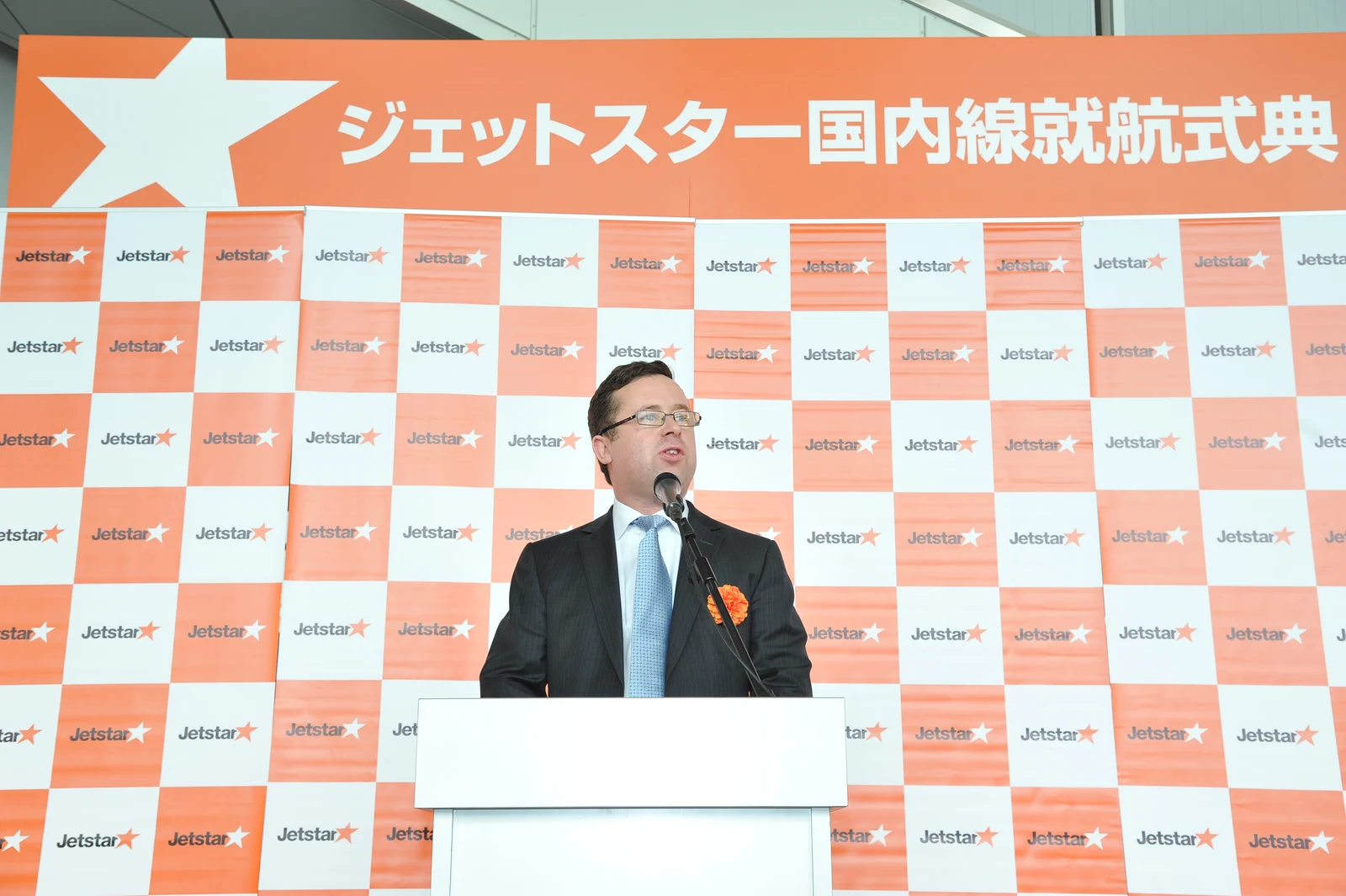
Airline executive and former Qantas Group chief executiveAlan Joyce brought an operations-research background into airline planning before leading Jetstar and then Qantas. His tenure combined low-cost competition, international network changes and expansion of nonstop flying with bitter industrial disputes. Later court outcomes and a governance review made customer treatment, workforce rights and executive accountability central to its assessment.Read biographyQuick answers
Common questions
- Was the opening on 24 or 25 March 2018?
- The Perth departure was on 24 March; the first arrival in London was on 25 March local time.
- Was Melbourne–London entirely nonstop?
- No. Melbourne passengers travelled through Perth before taking the nonstop Perth–London sector.
- Did the state’s visitor-spending forecast establish an achieved benefit?
- No. A forecast is different from a later independently measured result.
- Does a high seat factor alone establish profitability?
- No. It measures occupied seats, not all operating costs, yields or wider public benefits.
Primary and institutional sources
How this history was checked
Dated state and airline records establish announcement, terminal preparation and departure. SBS independently records the London arrival and explains passenger connections; the airport records the first return. The 2019 investor document is used only for its indexed seat-factor case study, not the entire presentation. Forecast visitor spending and company-reported operating results are distinguished from independently audited benefits. This article was reviewed on 24 October 2026.
- Western Australian Government11 December 2016: negotiated route, border-infrastructure contribution and forecast benefits
- Qantas2017 route-on-sale announcement: Melbourne–Perth–London structure and allocated Dreamliners
- Western Australian Government9 May 2017: terminal works and integrated domestic/international hub
- Western Australian Government24 March 2018: actual Perth departure and separate airport/marketing contributions
- SBS News25 March 2018: independent arrival report, passenger connections and remaining stopovers
- Perth Airport26 March 2018: first London return service and Terminal 3 arrival
- Qantas / ASXInvestor Day 2019: selected indexed printed slide 79 Perth–London seat-factor case study
- Jetstar Airways / FlickrJetstar Japan First Flight – Alan Joyce: exact original and current CC BY-SA 2.0 grant
- Wikimedia CommonsExact Jetstar Japan First Flight file: source, sole file version and licence record
- Creative CommonsAttribution-ShareAlike 2.0 Generic