
The short answer
The Progressive Party offered an alternative to apartheid within a Parliament that excluded most of the population. Understanding its founding requires separating opposition to racial discrimination from its initial limits on voting, and distinguishing the first conference from policies adopted through subsequent work.
Chronology
A timeline of the turning points
United Party division
Its congress deepens disagreement over political rights and opposition to apartheid.
Progressive Party formed
The breakaway establishes a separate parliamentary party.
Contemporary criticism
New Age assesses the first conference’s promises and unresolved policy questions.
Molteno proposals
The party adopts a constitutional programme including a qualified franchise.
Electoral contraction
Helen Suzman becomes the party’s only MP.
Expansion and later mergers
Additional seats precede the Reform and Federal party formations.
The split concerned the kind of opposition the United Party would offer
F. A. Mouton’s research places the breakaway after the United Party’s August 1959 congress and its rejection of a common voters’ roll. For the departing liberals, accommodation to the governing National Party’s direction had made continued membership untenable. A new party was an organisational response to that disagreement.
The formation did not simply give a new name to the entire opposition. Most United Party members did not follow the breakaway, and the National Party remained in government. Parliamentary arithmetic, constitutional principle and the willingness of white electors to support change would all shape what the new organisation could accomplish.
Sources for this section: [1]
The first conference left important questions unresolved
New Age’s November 1959 report welcomed a movement away from white domination but criticised the tendency to refer difficult questions to commissions. Its account singled out franchise qualifications and party membership as unfinished matters. This was contemporary political criticism, not a later verdict issued with knowledge of the entire party’s history.
Reading that response prevents a founding conference from appearing as a complete programme delivered at one moment. Broad declarations could attract approval while leaving substantial disagreements about implementation. What the party subsequently adopted must therefore be dated separately from what observers hoped, feared or demanded during its initial formation.
Sources for this section: [2]
A nonracial qualified franchise was not universal adult suffrage
Suzman’s 1996 TRC testimony described the initial proposal as a franchise subject to education and property qualifications, without racial qualification. Mouton records the Molteno Commission’s detailed work and the policy’s adoption in 1960. Eligibility was to depend on specified qualifications, not adulthood alone.
Removing an explicit racial bar was consequential, but the remaining requirements would still exclude many people. It is inaccurate to translate that early programme into an immediate commitment to one adult, one vote. The distinction concerns the practical distribution of political power, not merely alternative vocabulary for the same democratic arrangement.
Constitutional checks formed a second part of the alternative
The programme also sought a protected constitution, individual rights, judicial independence and federal arrangements. SAHO’s organisational history identifies these as central elements of the Progressive alternative. These safeguards addressed how power would be exercised, alongside the separate question of who could choose the government.
An entrenched bill of rights could constrain a majority or executive, but did not by itself answer the franchise question. Keeping the two dimensions visible makes the programme’s combination clearer: opposition to discriminatory law, concern for institutional restraints and a restrictive starting position on electoral participation could coexist within the same political project.
Sources for this section: [4]
The 1961 result exposed the limits of the available electorate
Only Suzman retained a Progressive seat at the 1961 election. The party continued to exist, but representation narrowed dramatically. Its fortunes in a whites-only electoral system could not measure the views of South Africa’s excluded majority, nor should its small caucus be mistaken for the absence of resistance outside Parliament.
Six more PP members won seats in 1974. Later mergers produced the Progressive Reform Party in 1975 and Progressive Federal Party in 1977. Those developments belong to the organisation’s subsequent history, not the original founding. They help explain why the successive party names must not be used interchangeably when tracing the 1959 breakaway.
Continue the chronology
Related history guides
Biography context
Explore Johannesburg, South Africa through connected lives
Connected biographies
The MP who remained after the electoral setback
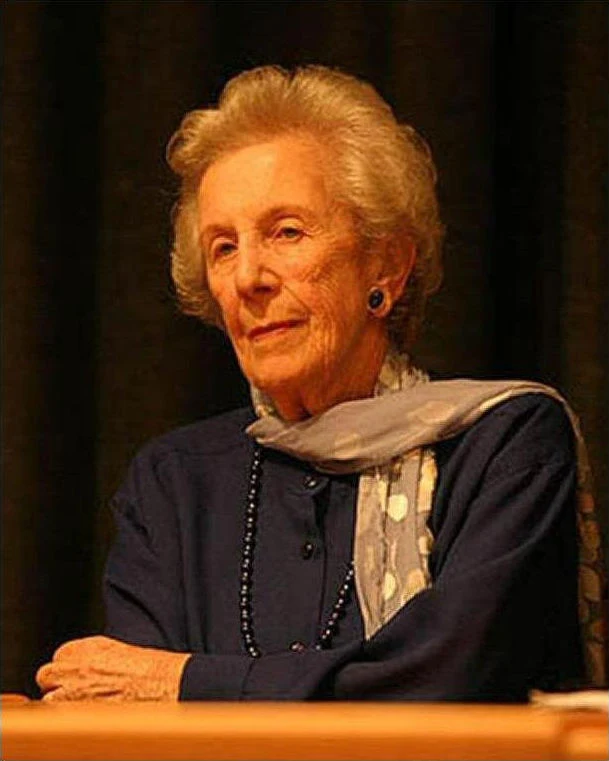
1917–2009
Helen Suzman
Parliamentarian and human-rights advocateHelen Suzman used a seat in the whites-only Parliament to challenge discriminatory laws and investigate their consequences. Her visits and interventions mattered to prisoners and their families. Her liberal politics also involved positions, including opposition to economic sanctions, that divided opponents of apartheid.Read biographyQuick answers
Common questions
- Was the party founded with universal adult suffrage as its programme?
- No. Its early nonracial franchise retained qualifications.
- Was the 1959 conference the end of policy development?
- No. Constitutional proposals were developed and adopted afterwards.
- Did the 1961 result abolish the party?
- No. Suzman remained its MP, and it continued organising.
- Was it already called the Progressive Federal Party in 1959?
- No. That later formation dates to 1977.
Primary and institutional sources
How this history was checked
Selected founding and policy passages in Mouton’s research were checked against Suzman’s retrospective testimony, the contemporary New Age conference assessment and an organisational chronology. Party testimony remains a participant’s account, not a TRC endorsement. The photograph is a later, undated portrait, not the founding conference. This article was reviewed on Reviewed 24 October 2026.
- F. A. Mouton / HistoriaLiberal crusader: selected 1959–1961 passages on Zach de Beer and the Progressives
- New Age / SAHO archive19 November 1959: contemporary assessment of the Progressive Party conference
- Democratic Party / Truth and Reconciliation Commission20 August 1996 testimony: selected founding, franchise and parliamentary passages
- South African History OnlineProgressive Federal Party: constitutional programme and predecessor chronology
- Robert Cutts / FlickrHelen Suzman: full supplied photographic frame