
The short answer
Port Sunlight was both a place to live and part of a manufacturing business. Its houses and green spaces addressed real problems in industrial housing, while the relationship between employer, tenant and community raised questions about power. The village’s appearance is a starting point for that history, not its conclusion.
Chronology
A timeline of the turning points
A product name before a village
Sunlight is registered as a trademark; the soap business creates the reason for expansion.
Factory works inaugurated
Elizabeth Lever cuts the first sod at the new site.
Production and occupation
The first boil of soap occurs in June; the first tenants move into Bolton Road in September.
Educational amenities
Schools, the Technical Institute and the Lever Library open as the settlement develops.
A wider supply chain
HCB is established in the Belgian Congo, connecting soap production to a coercive colonial labour system.
Lady Lever Art Gallery
The public gallery opens on 16 December after wartime construction delays.
Why put a village beside a soap works?
Sunlight soap’s growth required a larger manufacturing site. Lever chose land with access to road, rail and water transport and a nearby potential workforce. The factory and settlement were linked decisions: goods had to move efficiently, and workers needed somewhere to live. The landscape history describes marshy ground around tidal channels, later drained and incorporated into the village plan.
The 1888 inauguration marks a beginning. Production and occupation followed in 1889, while later land purchases enlarged the scheme. Reading every surviving building as a feature already completed in 1888 obscures this development. Port Sunlight acquired its familiar form through successive commissions and the continuing work of builders, gardeners and residents.
Housing reform operated at the scale of daily life
The museum’s teaching account contrasts the settlement with crowded industrial districts, where washing facilities and outdoor space were often inadequate. Houses provided separate domestic rooms and improved access to sanitation. Those differences affected everyday tasks: sleeping, laundering clothes, caring for children and spending time outside. Improvements should be understood through these uses as well as architectural appearance.
The scheme included schools, a cottage hospital and places for sport and recreation. Different architects produced visual variety within a planned settlement. Parks and allotments made open space part of the arrangement, rather than a leftover around factories. These facilities were material benefits, even though access and decisions about provision remained connected with the company.
Prosperity-sharing left the employer in a powerful position
Lever described housing and welfare provision as prosperity-sharing. Money that might have been distributed directly could instead support a settlement intended to produce security, health and loyalty. That structure gave management influence over the form in which employees benefited. It invites a question that attractive streets cannot answer: who should decide what workers need?
Originally, tenancies were tied to employment or close connections with the firm. As an interpretation of that arrangement, the employer’s role reached beyond wages into domestic life. This does not establish that every tenant experienced the relationship identically. It does make independence, choice and the balance between collective services and personal income central to evaluating the model.
A model village was not the whole business
Palm oil connected the works to African producers. HCB, established in the Belgian Congo in 1911, sought labour within a colonial order that enabled coercion. Bolton museum curators and the Village Trust describe forced labour. Improved housing on the Wirral therefore cannot stand as evidence that the enterprise treated all its workers equally.
The University of Liverpool report examines the labour system and cautions against simplistic calculations of early Congo profits. It also explains limits in the corporate archive. The appropriate conclusion is specific: the supply chain involved documented exploitation, while exact financial flows and individual decisions require careful evidence. This guide has not conducted an independent audit of the plantations.
Public institutions broadened the village’s meaning
The Lady Lever Art Gallery opened in December 1922. Its collections placed painting and decorative art within the settlement’s public life, extending the idea of welfare into cultural access. The institution also presents a founder’s collecting choices and wealth. Its presence raises questions about who selected the art and whose labour made such collecting possible.
Port Sunlight is consequently useful as a social question as well as a preserved place. It shows the possibilities of planning around health, space and shared amenities, alongside the unequal power of an employer-led community. Its history becomes more informative when residents, architects and overseas workers enter an account too easily reduced to one benefactor’s intentions.
Continue the chronology
Related history guides
Biography context
Explore United Kingdom through connected lives
Connected biographies
The manufacturer behind the village
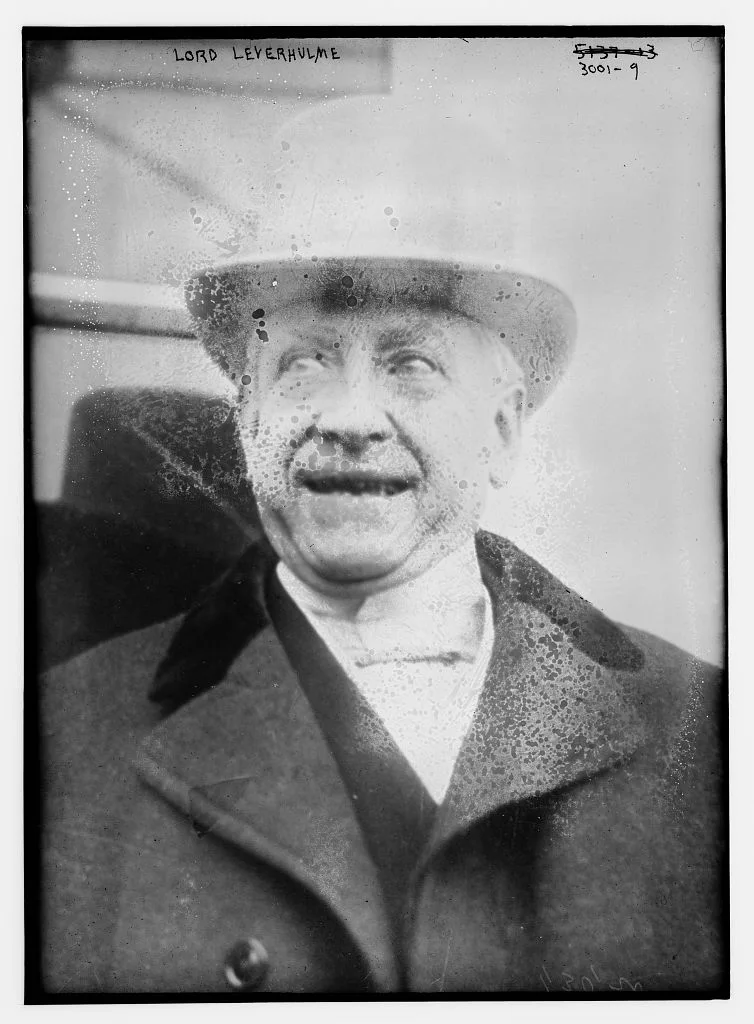
1851–1925
William Hesketh Lever
Soap manufacturer, co-founder of Lever Brothers and founder of Port SunlightWilliam Hesketh Lever developed Sunlight soap and co-founded Lever Brothers with his brother James. Port Sunlight combined housing and amenities with a business strategy of worker loyalty. The company’s Congo operations involved forced labour, complicating his reputation for philanthropy.Read biographyQuick answers
Common questions
- Did Port Sunlight begin as an independent town?
- It developed beside the Lever Brothers works as an employer-led settlement. Originally the houses were rented to employees and people closely connected with the company.
- Was prosperity-sharing a cash profit bonus?
- The term described benefits provided through housing, services and amenities. The Village Trust distinguishes this from simply sharing profits directly with employees.
- Why include the Congo in a village history?
- Palm oil was an ingredient in soap. The documented forced labour in HCB’s Congo operations connects the village to a much wider and unequal system of production.
Primary and institutional sources
How this history was checked
Village and museum histories establish the settlement’s chronology and facilities. University research and museum curators supply critical colonial context. The interpretation of employer power follows the documented tenancy and welfare arrangements; no complete tenant archive or plantation audit was examined. This article was reviewed on 23 October 2026.
- Port Sunlight Village TrustHistory and heritage: chronology and prosperity-sharing
- Parks & GardensPort Sunlight: site, architects and phased landscape development
- MyLearning / Port Sunlight MuseumSoap Success: transport, labour and factory expansion
- MyLearning / Port Sunlight MuseumLiving and Working Conditions at End of 19th Century
- MyLearning / Port Sunlight MuseumTown Planning: health, open space and amenities
- MyLearning / Port Sunlight MuseumModern Houses: domestic facilities and tenancies
- National Museums LiverpoolLady Lever Art Gallery: 1914 foundation stone and 1922 opening
- Revealing Histories / Bolton Museums and Archive ServiceTobacco box: philanthropy and forced labour
- Port Sunlight Village TrustRacism, the Belgian Congo, and William Lever, June 2022
- University of Liverpool / Royal African SocietyLever Brothers’ plantations report: selected Congo labour, finance and archive passages
- Library of CongressBain Collection: image rights and restrictions