
The short answer
The National Firearms Agreement was reached on 10 May 1996 after the Port Arthur massacre. It joined Commonwealth leadership and funding to changes enacted by state and territory parliaments. Its history is clearer when the agreement, the laws, licensing systems and compensation programme are treated as connected but separate steps, and when evidence about later firearm deaths is distinguished from the reform’s stated aims.
Chronology
A timeline of the turning points
Port Arthur
A gunman kills 35 people in Tasmania, prompting demands for a stronger national response.
Agreement in Canberra
Police ministers adopt resolutions on firearm categories, licensing, registration, storage and compensation.
Heads of government reaffirm implementation
A COAG statement commits jurisdictions to implementing the May resolutions.
Buyback begins in most jurisdictions
States and territories operate surrender and compensation arrangements funded by the Commonwealth.
New South Wales implementation
The NSW Firearms Act 1996 and accompanying regulation commence.
Main buyback period ends
The programme closes in most jurisdictions; administration and evaluation continue.
Port Arthur made coordination an urgent political priority
On 28 April 1996 a gunman killed 35 people at Port Arthur, Tasmania. John Howard had become prime minister the previous month. The massacre intensified an existing debate about access to firearms and the uneven rules across jurisdictions.
Howard pressed for national reform, but regulation of ownership and possession lay primarily with state and territory governments. A nationwide response therefore required cooperation across the federation. The emergency meeting on 10 May brought police ministers together to agree on a common policy framework rather than transferring all firearms powers to the prime minister.
The agreement required legislation and administration
The original document records resolutions and action plans of the Australasian Police Ministers’ Council. Howard announced the agreement on 10 May, and heads of government reaffirmed implementation on 14 June.
Each jurisdiction then needed to change and operate its legal arrangements. New South Wales, for example, brought its Firearms Act 1996 and related regulation into force on 1 July 1997. The agreement date, the passage of a statute and its commencement are different milestones. Describing a single Commonwealth Act as the entire reform would obscure both state responsibility and the work of implementation.
Restrictions distinguished firearm categories and purposes
The resolutions restricted automatic and semi-automatic long arms and pump-action shotguns, with specified exceptions and tightly limited categories. They did not abolish every form of civilian firearm ownership. The document distinguishes ordinary categories from access for particular occupational, official or other approved purposes.
It also required applicants to demonstrate a genuine reason for owning, possessing or using a firearm. Personal protection was excluded as such a reason. Additional need requirements applied to several categories. These are descriptions of the historical agreement’s structure, not instructions that substitute for a jurisdiction’s later legislation or present licensing rules.
Licensing, registration and storage were separate controls
A licence concerns the person’s authority to possess a category of firearm; registration identifies a particular firearm. The agreement addressed both, alongside acquisition permits, safety training, refusal or cancellation of licences and secure storage.
This wider framework matters because the response was more than a list of prohibited models. It sought to regulate access, records and ongoing custody. Its ambition for nationwide coordination also should not be confused with a fully completed single national register in 1996. The Parliamentary Education Office notes that agreement to create the later nationwide register came much later.
The buyback connected compensation to newly prohibited firearms
The buyback allowed owners and dealers to surrender newly prohibited weapons for compensation, while an amnesty supported compliance. States and territories ran the arrangements and the Commonwealth provided funding. In most jurisdictions the main scheme ran from 1 October 1996 to 30 September 1997.
The Australian National Audit Office examined that administration and funding. It recorded approximately $304 million in owner compensation, with other costs for administration and related activities. Its audit is evidence about operating a programme and accounting for expenditure; it is not, by itself, a study proving how many later deaths were prevented.
Outcome studies need a defined measure and period
Researchers have examined mass shootings, firearm homicide, firearm suicide and total deaths as different outcomes. A 2016 JAMA study by Simon Chapman, Philip Alpers and Michael Jones compared official death statistics for 1979–2013 and mass-shooting records through May 2016.
The authors reported a faster decline in firearm deaths after the reforms, while observing wider changes in non-firearm deaths that complicated attributing the difference solely to the laws. Their stated period is essential: a finding through May 2016 is not a claim about every subsequent year. Agreement, implementation, association and an estimate of causal effect answer different historical questions.
Continue the chronology
Related history guides
Biography context
Explore Australia through connected lives
Connected biographies
National political leadership and the wider career
1939–
John Howard
Former Australian treasurer and Australia’s 25th prime ministerA Sydney solicitor who became treasurer, twice led the opposition and served as prime minister from 1996 to 2007 before losing government and Bennelong.Read biographyQuick answers
Common questions
- Was the National Firearms Agreement a Commonwealth Act?
- No. It was an intergovernmental agreement expressed in police-minister resolutions. Commonwealth, state and territory laws and administrative arrangements put the reforms into effect.
- Were all civilian firearms banned?
- No. The agreement restricted specified categories and retained licensed ownership for recognised reasons, with additional limits and exceptions.
- Did the agreement allow personal protection as a genuine reason?
- No. The original 1996 resolutions expressly excluded personal protection as a genuine reason for firearm ownership, possession or use.
- Who operated and funded the buyback?
- States and territories operated surrender and compensation arrangements, with Commonwealth funding. The main scheme ran in most jurisdictions from October 1996 to September 1997.
- Does a before-and-after decline prove the reform caused every change?
- No. Outcome studies must specify measures, periods and comparison methods, including trends already present and changes in other causes of death.
Primary and institutional sources
How this history was checked
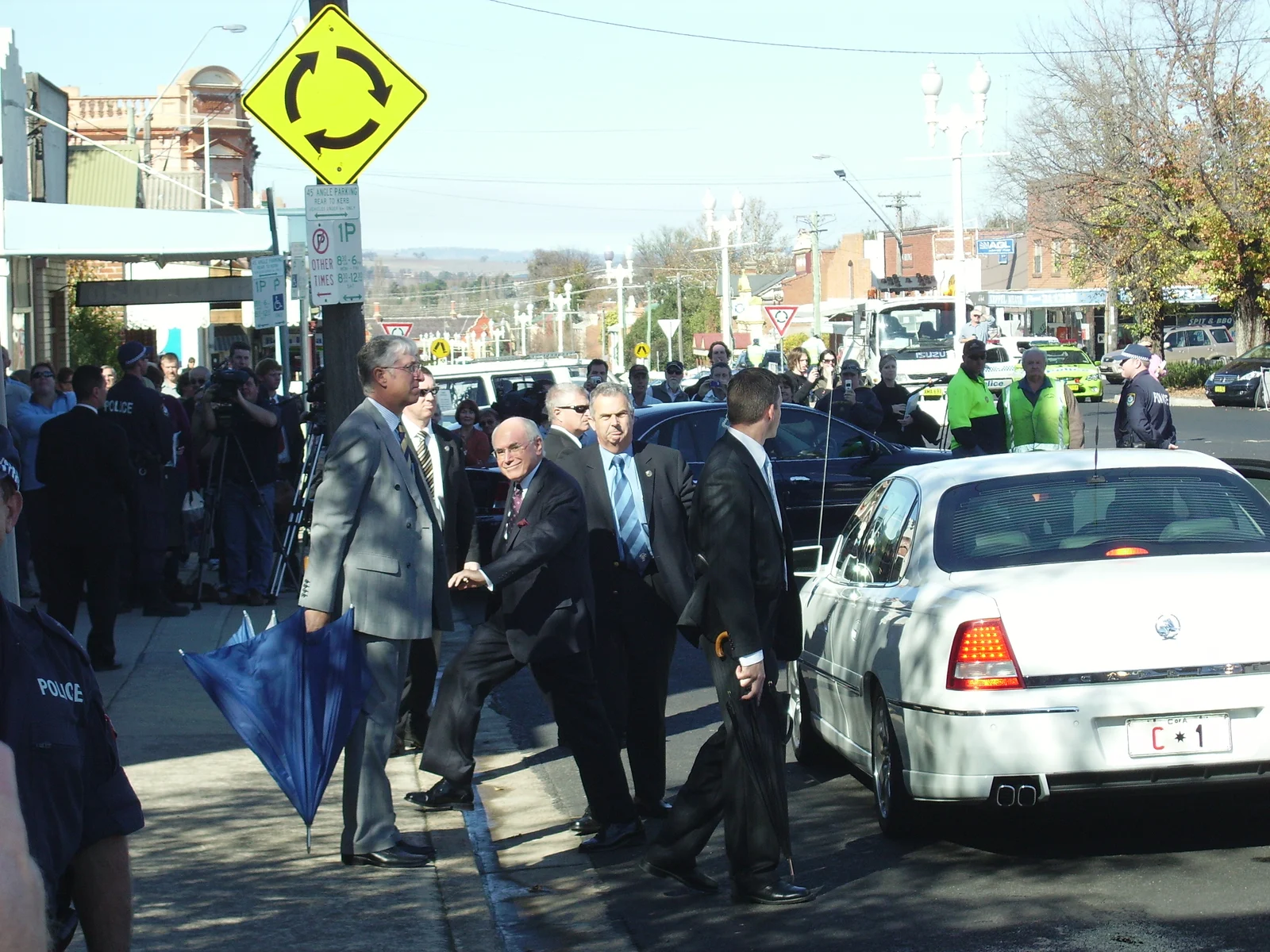
The original 1996 resolutions and contemporary government statements establish what was agreed. NSW parliamentary research illustrates legal implementation, and the ANAO audit documents buyback administration. The JAMA study is used within its stated observation periods and limits. This historical account does not present the 1996 document as current licensing guidance. The photograph shows Howard in Bathurst in 2007, not at the 1996 meeting. This article was reviewed on 23 October 2026.
- Australasian Police Ministers’ Council / Australian Criminal Intelligence CommissionSpecial Firearms Meeting, Canberra, 10 May 1996: original resolutions and action plans
- Department of the Prime Minister and CabinetJohn Howard: firearms agreement press conference, 10 May 1996
- Department of the Prime Minister and CabinetGun Control: heads of government implementation statement, 14 June 1996
- Parliamentary Education OfficeNational Firearms Agreement: 10 May 1996 and intergovernmental cooperation
- National Archives of AustraliaLetters to John Howard supporting gun control: the massacre, political response and legislation
- Parliament of New South WalesAbigail Rath and Gareth Griffith: Firearms Regulation — An Update, Background Paper 5/1999
- Australian National Audit OfficeThe Gun Buy-Back Scheme, Audit Report 25, 1997–1998: administration and funding
- JAMA / Simon Chapman, Philip Alpers and Michael JonesAssociation Between Gun Law Reforms and Intentional Firearm Deaths in Australia, 1979–2013, 2016
- Wikimedia Commons / Cartman02auHoward gets out of car.JPG: complete original and copyright-holder licence choices