
The short answer
Did John Molson create a completely new brewery in 1786? The familiar founding year marks a stage in an existing enterprise. A predecessor operation, a debt and auction, a journey to England and a return to direct management all preceded the brewery’s expansion. Separating them explains what the date commemorates and how a small colonial brewery developed into an industrial business.
Chronology
A timeline of the turning points
A predecessor business
Thomas Loid’s brewery and Molson’s involvement precede the conventional founding date.
Ownership after an auction
Molson acquires the brewery following a debt dispute.
England and equipment
He settles affairs in England, obtains equipment and returns to Montréal.
A recorded barley purchase
His notebook marks the first barley bought for malting that season.
Machinery and later growth
Steam pumping and grinding precede successive generations of industrial construction.
The brewery existed before the date on the brand history
Thomas Loid had established a brewery near the Courant Sainte-Marie before Molson took charge. Molson arrived in the colony in 1782 and became involved in the business soon afterwards. The district’s access to the St. Lawrence and the road later known as Notre-Dame Street placed production close to the city’s developing commercial routes.
The founding story therefore begins with an existing site and earlier operator. Molson Coors uses 1786 for John Molson’s brewery, while official heritage records identify the preceding enterprise. These descriptions can be understood together by asking whether a date refers to the original brewery, its ownership or its management.
The 1785 purchase arose from a debt and auction
Molson sued Loid for repayment of a debt in 1784. The scholarly biography records a failed first auction and a second sale on 5 January 1785, when Molson was the only bidder. He placed James Pell in charge and subsequently travelled to England to settle his financial affairs and acquire equipment.
Québec’s heritage account corroborates sole ownership in 1785 and the role of inherited resources. Ownership did not mean that Molson personally supervised every stage immediately. The interval before his return helps explain why an acquisition in one year and an operating milestone in the next appear in the same company history.
The 1786 notebook records barley rather than a finished batch
After returning to Montréal in May 1786, Molson managed the establishment, enlarged its facilities and purchased grain. His 28 July notebook entry identifies the first barley bought for malting that season. It supplies a concrete business record behind the anniversary year.
The brewery heritage inventory describes that date as his first beer. The narrower notebook wording is preferable when identifying the exact event: purchasing barley is a stage in brewing, rather than proof that finished beer was sold that day. The significance of 1786 remains his direct operation and development of the business.
Production depended on supplies, storage and gradual mechanization
Expansion required more than a new name. Molson invested in land and buildings, including storage and an icehouse. Grain supply and imported equipment formed part of an operation serving an expanding colonial market. The brewery’s earnings later helped him absorb the losses of early steamship experiments.
Parks Canada dates an engine for pumping water and grinding malt to 1811. That change began a gradual transition towards industrial production. It should not be projected back onto 1786: the original brewery and its later machinery represent different stages, with continuing dependence on workers, materials and practical operating knowledge.
The later complex and brands belong to subsequent chapters
The familiar Montréal complex contains buildings from successive periods. Héritage Montréal records reconstruction after the 1852 fire, a major stone façade in 1913 and extensive twentieth-century additions. Those structures reflect the work of later family members, architects and employees rather than the founder’s original premises.
The distinction also applies to products. Molson Coors dates Molson Canadian to 1959, long after John’s death in 1836. A continuing company name links these histories, but the first brewery, industrial complex and modern brand answer different questions. Keeping those layers separate makes the 1786 anniversary more informative.
Biography context
Explore Canada through connected lives
Connected biographies
The proprietor’s life beyond the brewery
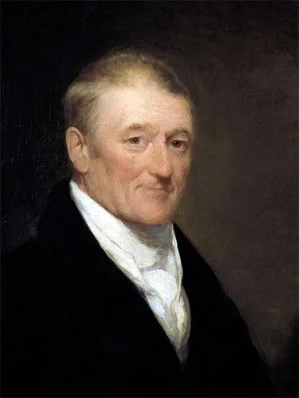
1763–1836
John Molson
Brewer, steamship investor, banker and colonial politicianJohn Molson was an English-born Montréal entrepreneur whose brewery supplied the capital for investments in steamships, property and financial institutions. He also served in Lower Canada’s legislature. His life ended before the opening of the railway in which he had become a major investor, and before later generations expanded the family business.Read biographyQuick answers
Common questions
- Was the brewery bought in 1785 or founded in 1786?
- Molson acquired an existing brewery in 1785 and took direct charge after returning from England in 1786. The dates mark different stages.
- Does the 28 July entry prove beer was sold that day?
- The scholarly biography identifies it as a purchase of barley for malting. It does not establish a finished batch or sale on that exact day.
- Was Molson Canadian the original beer brand?
- No. Molson Coors dates Molson Canadian to 1959. It belongs to a much later chapter than the founder’s brewery.
Primary and institutional sources
How this history was checked
The archival biography distinguishes the auction and management dates. Official Québec and Parks Canada records document buildings and machinery; the company history supplies its anniversary convention and later brand chronology. Conflicting descriptions of the July notebook entry are identified explicitly. This article was reviewed on 23 October 2026.
- Alfred Dubuc / Dictionary of Canadian BiographyJohn Molson (1763–1836): archival biography, auction, brewery, shipping, politics and succession
- Québec Ministry of Culture and CommunicationsJohn Molson: life dates, family, businesses, public offices and death
- Québec Ministry of Culture and CommunicationsBrasserie Molson: predecessor brewery, 1785 ownership and successive buildings
- Parks CanadaJohn Molson National Historic Person: brewing, mechanization, transport and hospital support
- Molson CoorsCompany history: John Molson’s 1786 brewery and the later Molson Canadian brand
- Héritage MontréalMolson Brewery complex: building phases, 1852 fire and redevelopment context
- Wikimedia CommonsJohn Molson Sr: exact portrait file, elder Molson identification and file history
- Molson Coors Canada / CNW, reproduced by 6ix2011 anniversary release: caption identifies an original John Molson portrait dated 1811
- Creative CommonsPublic Domain Mark: identification of public-domain status