
The short answer
Matilda the Musical is not simply Roald Dahl’s novel with songs inserted. The Royal Shakespeare Company’s production required a new dramatic structure, a score, performers and repeated revision. Its history reveals how adaptation changes the means of storytelling while retaining a recognisable conflict.
Chronology
A timeline of the turning points
Approach and workshops
Minchin’s account dates Warchus’s approach before the 2009 score draft and workshops.
First public run
November previews at the Courtyard precede the 9 Decemberopening.
Separate transfers
The West End run precedes the Broadway opening inApril 2013.
A film adaptation
Warchus directs the screen version, distinct from a recording of a stage performance.
The RSC developed a project, not just a celebrity commission
The RSC’s account of Michael Boyd credits him and dramaturg Jeanie O’Hare with beginning Matilda’s development. Dennis Kelly was commissioned first; Matthew Warchus and Tim Minchin then joined the team. That institutional history prevents the musical being reduced to one famous performer’s solo idea.
Kelly wrote the book—the dramatic script—while Minchin wrote music and lyrics and Warchus directed. Dahl’s 1988 novel remained the source. These are different kinds of authorship, with responsibility also extending to design, choreography, musical supervision and the performers making the work legible on stage.
An added narrative made storytelling an action
In a published interview, Kelly explained his expansion of Miss Honey’s past through the acrobat-and-escapologist story. Matilda narrates it, giving her imagination an active role in the drama. Its loving parents also contrast with the neglect she experiences at home.
The important adaptation question is therefore not merely which incidents survived from the novel. It is how a recurring invented story can organise emotion and connect characters. Kelly’s explanation supports that reading without making every line of the musical a direct quotation from Dahl or claiming that Minchin wrote the dramatic subplot.
Sources for this section: [4]
Songs and staging had to preserve danger as well as play
Minchin described wanting to avoid a prettified version of Dahl, drawing instead on the darker energy of Quentin Blake’s illustrations. In the same interview, the team discussed the balance between silliness and the real threat posed by Miss Trunchbull. Humour alone would not make the children’s resistance matter.
That balance also depended on bodies and objects, not just lyrics. Warchus credited choreographer Peter Darling with the swings for When I Grow Up. The example shows how a song’s theatrical meaning can emerge from collaboration; its staging is not evidence that the composer personally devised every visible effect.
Workshops separated an early idea from the finished production
Minchin’s development account records a 2009 draft and workshops, then substantial changes involving Warchus, Kelly, O’Hare and musical supervisor Christopher Nightingale. Songs and characters were discarded, scenes combined and the script reworked. Rehearsals did not merely reproduce an untouchable first version.
The first public Courtyard performance was on 9 November 2010, with previews before the 9 Decemberopening. Those dates describe different events. Later West End previews and opening also differed, so a broad statement that the show began in 2010 should not be confused with its London or Broadway premiere.
Sources for this section: [3]
Transfers and a film created distinct versions of success
The West End transfer followed in 2011; Broadway opened inApril 2013. RSC records distinguish four Tony Awards from the separate Tony Honor for the four young title-role performers. Minchin’s personal score nomination, documented by the Broadway League, is not a personal Tony win.
The 2022 film was another adaptation, directed by Warchus with Kelly’s screenplay, rather than a camera recording of a theatre show. Stage development, touring casts, award categories and screen storytelling are related but separate histories. Keeping them separate makes the collaboration easier to understand than an undifferentiated tally of acclaim.
Biography context
Explore United Kingdom through connected lives
Tim Minchin
Follow Perth training, comedy, stage collaboration and screen work.
Explore the biographiesPerformance contextHugh Jackman
Compare the different skills required across stage musicals and film.
Explore the biographiesAnother writing processCourtney Barnett’s debut album
Compare original-song revision with adapting an existing dramatic source.
Explore the biographiesConnected biographies
The composer’s wider career
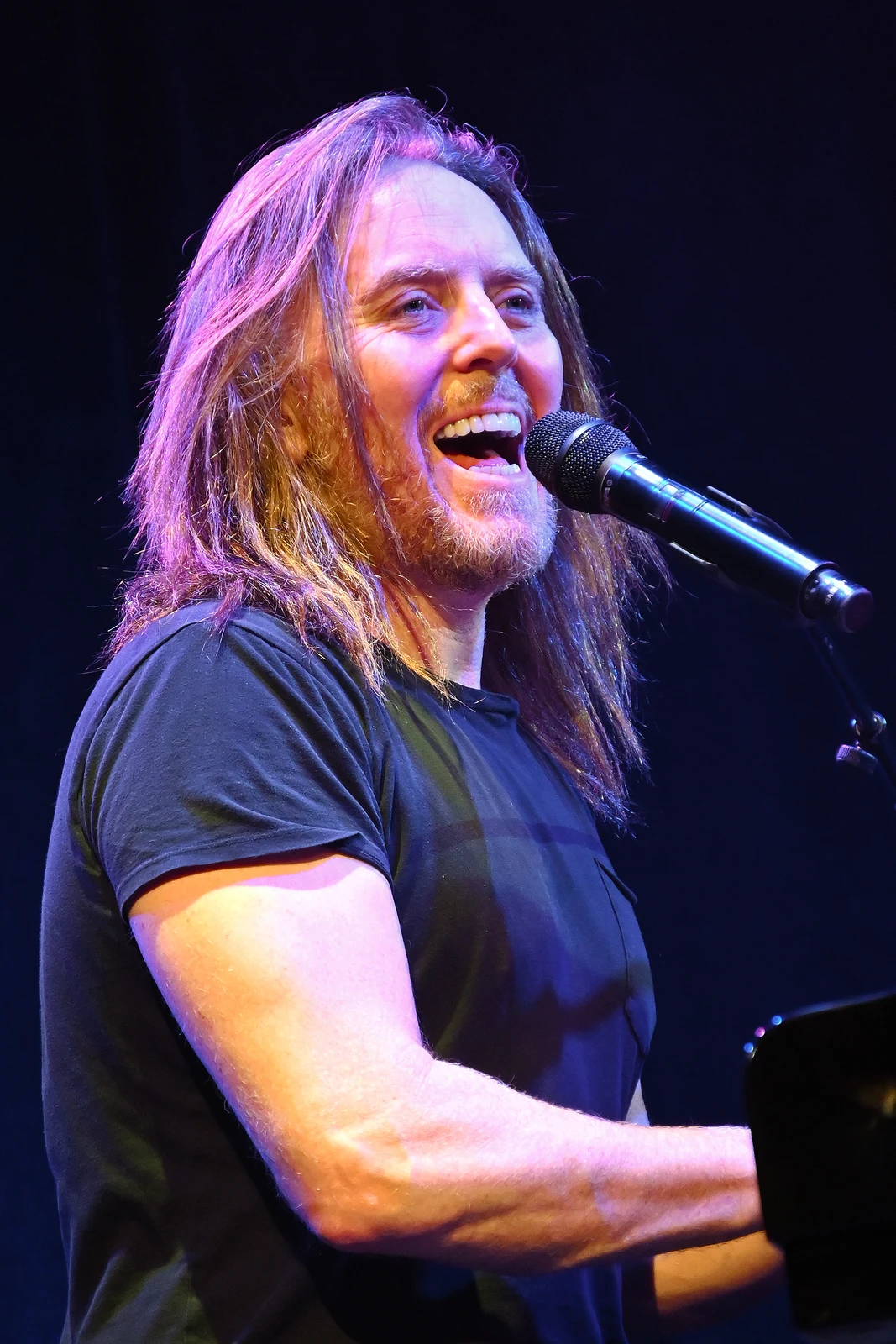
1975–
Tim Minchin
Composer, lyricist, musician, comedian and actorTim Minchin developed from Perth theatre and cabaret into an international musical-comedy performer, then a composer for collaborative stage and screen projects. His work spans comic songs, dramatic acting, studio recordings and writing drawn from public speeches.Read biographyQuick answers
Common questions
- Who wrote Matilda the Musical?
- Dennis Kelly wrote the musical’s book; Tim Minchin wrote its music and lyrics, adapting Roald Dahl’s novel.
- Did it begin in London?
- No. The original 2010 production was in Stratford-upon-Avon; the West End transfer followed in 2011.
- Is the 2022 film a filmed stage performance?
- No. It is a separate screen adaptation directed by Matthew Warchus, with a screenplay by Dennis Kelly.
- Why is it connected to Australia here?
- The guide accompanies Australian composer Minchin’s biography, but the original production’s actual country is the United Kingdom. It is counted only once.
Primary and institutional sources
How this history was checked
Uses selected RSC institutional histories and credits, Minchin’s dated development account, creator interviews and the Broadway League. The 2026 interview’s inconsistent 15th-anniversary/tour framing is not used to date a new anniversary. No full novel, score, performance, film or workshop archive newly consumed; no lyrics reproduced. This article was reviewed on 24 October 2026.
- Royal Shakespeare Company4 August 2023: Michael Boyd, Jeanie O’Hare and Matilda’s development
- Royal Shakespeare Company2017 announcement: original production, collaborators and 2018–2019 tour
- Tim MinchinMatilda’s development: workshops, previews and separate openings
- Marianka Swain / In-Common14 April 2026 publication: the creators on storytelling, tone and staging
- The Broadway League / IBDBTim Minchin: birth, Broadway credits and award nominations
- Royal Shakespeare CompanyNovember 2022: 4,000 West End performances and the distinct film adaptation
- Philip Romano / Wikimedia CommonsTim Minchin at Town Hall: own-work photograph and original grant