
The short answer
From three Group B wins to the gold-medal rematch: follow Goh V Shem and Tan Wee Kiong’s opponents, comeback victories and final, with every score shown from Malaysia’s perspective.
Every round
All six Rio matches
Dates are local to Rio de Janeiro. Every game score is written from Malaysia’s perspective (Goh and Tan); a doubles pair contributes one medal event to the national tally.
| Round and date | Opponents | Malaysia’s game scores | Outcome |
|---|---|---|---|
| Group B · 11 August | Michael Fuchs / Johannes Schöttler (Germany) | 21–14, 21–17 | Won 2–0 |
| Group B · 12 August | Phillip Chew / Sattawat Pongnairat (United States) | 21–12, 21–10 | Won 2–0 |
| Group B · 13 August | Fu Haifeng / Zhang Nan (China) | 16–21, 21–15, 21–18 | Won 2–1 |
| Quarterfinal · 15 August | Lee Yong-dae / Yoo Yeon-seong (South Korea) | 17–21, 21–18, 21–19 | Won 2–1 |
| Semifinal · 16 August | Chai Biao / Hong Wei (China) | 21–18, 12–21, 21–17 | Won 2–1 |
| Final · 19 August | Fu Haifeng / Zhang Nan (China) | 21–16, 11–21, 21–23 | Lost 1–2; silver |
Chronology
A timeline of the turning points
Three Group B victories
Beat Germany, the United States and Fu Haifeng/Zhang Nan to top the group.
Quarterfinal comeback
Defeated top seeds Lee Yong-dae and Yoo Yeon-seong in three games.
A medal guaranteed
Beat Chai Biao and Hong Wei to reach the gold-medal match.
Silver after the rematch
Fu and Zhang won the final despite two Malaysian match points in the deciding game.
The route to silver: six matches, five victories
Goh V Shem and Tan Wee Kiong won Olympic men’s doubles silver for Malaysia at Rio 2016. Their campaign ran from the group stage on 11 August to the final on 19 August, at Riocentro Pavilion 4. It involved six matches against five different partnerships, because the Chinese pair they defeated in their group returned as their opponents for gold.
The competition combined group play with a knockout draw. Winning the group did not finish the tournament, and losing a group match did not necessarily eliminate a pair. That format is central to the story: Goh and Tan progressed unbeaten to the final, but Fu Haifeng and Zhang Nan could recover from their earlier defeat and still win the title.
Group B: a clean sweep and a first meeting with China
The Malaysians opened with a straight-games victory over Germany’s Michael Fuchs and Johannes Schöttler, then defeated Phillip Chew and Sattawat Pongnairat of the United States. The two wins established their position before the final group encounter with fourth seeds Fu and Zhang. Contemporary reports identify this as Group B, not a knockout round.
Against China, Goh and Tan lost the first game but won the next two. The result completed a three-win group campaign and placed them in the quarterfinal draw. It did not eliminate Fu and Zhang. A later rematch was possible because both partnerships advanced, illustrating why a group-stage win and the final medal decision must be read as separate results.
The quarterfinal comeback against Lee and Yoo
The quarterfinal brought South Korea’s Lee Yong-dae and Yoo Yeon-seong, the top seeds. Goh and Tan again had to recover after dropping the opening game. The match was one of three quarterfinals that required a deciding game, reflecting how closely contested this stage of the tournament was.
The Malaysians came through 17–21, 21–18, 21–19. The official report records a duration of 89 minutes. Winning this match put them into the last four, not directly on the medal podium: a defeated semifinalist would still need to win the bronze playoff. Their next victory would therefore decide whether they left Rio with a guaranteed medal.
The semifinal that guaranteed a medal
Chai Biao and Hong Wei, the other Chinese partnership in the semifinal draw, stood between Malaysia and the gold-medal match. Goh and Tan won the opening game, lost the second and prevailed in the decider. Their opponents were Chai and Hong, not Britain’s Marcus Ellis and Chris Langridge, who played in the other semifinal.
The 21–18, 12–21, 21–17 result guaranteed Malaysia at least silver. Ellis and Langridge later won bronze, while Chai and Hong finished fourth. The medal paths explain why reaching the final was a decisive achievement even before its outcome: the Malaysians no longer faced the possibility of finishing the tournament without a medal.
The final: two match points before a 23–21 defeat
On 19 August, Fu and Zhang reversed the group-stage result. Goh and Tan took the first game, China won the second, and the decider reached a finish in which Malaysia had match points at 20–19 and 21–20. Reuters’ courtside report attributes the failure to convert both opportunities to serves that fell short.
China won the next two points from 21–21 to secure gold, with the full score 21–16, 11–21, 21–23 from Malaysia’s perspective. The official duration was 70 minutes. A report dated 20 August in Malaysia concerns the same final played on 19 August in Rio; the difference reflects local publication time, not a second final.
What the medal meant, beyond the final points
In the post-final interviews, Tan acknowledged rushing to close out the match, while Goh spoke of disappointment and gratitude for silver. Their statements give a more specific account of the pressure than treating the scoreline alone as evidence of their personalities. The missed opportunities were part of one match, not a complete explanation of two sporting careers.
BWF’s Olympic retrospective places Fu’s win alongside his earlier doubles success and Zhang’s achievements across two disciplines. Malaysia’s Olympic council records a national Rio total of five medal events: four silvers and one bronze. Goh and Tan contributed one of those events together. Their individual biographies cover earlier titles and later partnerships; this guide follows the shared tournament in which they became Olympic silver medallists.
Continue the chronology
Related history guides
Connected biographies
The two players behind the shared campaign
1989—
Goh V Shem
Badminton doubles player and Olympic silver medallistThe Malaysian doubles player who won Olympic silver with Tan Wee Kiong, added Denmark and Dubai titles in 2016 and later competed independently.Read biography1989—
Tan Wee Kiong
Badminton doubles player and Olympic silver medallistThe Malaysian doubles player whose career spans a Macau title with Hoon Thien How, Olympic silver with Goh V Shem and later independent partnerships.Read biographyQuick answers
Common questions
- Who won Malaysia’s men’s doubles silver at Rio 2016?
- Goh V Shem and Tan Wee Kiong. They reached the final with five victories and lost to Fu Haifeng and Zhang Nan of China.
- Did Malaysia beat China earlier in the tournament?
- Yes. Goh and Tan beat Fu and Zhang in Group B, but China won their later gold-medal rematch.
- Who did Goh and Tan beat in the semifinal?
- Chai Biao and Hong Wei of China, 21–18, 12–21, 21–17. Britain’s Ellis and Langridge played in the other semifinal.
- Was the final on 19 or 20 August?
- It was played on 19 August 2016 in Rio. Malaysian reports dated 20 August describe that same match.
Primary and institutional sources
How this history was checked
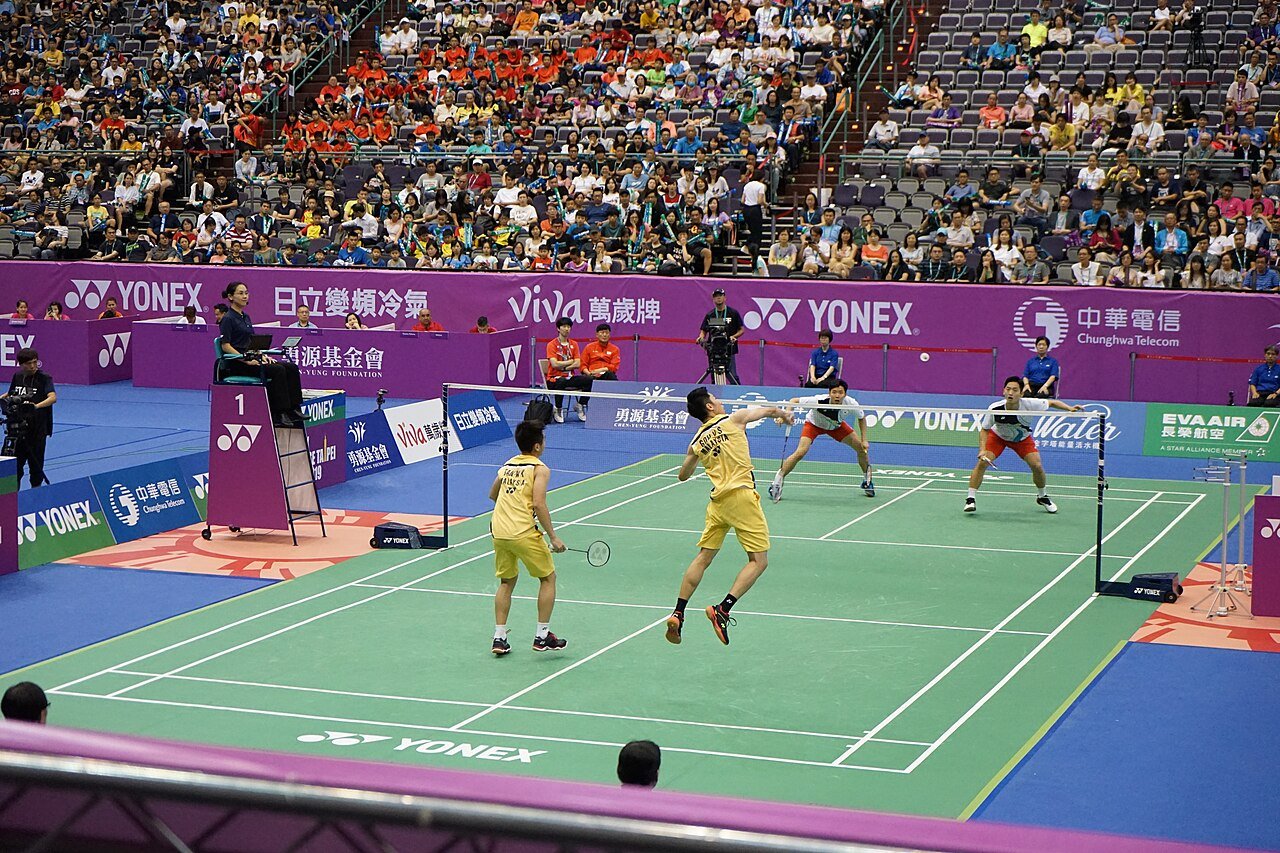
The indexed official match reports were checked for all six dates and scorelines; this is not a claim of full PDF or visual-page inspection. Contemporary reporting supplies interviews and the final’s sequence. Score orientation is kept consistent. The Olympic council’s Rio-specific page is used for the five-medal total; an older summary table contains inconsistent totals. The hero image is an existing licensed 2019 photograph, clearly labelled, not a Rio photograph. This article was reviewed on 16 October 2026.
- Rio 2016 Organising Committee / Olympic World LibraryBadminton results book: Group B, MD527, MD529 and MD532 match reports
- OlympediaRio men’s doubles: event narrative, rounds and medal placings
- Reuters / Gracenote via Yahoo SportsGroup B results, 11 August 2016
- Malay MailGroup B win over Fu and Zhang, reported 14 August 2016
- Reuters / Ian Ransom via Yahoo SportsFinal courtside report, 19 August 2016
- Malay MailFinal report published in Malaysia on 20 August
- Malay MailPost-final comments from both Malaysian players, 21 August 2016
- Badminton World FederationOlympic Legacies: Most Medals in the Bag, 2021 retrospective
- Olympic Council of MalaysiaRio 2016: four silvers and one bronze
- Wikimedia Commons / De-Shao Liu2019 Chinese Taipei Open photograph: attribution and CC BY-SA 4.0 record