
The short answer
Opening a railway meant more than choosing a locomotive. The Liverpool and Manchester enterprise joined a port and a manufacturing region through land, finance, labour, stations and services, changing how goods and people moved while exposing conflicts within industrial society.
Chronology
A timeline of the turning points
Promoters organize
Merchants, engineers, bankers and politicians develop the proposed connection.
Parliamentary approval
Approval follows disputed surveys and opposition to the route.
Locomotive trials
Rocket succeeds at Rainhill before the line opens.
Opening and tragedy
A major public procession is overshadowed by William Huskisson’s fatal injuries.
Liverpool Road changes role
Passenger traffic moves away while the Manchester site continues as a goods station.
Merchants wanted a better connection to the port
Liverpool handled imported raw cotton, while Manchester and surrounding towns manufactured cloth for sale at home and abroad. Moving goods between them involved costly, slow or congested transport by canal and road. Railway promoters presented the line as a way to improve that commercial connection, with passengers becoming another important market.
William James, Joseph Sanders and Henry Booth helped gather the network of merchants, bankers, engineers and politicians behind the project. The railway was consequently a company and an investment before it became a famous engineering achievement. Understanding who expected to benefit helps explain why construction attracted support, opposition and the capital needed for a difficult undertaking.
Permission and construction were collective achievements
Surveys faced resistance from landowners. The route went through changes of personnel and parliamentary setbacks before approval in 1826. George Stephenson’s part was substantial, but the IMechE’s archive account also names other engineers and surveyors whose involvement complicates the idea of one man simply drawing a successful line across a map.
Chat Moss posed a particular construction problem because the ground could not support a conventional railway formation easily. Bridges, cuttings and other works also required money and labour. These were conditions for every later journey. An effective locomotive could not compensate for an unfinished bridge, an unusable track bed or a route that had never secured permission to be built.
The opening joined celebration with political conflict
The railway opened on 15 September 1830 with dignitaries including Prime Minister the Duke of Wellington. Large crowds made the day a public spectacle. Historian Shirin Hirsch places the event within economic distress and demands for political reform: the presence of elite passengers did not mean everyone saw industrial progress as a shared benefit.
During a stop, Liverpool MP William Huskisson was struck by Rocket and fatally injured. He died later that day. The procession continued, but the death changed the meaning of the celebration. It belongs to the risks of the opening, not to the previous year’s Rainhill Trials. Avoiding the label “first railway death” also prevents this prominent victim from erasing earlier industrial casualties.
Sources for this section: [3]
Operating the line meant organizing people and freight
Passengers needed booking, waiting spaces, carriages and staff. At Liverpool Road, first- and second-class facilities offered visibly different experiences. The railway connected the towns through a service that required coordination, not simply through occasional demonstrations of speed. Paying travellers, guards and porters became part of its daily operation.
Goods demanded a different kind of organization: wagons, loading, storage and transfer between the railway and the city. Liverpool Road’s warehouses helped raw materials, food, animals and manufactured products move through Manchester. Passenger use of that station ended in 1844, but goods work continued for generations. This later history reveals why a station can remain commercially important after its passenger trains have moved elsewhere.
Connectivity and its benefits had an unequal foundation
The railway helped accelerate regional trade and became an influential model for further lines. Its value lay in connecting production and distribution repeatedly, enabling business journeys and moving goods within a wider network. The surviving station and warehouse make that infrastructure visible alongside the locomotives usually remembered.
The cotton economy also depended on enslaved labour overseas. The Science and Industry Museum identifies slave-grown cotton among the railway’s freight and several founders or investors whose wealth was connected with the slave trade. Those links are part of the enterprise’s history, rather than an unrelated footnote. Faster transport could expand opportunity while also strengthening commercial systems built on exploitation.
Continue the chronology
Related history guides
Biography context
Explore United Kingdom through connected lives
Connected biographies
Engineering within commercial railways
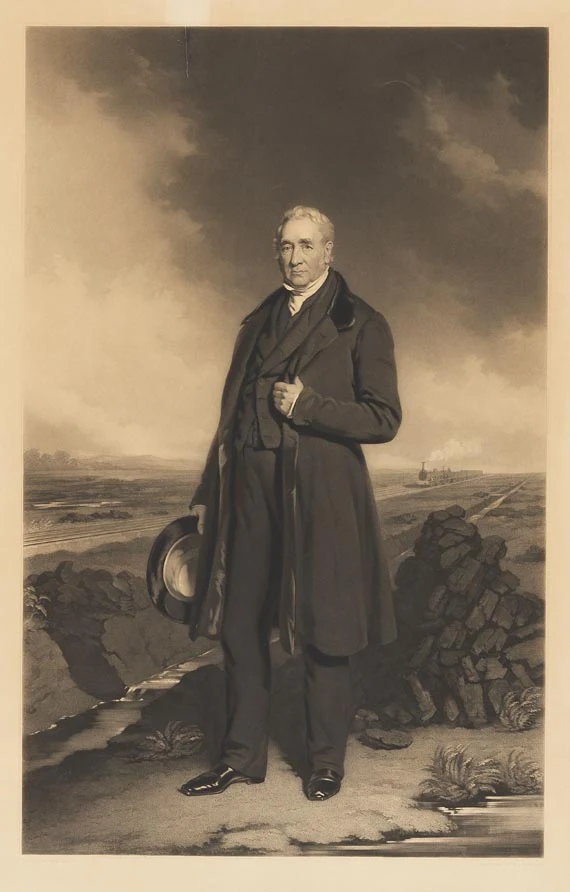
1781–1848
George Stephenson
Colliery engineer, railway engineer and locomotive manufacturerGeorge Stephenson moved from colliery work into engineering, locomotive manufacture and major railway construction. His work on the Stockton and Darlington and Liverpool and Manchester railways helped establish steam transport as a commercial system.Read biography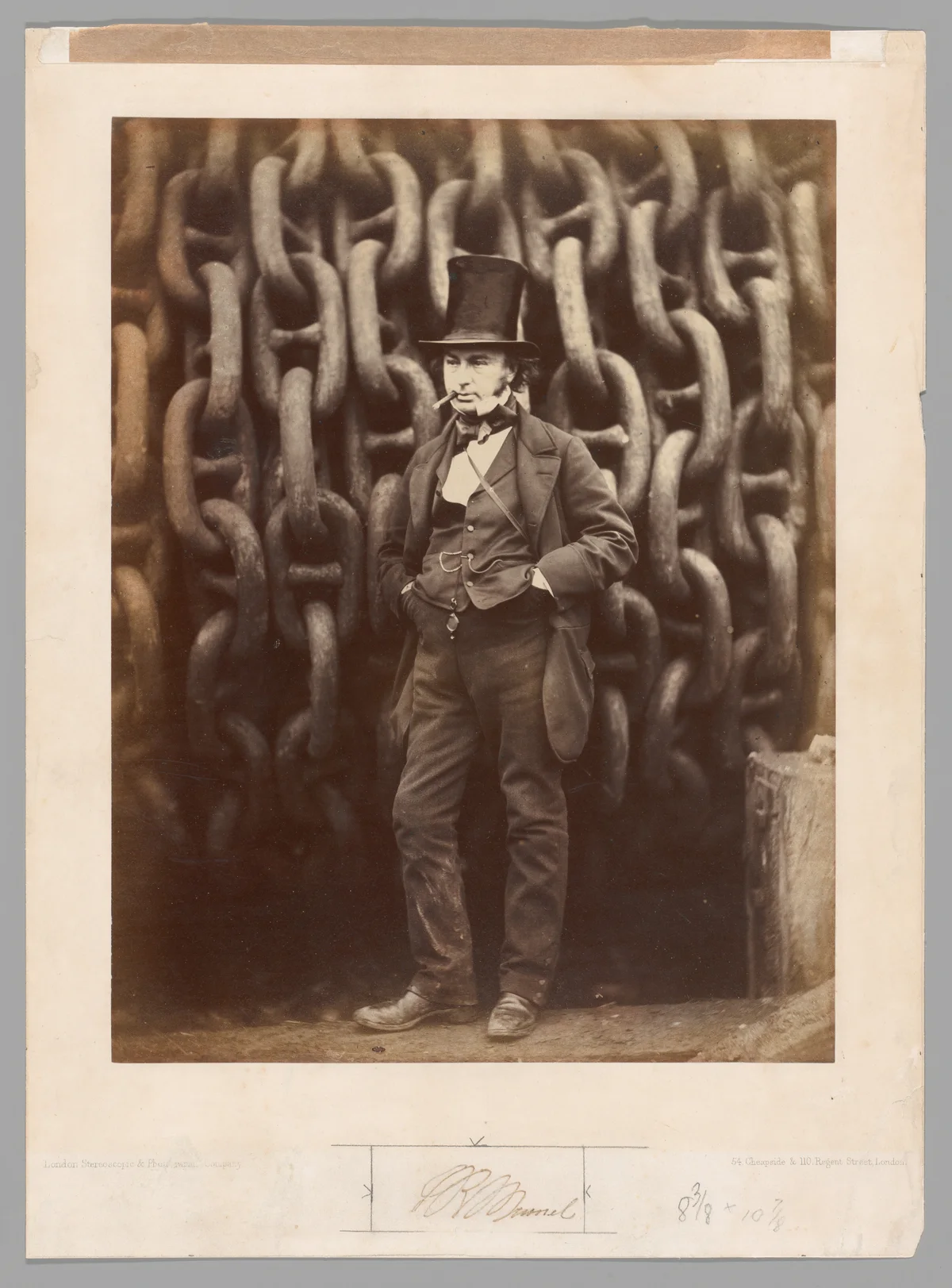
1806–1859
Isambard Kingdom Brunel
Consulting civil engineer for railway, bridge, dock and steamship enterprisesIsambard Kingdom Brunel ran an engineering practice serving railway and maritime companies. As the Great Western Railway’s engineer, he helped connect London and Bristol in 1841. His ships and structures combined technical ambition with financial risk and depended on investors, contractors and workers.Read biographyQuick answers
Common questions
- Was this the first railway of any kind?
- No. Earlier wagonways and railways existed. Its particular importance was as a steam-powered inter-urban railway designed for both passengers and goods.
- Who died at the opening?
- William Huskisson, MP for Liverpool, suffered fatal injuries when struck by Rocket on 15 September 1830.
- Did Liverpool Road close when passenger trains left?
- No. Passenger use ended in 1844, but the site continued to handle goods for many decades.
Primary and institutional sources
How this history was checked
The museum’s complete public railway account, published archive commentary, political interpretation and cotton-and-slavery project text were read. These are not a complete review of company share registers, accounts, construction records or every opening-day newspaper. Specific investor accusations are not inferred from an engineer’s association with the railway. This article was reviewed on 23 October 2026.
- Institution of Mechanical EngineersGeorge Stephenson was no stranger to controversy: routes, surveys and lamp debate
- Science and Industry MuseumThe making of the Liverpool and Manchester Railway: planning, Rainhill, stations and services
- Science and Industry Museum / Shirin Hirsch1830: A rebellious year — Huskisson, Wellington and political protest
- Science and Industry MuseumManchester, cotton and transatlantic slavery: railway investors and freight
- Science and Industry MuseumGlobal Threads: cotton, the port and the railway
- Science and Industry MuseumThe New Warehouse: Liverpool Road’s goods-station history
- Wikimedia Commons / Ketterer KunstGeorge Stephenson: complete 1849 Atkinson-after-Lucas engraving and public-domain record
- National Portrait GalleryThomas Lewis Atkinson, 1817–circa 1890: artist authority record
- Creative CommonsPublic Domain Mark 1.0