
The short answer
A village that has organised its life around familiar neighbours and passing trains discovers that neither can be taken for granted. Khushwant Singh’s novel makes Partition a crisis of local relationships and individual action. This guide discusses the ending and violence against civilians.
Chronology
A timeline of the turning points
Neighbours and the railway
Daily relationships initially appear more immediate than distant national politics.
Police power enters the plot
Arrests expose the distance between evidence, social status and official convenience.
Mass violence reaches the village
The railway brings the catastrophe of Partition into Mano Majra.
Neighbours become departing refugees
A train carrying Muslim passengers becomes the object of a retaliatory plot.
Publication
The novel appeared nine years after the events forming its historical setting.
Mano Majra is a constructed social world
The publisher introduces Mano Majra as a Punjab village where Sikh and Muslim neighbours have lived together. It is a fictional setting within the historical Partition of 1947. Its usefulness lies in the concentration of relationships: people who know one another must respond when communal categories begin to override familiarity.
Read the early village as a set of dependencies rather than an uncomplicated lost paradise. Religion, occupation, reputation and status already shape the way people are treated. Partition intensifies and reorganises those relationships. The novel’s invented village can make that process vivid without standing for every village, every refugee or every side of the historical catastrophe.
The railway changes from routine to threat
The train carrying murdered refugees makes distant violence physically present. A railway that connects the village to a larger world also carries evidence that the larger world has become dangerous. The central image is powerful because transport continues to function while the meaning of the journey changes.
The later train carries Muslim refugees towards Pakistan and becomes the target of a retaliatory attack. The direction matters: the narrative does not offer a single community permanently occupying the position of victim or perpetrator. It follows how the sight of one atrocity can be used to justify another against people who did not commit it.
Juggut, Iqbal and Hukum Chand occupy unequal positions
Juggut Singh, often called Jugga, is a local man with a criminal reputation and a relationship with Nooran, a Muslim woman. Iqbal is an educated political worker. Hukum Chand is the magistrate whose decisions connect the police and the machinery of government to the village’s crisis.
The teaching unit and critical review draw attention to unequal treatment in custody and to the manipulation of Iqbal’s identity. Education, respectability and official authority do not automatically produce moral clarity. Nor does a criminal label exhaust a person’s capacity to act. Keeping those distinctions visible prevents the three men from becoming simple representatives of wisdom, ignorance and order.
Official language can manufacture an identity
In the university teaching account, the authorities direct that Iqbal be identified as Mohammed Iqbal on an arrest warrant. A name becomes an administrative instrument: the record can place a person inside a communal category for the convenience of those exercising power.
This is different from saying the novel’s political worker transparently represents one religion or the author’s own opinions. The uncertainty surrounding him is part of the narrative. A useful reading asks who gets to define an identity, what consequences that definition has, and whether a written official account is supported by what the reader knows.
Sources for this section: [4]
The ending measures action against status
The publisher’s anthology synopsis places the possibility of averting the massacre with the socially discredited Sikh man who loves a Muslim woman. Juggut’s intervention at the railway bridge stops the planned attack at the cost of his life. The climax brings bodily risk into a story where other characters have explained, administered or debated the crisis.
His action should not make Nooran merely a prize for heroism, or imply that personal love repairs Partition. The rescue is a specific interruption of a specific atrocity. The critical review’s attention to the limited narrative space given to women offers a further question: whose suffering is explored inwardly, and whose life supplies the stakes for another person’s moral decision?
Publication, edition and history need different dates
Train to Pakistan was first published in 1956. The British national bibliography record identifies that year, while the Library of Congress recording project lists readings from a 1998 Oxford University Press edition. Penguin’s current product page describes another edition. None of those later edition dates changes the novel’s first-publication year.
This guide combines publisher synopses, selected indexed passages from a university teaching unit and a critical review. It does not claim a complete new reading of the novel or use its dialogue as documentary testimony. For a focused reading, compare the treatment of the two arrested men, the arrival of the corpse train and the bridge ending; then separate the narrator’s judgments from the claims made by officials and characters.
Continue the chronology
Related history guides
Firaaq: living after communal violence
Compare another fictional treatment of neighbours, identity and the consequences of collective violence.
Read the timeline1987Ijaazat: another railway encounter
Explore a different use of trains and a waiting room in an intimate relationship drama.
Read the timelineBiography context
Explore Punjab, Indian subcontinent through connected lives
Connected biographies
The novelist and journalist beyond Mano Majra
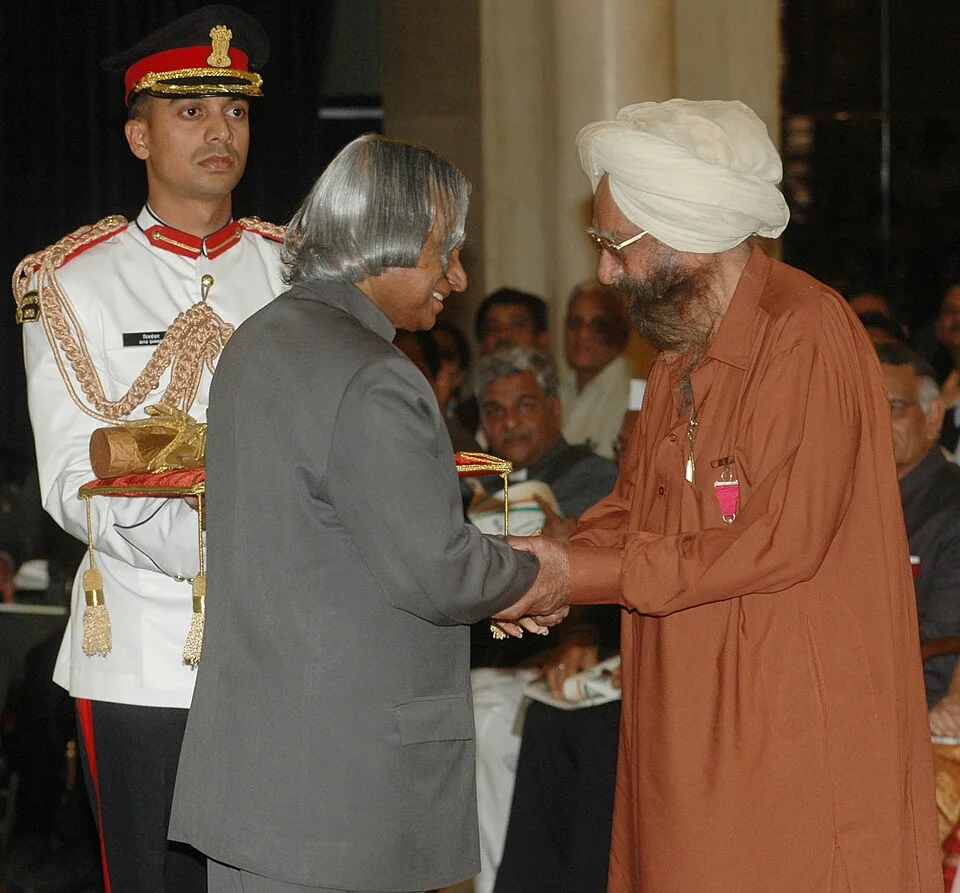
1915–2014
Khushwant Singh
Novelist, journalist, historian and parliamentarianKhushwant Singh moved from law and diplomatic work into fiction, Sikh history and combative journalism, carrying Partition into his public writing.Read biographyQuick answers
Common questions
- Is Mano Majra a real village?
- It is a fictional Punjab village used to concentrate relationships and choices during the historical Partition of 1947.
- When was Train to Pakistan first published?
- 1956. The 1947 date belongs to the setting; later Oxford and Penguin edition dates do not replace the first-publication year.
- Why does Juggut Singh matter to the ending?
- The man treated as a criminal acts to stop a planned attack on Muslim refugees. His sacrifice challenges the assumption that education or official status guarantees moral courage.
Primary and institutional sources
How this history was checked
Publisher descriptions establish the setting and central relationship; selected university teaching passages and named criticism support the character and power analysis. No complete new reading, extended quotation or reproduction of book-cover art is claimed. This article was reviewed on 23 October 2026.
- Grove AtlanticTrain to Pakistan: 1956 publication and authorised synopsis
- Penguin Random House IndiaTrain to Pakistan: setting and later edition
- Penguin Random House IndiaMemories of Madness: central rescue and Partition context
- Lovely Professional UniversityIndian Writing in English, Unit 6: identities, arrests and official power
- Textualities / Undergraduate Digital ReviewsTrain to Pakistan and the Voice of Hypocrisy: status and gender
- Open British National BibliographyChatto & Windus 1956 bibliographic record
- Library of CongressRecorded readings from a 1998 edition
- President’s Secretariat / PIB via Wikimedia CommonsLater author photograph: exact record
- Press Information BureauPermission for accurate credited reproduction