
The short answer
Imagine is often remembered through one song and one piano performance. The 1971 album contains a wider range of voices and moods: affection, insecurity, political frustration and personal hostility. This guide distinguishes the original album, its title song, the single and later reissues, then suggests ways to hear those differences without treating a record as an unfiltered diary.
Chronology
A timeline of the turning points
Title-song demo
The official Ultimate Collection notes date the demo four days before the master recording.
Ascot recording
Sessions at Lennon and Ono’s home studio developed the album; the title-song master was recorded on 27 May.
New York overdubs
The Flux Fiddlers added strings at the Record Plant, with orchestrations by Torrie Zito.
US album
Imagine appeared in the United States as an album before the title song’s single release.
Two different releases
The UK album appeared on 8 October; the US title-song single followed on 11 October, backed with It’s So Hard.
An album, a song and a single have different dates
Imagine opens the ten-track album of the same name, but the song’s presence on an LP and its release as a single are different events. The album appeared in the United States on 9 September 1971 and in the United Kingdom on 8 October. The US single followed on 11 October, with It’s So Hard on the other side. One date cannot accurately stand for all three releases.
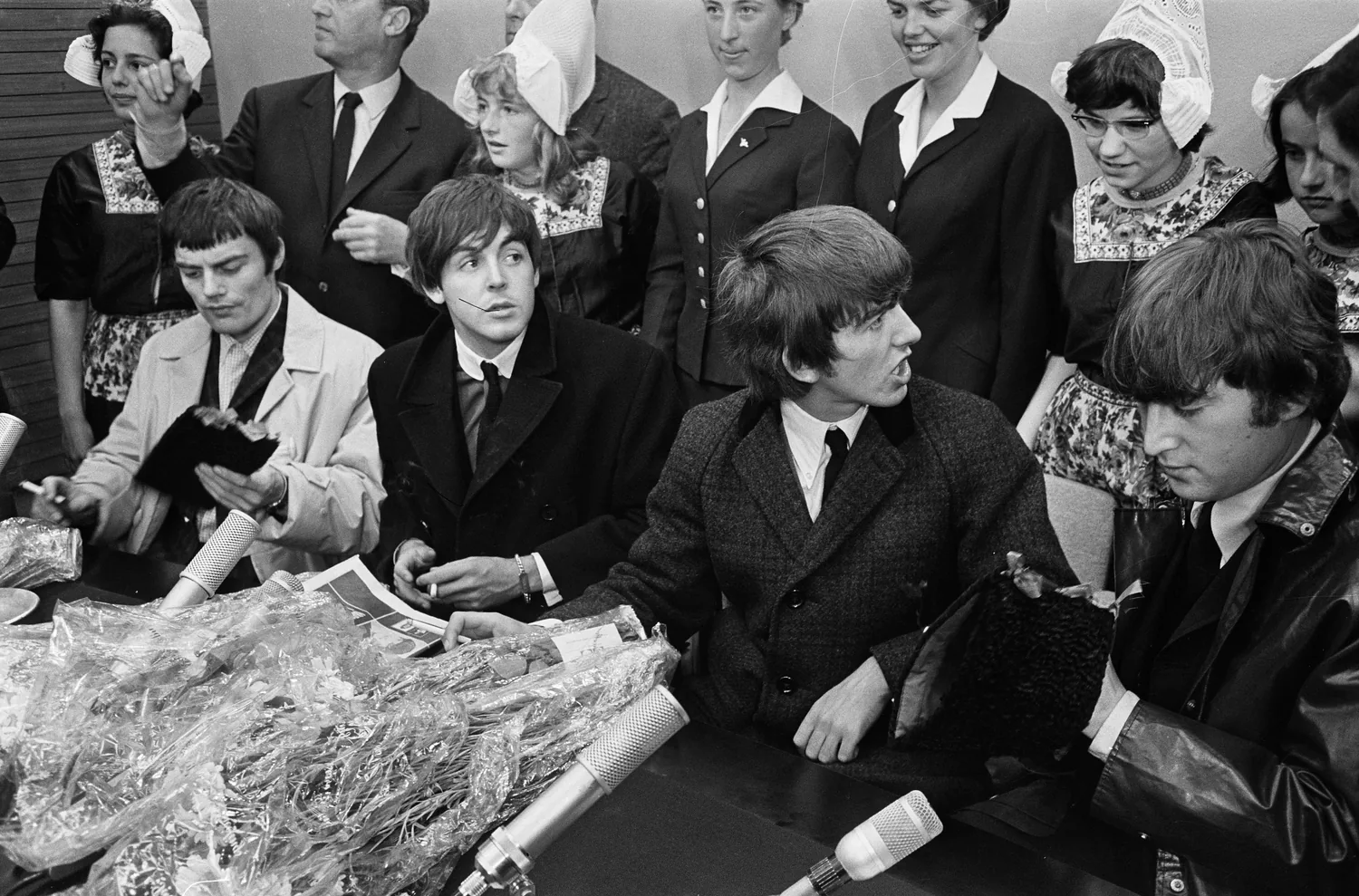
Packaging creates another possible confusion. The official single page warns that the picture sleeve it displays belongs to the later 1975 release promoting Shaved Fish, rather than the original plain-sleeved 1971 single. The accompanying photograph here is earlier still: Harry Pot made it in 1964 at Schiphol. It establishes the subject’s identity and an earlier public context, not what happened in the Imagine studio.
Follow the recording from a room to an arrangement
The title song’s home-studio recording developed in May 1971 with Lennon at the piano, Klaus Voormann on bass and Alan White on drums. The official reissue notes date a demo to 23 May and identify it as four days before the master. July string overdubs in New York added another layer, played by the Flux Fiddlers from Torrie Zito’s score. The filmed white-piano image should not be assumed to document every sound on the finished record.
Across the album, Harrison’s guitar, Nicky Hopkins’s keyboards and the different rhythm players contribute recognisable textures. Hearing an apparent personal confession therefore also means hearing organised collective work. A useful listening question is what the arrangement adds: does it cushion an uncertain voice, sharpen an accusation or give a private feeling a public scale? The intimacy is a musical achievement, not evidence that no mediation occurred.
Read the credits as part of the work
The production credit names John Lennon, Yoko Ono and Phil Spector. The official catalogue now credits Lennon and Ono together for Imagine and Oh My Love, and identifies Ono’s contribution to the cover concept and photography. Lennon later acknowledged the title song’s debt to her book Grapefruit and to her ideas. That retrospective admission matters, because a familiar solo-artist name on a record can hide the people involved in making it.
Keep composition, performance, orchestration, production and artwork distinct while considering how they interact. Recognising Ono’s role does not require assigning every instrumental choice to her; recognising Lennon’s performance does not make him the sole author of the complete object. These are historical creative credits. They are not a claim about the present ownership, licensing terms or availability of the recordings for reuse.
Let the other tracks complicate the opening promise
The peaceful invitation of the opening song does not describe the emotional temperature of the entire album. Jealous Guy presents vulnerability and apology; Gimme Some Truth presses outward towards public dishonesty. How Do You Sleep? brings hostility into the same sequence that includes Oh My Love and the exuberance of Oh Yoko! A productive reading asks what it means to place those impulses together, rather than selecting only the agreeable ones.
These contrasts also limit biographical shortcuts. A song’s speaker is a shaped performance, while the order, accompaniment and recording give the words their setting. The album can suggest a mind arguing with itself without supplying a complete account of every relationship. Listening for changes between tracks restores the original sequence’s complexity and helps explain why the famous title song has never been an adequate substitute for the whole record.
Choose the version before comparing the sound
The 2018 Ultimate Collection distinguishes remixes, original quadrasonic mixes, outtakes, isolated elements and raw studio mixes. These are different presentations of the material. A part made prominent in a later remix may have been present but less audible in the original release; an outtake is not automatically a missing track from the 1971 album. Identify the edition and mix before deciding what a difference proves.
The reissue’s producers describe their use of original multitracks and their decisions about vocal and instrumental clarity. Their account is useful evidence about that reissue, rather than a neutral replacement for the 1971 listening experience. This guide reads the published notes and selected historical evidence; it does not claim access to the master tapes, a complete session-by-session audit or a technical comparison of every release.
Sources for this section: [3]
Biography context
Explore United Kingdom through connected lives
Connected biographies
The musician behind the album
1940–1980
John Lennon
Singer, songwriter, musician, writer and peace campaignerJohn Lennon was an English musician whose work with the Beatles and as a solo artist ranged from rock and experimental recording to intimate songs and public peace campaigns.Read biographyQuick answers
Common questions
- When was the Imagine album released?
- The original album appeared on 9 September 1971 in the United States and 8 October 1971 in the United Kingdom. The US single of the title song followed on 11 October.
- Who produced Imagine?
- John Lennon, Yoko Ono and Phil Spector receive the production credit. The album also depended on its instrumentalists, engineers and string orchestrator Torrie Zito.
- Did Yoko Ono help create Imagine?
- Yes. The official catalogue credits her as co-writer of the title song and Oh My Love, as co-producer and for visual contributions. Lennon acknowledged the title song’s debt to Grapefruit and her ideas.
Primary and institutional sources
How this history was checked
Read limits: official album and single metadata, selected 2018 reissue notes and Kenneth Womack’s Registry essay were read. The older album page’s broad June–July session summary conflicts with the same estate’s dated May reissue material; the latter and the Registry essay support the May account here. No master tapes or complete session archive were examined. No lyrics are reproduced. This article was reviewed on 23 October 2026.
- John Lennon official websiteImagine: album sequence, credits and US/UK release dates
- John Lennon official websiteImagine single: 11 October 1971 release and later sleeve warning
- John Lennon official websiteImagine — The Ultimate Collection: selected dated session and mixing notes
- Library of Congress / Kenneth WomackImagine: National Recording Registry guest essay, 2023
- John Lennon official websiteAbout: retrospective discussion of contrasting songs
- Nationaal ArchiefAnefo 916-5130: photograph identity, date and CC0 release