
The short answer
British withdrawal left a second territorial problem alongside partition: the relationship of hundreds of princely states with the new Dominions. Negotiated accession, administrative merger and military intervention were different processes, with consequences that varied sharply between states.
Chronology
A timeline of the turning points
Accession negotiations
The States Department worked to establish relations with rulers before British paramountcy lapsed.
British rule ended
The constitutional future of some states remained unresolved.
Kashmir and Junagadh crises
Accession amid war in Kashmir differed from the Indian takeover in Junagadh.
Junagadh referendum
A vote under Indian administration overwhelmingly supported India.
Army entered Hyderabad
Military defeat ended the Nizam’s attempt to maintain a separate position.
Constitutional integration
Unions, mergers and special arrangements were incorporated into the republican framework.
Accession was not the same as administrative merger
Princely states had existed alongside directly administered British provinces under a system of British paramountcy. Its disappearance did not automatically turn every state into an ordinary province of India. The new government had to establish constitutional relations and then determine how territories, revenues and administrations would operate.
Initial accession commonly concerned defence, external affairs and communications. Subsequent agreements could merge a state with a province or create a union of states. These stages mattered because a signature accepting limited central authority was different from surrendering a ruler’s separate administration. Describing everything as a single annexation obscures the varied mechanisms and chronology.
Patel’s leadership depended on collective institutions
Vallabhbhai Patel, minister responsible for states and independent India’s deputy prime minister and home minister, played a major role. V. P. Menon and the States Department handled detailed negotiation and administration. Nehru’s government, rulers, officials and political movements within the states also shaped what could be agreed or imposed.
The government’s White Paper celebrated the territorial changes as a national achievement. As an official retrospective it also defended the policy it described. That makes it valuable for agreements and institutional stages, but insufficient as the sole account of consent or popular experience. Patel’s importance can be recognised without crediting one person with independently assembling the entire country.
Junagadh combined a disputed choice with a later referendum
Junagadh’s ruler chose accession to Pakistan despite its geographical position and a predominantly Hindu population. The resulting crisis involved pressure, a breakdown of administration and the ruler’s departure. The White Paper records that India took over administration on 9 November 1947 at the request of the Nawab’s council.
The referendum of February 1948 overwhelmingly favoured India, but it occurred after that takeover. Sequence matters: the vote was part of the process of legitimising an existing Indian administration, not the first step taken in an untouched political environment. The state’s administration passed to Saurashtra in January 1949, another stage beyond the immediate accession dispute.
Hyderabad cannot be described as a wholly voluntary settlement
The Nizam of Hyderabad sought to maintain a separate position after 1947. A standstill agreement temporarily preserved relations, while internal conflict, armed mobilisation and competing political demands intensified. In September 1948 the Indian army invaded in the operation officially called a police action. Military defeat ended the Nizam’s resistance.
The episode also involved grave communal violence, including attacks on Muslims during and after the intervention. Scholarship drawing on the Sunderlal investigation challenges a celebratory account concerned only with territorial unity. The 1950 White Paper describes the later constitutional relationship, but that administrative formulation does not capture the violence experienced by civilians. Integration and the protection of people must therefore be assessed separately.
Jammu and Kashmir followed a distinct and contested course
Jammu and Kashmir’s accession in October 1947 took place amid armed invasion, internal upheaval and the beginning of war between India and Pakistan. It was not a repetition of the Junagadh referendum or Hyderabad military takeover. The 1950 White Paper states the Indian government’s legal position and records its commitment that the people would confirm the state’s political future.
The republican settlement included special constitutional arrangements rather than complete uniformity. Those historical provisions demonstrate that integration did not mean every territory immediately received identical institutions. The White Paper represents the Indian government’s claim, not an agreed settlement of the international dispute. This guide stops with the formation period and does not convert the 1950 text into a statement of current law.
Sources for this section: [4]
A new map did not complete political belonging
By 1950 mergers, state unions and constitutional arrangements had greatly transformed the political map. Further territorial reorganisation would follow. Counting states or agreements alone cannot measure whether residents gained security, accountable government or equal citizenship. Local political movements and the consequences of coercion remain part of the history.
The broader setting was the violence and displacement surrounding partition. The central government’s drive for territorial stability existed alongside the obligation to protect minorities and refugees. Distinguishing accession, merger, war and constitutional adaptation gives a clearer account of what was achieved—and why the experience cannot be reduced to every ruler freely signing the same document on independence day.
Continue the chronology
Related history guides
Biography context
Explore India through connected lives
Connected biographies
Government and constitutional responsibility
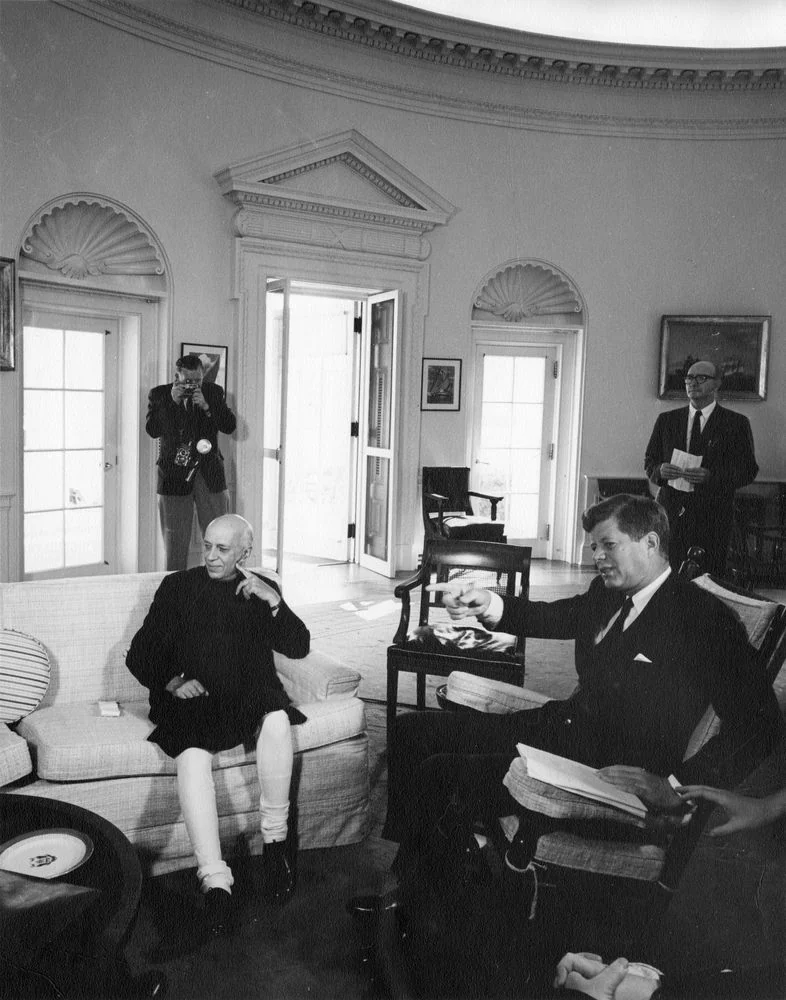
1889–1964
Jawaharlal Nehru
Independence leader and India’s first prime ministerJawaharlal Nehru moved from an English education and legal training into Congress organising, imprisonment and the leadership of independent India. His premiership joined democratic institution building and economic planning to difficult decisions over partition, security and foreign policy.Read biography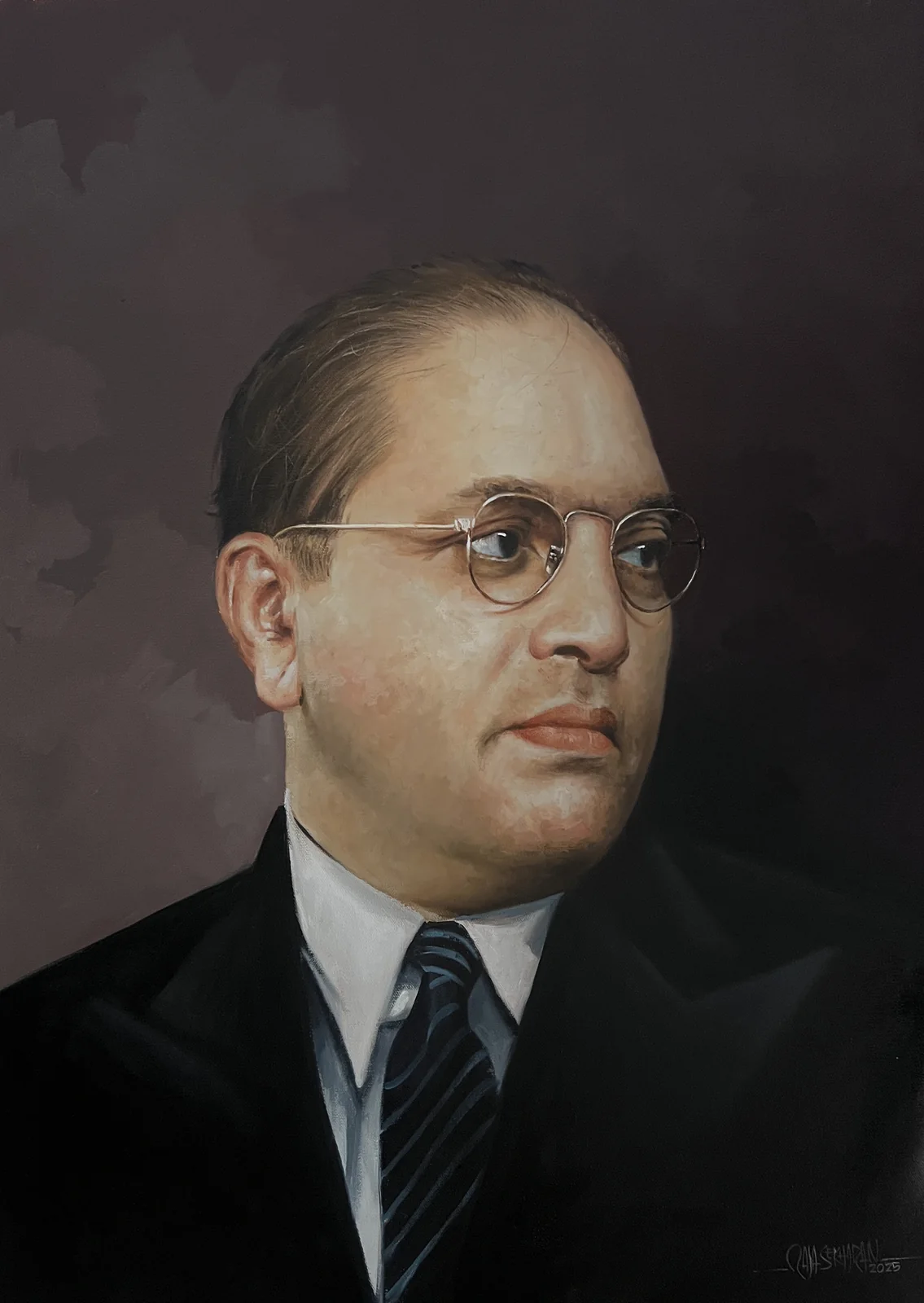
1891–1956
B. R. Ambedkar
Anti-caste leader, economist, jurist and law ministerBhimrao Ramji Ambedkar combined scholarship, anti-caste organising and constitutional politics. India’s first law minister and chair of its Drafting Committee, he argued that political democracy could not endure without social and economic equality.Read biographyQuick answers
Common questions
- Did Patel integrate the states alone?
- No. His leadership was central, but Menon, the States Department, the cabinet, rulers, officials and political movements within the states all contributed.
- Were all accessions voluntary and peaceful?
- No. Many were negotiated, but pressure and force mattered in important cases. Hyderabad’s military takeover and associated communal violence cannot be described as a wholly voluntary arrangement.
- Why distinguish Junagadh, Hyderabad and Kashmir?
- Their rulers’ choices, military circumstances, public participation and constitutional outcomes differed. Treating them as interchangeable erases the evidence of each case.
- Did integration end in 1950?
- The republican Constitution established a major settlement, but later reorganisation and political disputes continued. This guide covers the formation period rather than every subsequent change.
Primary and institutional sources
How this history was checked
Selected White Paper foreword and paragraphs 221–223 were read as individual transcriptions, not the full 409-page volume. They document the Indian government’s account and legal claims. The Hyderabad publisher’s preview supplies scholarly evidence of coercion and communal violence; it is not a claim to have read the entire book or the full Sunderlal archive. Kashmir’s 1950 arrangements are described historically. This article was reviewed on 23 October 2026.
- Ministry of States, Government of India / Wikisource transcriptionWhite Paper on Indian States, 1950: foreword to the first edition
- Ministry of States, Government of India / Wikisource transcriptionWhite Paper, paragraph 222: constitutional relationship with Hyderabad
- Ministry of States, Government of India / Wikisource transcriptionWhite Paper, paragraph 223: Junagadh and Saurashtra
- Ministry of States, Government of India / Wikisource transcriptionWhite Paper, paragraph 221 and 1950 order: Jammu and Kashmir
- Centre for Law and Policy ResearchSardar Vallabhbhai Patel: biography and constitutional committees
- Constituent Assembly of India / Centre for Law and Policy Research26 May 1949: minority representation debate and Patel’s reply
- Cambridge University PressRemaking History: 1948 Police Action and the Muslims of Hyderabad; publisher’s preview
- Abbie Rowe / Wikimedia CommonsNehru and Kennedy in the Oval Office, 7 November 1961: exact file and rights
- US National Park ServiceAbbie Rowe: federal employment and presidential photographic duties, 1941–1967
- US Code / Cornell Legal Information Institute17 USC 105: United States Government works
- Creative CommonsPublic Domain Mark 1.0