
The short answer
Indian women’s voting rights emerged through collective campaigning and a decisive constitutional change. Limited colonial enfranchisement, independence in 1947 and universal adult suffrage under the 1950 Constitution were separate milestones.
Chronology
A timeline of the turning points
Women demanded political inclusion
A deputation associated with Sarojini Naidu and Margaret Cousins pressed the franchise question.
Campaigners lobbied in Britain
Naidu, Herabai Tata and Mithan Tata challenged exclusion during constitutional reform.
Provinces enfranchised limited groups
Qualifications such as property ownership excluded most women.
New reforms widened the electorate
Literacy and family-status qualifications expanded access without establishing adult suffrage.
Constitutional principle adopted and commenced
The Assembly adopted adult suffrage; the Constitution came into force on 26 January 1950.
First general election
Electoral registration and polling implemented the constitutional commitment on a national scale.
The 1917 demand concerned who counted as a political person
As British officials prepared constitutional reforms, women campaigners challenged the assumption that representation belonged to men. A deputation led by Sarojini Naidu pressed the claim before Edwin Montagu in 1917. Margaret Cousins and the Women’s Indian Association helped organise a wider movement around political inclusion.
This was not the moment every Indian woman acquired a vote. It was a demand made within a colonial system that also restricted men’s political participation. Campaigners challenged a bar based on sex while debating the qualifications attached to the franchise. Their organisational work, correspondence and lobbying mattered alongside the public prominence of an individual speaker.
Provincial concessions created rights for a small minority
Campaigners including Naidu, Herabai Tata and Mithan Tata went to Britain in 1919 to argue against exclusion. Constitutional reform left provinces room to enfranchise women. From 1921 provincial changes admitted some women on qualifications connected to property and other conditions, rather than creating a single universal national electorate.
Formal eligibility therefore depended on resources distributed unequally across society. Women with little property, limited schooling or restricted legal independence could remain outside the electorate. Caste and class shaped access to those resources even when a rule did not explicitly name caste. The removal of one sex-based barrier was significant, but it did not make political citizenship equally available to all women.
The 1935 reforms expanded access without ending exclusion
The Government of India Act of 1935 enlarged the electorate, including through literacy and qualifications linked to the status of wives and widows of male voters. The resulting system remained far from universal adult suffrage. The Supreme Court’s later historical discussion describes property, tax and residence conditions and the limited reach of the colonial franchise.
Women’s organisations did not hold one identical strategy throughout. Some favoured wider qualifications as an intermediate step; others insisted on full adult franchise. Campaigners such as Rajkumari Amrit Kaur, Muthulakshmi Reddi and Shareefah Hamid Ali pressed the broader demand. This disagreement was about the pace and basis of inclusion, not whether women were merely waiting passively for a concession.
Independence and universal adult suffrage were different stages
The end of British rule in August 1947 created the political setting for a new constitutional settlement. It did not mean that a republican constitution had already commenced. The Constituent Assembly adopted the adult-suffrage provision in June 1949, and the Constitution took effect on 26 January 1950.
The original Article 326 established adult suffrage for elections to the House of the People and state legislative assemblies, with the voting age then twenty-one. It retained specified legal disqualifications but did not impose the colonial property or educational qualification. This was a decisive change in the basis of the electorate. The later reduction to eighteen should not be read backwards into the first republican elections.
Sources for this section: [5]
The first election required more than declaring a principle
The 1951–1952 general election turned a constitutional entitlement into registration lists, polling places and ballots. Social expectations could still obstruct participation. Reporting based on the first election’s official account describes women registered by their relationship to men rather than their own names, and the exclusion of millions of such entries when proper names were not supplied.
That experience illustrates a gap between equal entitlement and the administrative conditions of exercising it. Literacy, mobility, household authority and the ability to identify oneself publicly could affect participation even after property qualifications disappeared. Recognising those barriers does not deny the scale of the constitutional achievement; it explains why organising around the vote continued after 1950.
Naidu’s role belongs inside a collective, unfinished history
Naidu’s speeches, international work and Congress leadership helped carry the suffrage claim into nationalist politics. Yet women’s organisations, provincial campaigners and constitutional participants all contributed. She died in March 1949, before the Constitution came into force, and did not personally witness the first general election under adult suffrage.
The history also resists a simple progression from no rights to complete equality. Limited provincial votes, universal legal entitlement and effective participation answer different questions. A woman could possess a vote while confronting caste discrimination, economic dependence or barriers to office. The collective achievement of adult suffrage becomes clearer when those distinctions are retained, rather than attributing the vote to a single leader or treating it as the end of women’s politics.
Biography context
Explore India through connected lives
Connected biographies
Political equality and the people who argued for it

1879–1949
Sarojini Naidu
Poet, suffrage campaigner and independence organiserSarojini Naidu combined a recognised literary career with public speaking, women’s suffrage campaigns and mass nationalist politics. The first Indian woman to preside over Congress, she became governor of the United Provinces after independence in 1947.Read biography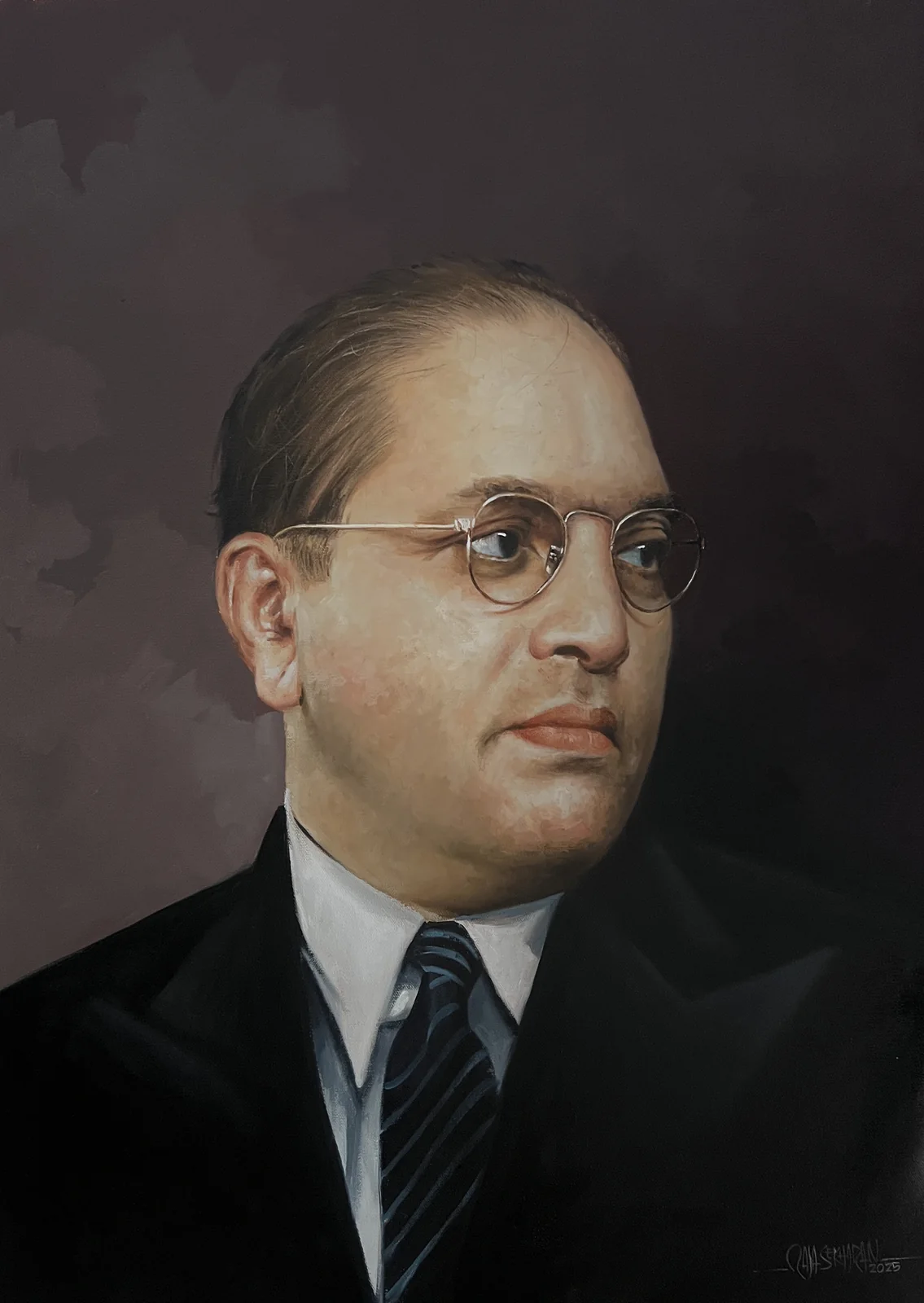
1891–1956
B. R. Ambedkar
Anti-caste leader, economist, jurist and law ministerBhimrao Ramji Ambedkar combined scholarship, anti-caste organising and constitutional politics. India’s first law minister and chair of its Drafting Committee, he argued that political democracy could not endure without social and economic equality.Read biographyQuick answers
Common questions
- Did all Indian women get the vote in 1917?
- No. Organised demands in 1917 were followed by limited provincial enfranchisement. Most women remained excluded by qualifications and social conditions.
- Did the 1935 Act establish universal suffrage?
- No. It widened voting rights but retained restrictive qualifications. Universal adult suffrage belonged to the later republican settlement.
- Was the original voting age eighteen?
- No. Article 326 originally used twenty-one. The age was reduced later, so eighteen should not be used to describe the first general election.
- Did Sarojini Naidu secure the vote alone?
- No. She was a prominent participant in networks of campaigners and organisations. She died before the Constitution commenced and before the 1951–1952 election.
Primary and institutional sources
How this history was checked
This guide combines a historian’s account of campaign networks, a constitutional transcript and selected historical passages in a later Supreme Court judgment. The Fawcett article compresses independence and full suffrage at its conclusion; the guide separates 1947, 1950 and 1951–1952 using the original Article 326. Sources differ on the month of the 1917 deputation, so the year is used. The first-election registration account is secondary reporting, not a claim to have read the entire election report. This article was reviewed on 23 October 2026.
- Centre for Law and Policy ResearchSarojini Naidu: life and constituent work
- Uttar Pradesh Legislative AssemblyFormer governors: Sarojini Naidu’s tenure
- Sumita Mukherjee / The Fawcett SocietyIndian suffrage campaigners and how women won the vote in India
- Supreme Court of IndiaJudgment of 17 October 2024: paragraphs 324–326 on the historical franchise
- Constitution of India / Centre for Law and Policy ResearchArticle 326: original 1950 wording and drafting history
- Adrija Roychowdhury / The Indian ExpressFrom 1951–2019: women voters and electoral participation
- John Butler Yeats / Wikimedia CommonsSarojini Naidu, 1896: file history, including original 2014 scan revision
- University of California Libraries / Internet ArchiveThe Golden Threshold, 1916 New York and London edition: publication and scan record
- Royal Irish Academy, Dictionary of Irish BiographyJohn Butler Yeats: artist and death in 1922
- Creative CommonsPublic Domain Mark 1.0