
The short answer
The Heart of Redness connects a village’s contemporary future with a divided understanding of its past. The reader’s task is not simply to choose tradition over progress, but to examine who defines development, whose knowledge counts and how a novelist uses historical writing.
Chronology
A timeline of the turning points
Historical background
The Xhosa cattle-killing movement supplies part of the novel’s historical material.
The novel appears
Historical and contemporary strands enter one fictional narrative.
Recognition and a paperback
A Fiction award and the cited US paperback belong to separate records.
Authorship dispute
Offenburger and Mda disagree about borrowing and acknowledgement.
A returning outsider enters a community with its own history
Camagu returns from America and makes his way to Qolorha in the Eastern Cape. The publisher’s account connects his arrival with family divisions and a disputed development proposal. He is a participant in a setting already shaped by other people’s relationships, not the source of its entire history.
The novel moves between a nineteenth-century rupture and a contemporary struggle over the village’s future. The official 2014 literary citation recognises this interplay of history and myth. That description does not convert each fictional conversation into a recoverable historical statement.
The cattle-killing past is interpreted rather than simply replayed
The historical strand draws on the Xhosa cattle-killing movement associated with Nongqawuse. In the publisher’s summary, the division between Believers and Unbelievers continues to matter to descendants. The narrative asks how an inherited division can organise later choices.
A novel can put different times in conversation without supplying a complete causal history of colonial dispossession. Readers seeking that history should distinguish Mda’s imaginative narrative from the historians whose research it uses. The story’s structure is not evidence that every present dispute has one unchanged nineteenth-century cause.
Development is a struggle over benefits, knowledge and control
Jason D. Price’s critical discussion follows Camagu and Qukezwa’s resistance to a gambling and tourist development. It emphasises an alternative attentive to the local community and environment, rather than treating outside investment as automatically beneficial.
Price also considers how indigenous knowledge can challenge a narrow account of nature as a collection of usable resources. This is an interpretation of the fiction, not an independently measured economic forecast. It makes the useful question who controls change and who bears its costs, rather than whether a village must choose between all change and none.
Sources for this section: [8]
The borrowing debate must include both accusation and response
Offenburger argued in 2008 that Mda’s use of Peires’s The Dead Will Arise went beyond adequately acknowledged influence. Mda disputed that judgment, identifying his acknowledgement and treating the work as an intertextual novel rather than a history textbook.
The disagreement concerns the handling of existing language and narrative as well as historical facts. These sources establish a literary controversy, not a legal ruling. This guide does not claim to have compared both complete books or to decide the charge by counting a few quoted examples.
Edition dates and honours should not settle a reading in advance
South African publication in 2000, later US editions and the 2003 Hurston/Wright Fiction award are separate events. The cited Picador paperback’s August 2003 date belongs to that edition, not the first appearance of the novel.
Recognition can invite readers into the book without deciding its account of development or resolving the authorship dispute. Reading the record carefully means keeping awards, criticism, a publisher’s description and historical research in their proper roles rather than requiring one of them to stand for all the others.
Biography context
Explore South Africa through connected lives
Zakes Mda
Place the novel within theatre, exile and a longer writing career.
Explore the biographiesCompare narrative questionsWays of Dying
Read about mourning, community and political transition in another novel.
Explore the biographiesDocumented land legislationThe Glen Grey Act
Keep a specific colonial statute and its consequences distinct from literary invention.
Explore the biographiesConnected biographies
The author and the source controversy
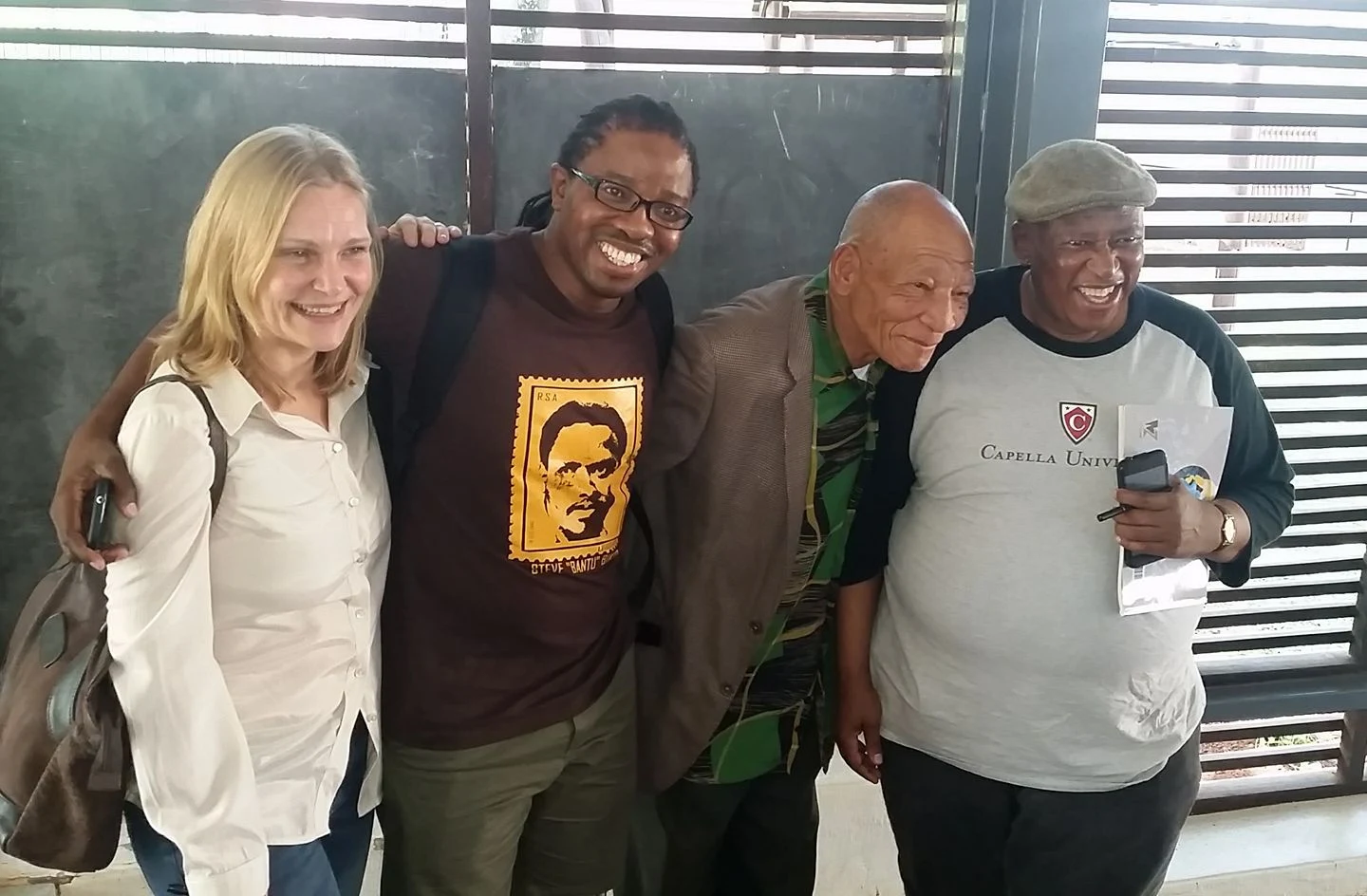
1948–
Zakes Mda
Novelist, playwright, painter and teacherZakes Mda developed as a writer through exile, teaching and theatre before his novels reached a broad international readership. His work places ordinary people within histories of violence, belief and social change, combining comic invention with questions about power and belonging.Read biographyQuick answers
Common questions
- Is The Heart of Redness simply a history textbook?
- No. It combines historical material and invented narrative; its use of sources has also been debated.
- Who is Camagu?
- A returning expatriate drawn into the contemporary life and development disputes of Qolorha.
- Does the development debate mean all change is rejected?
- The cited critical reading distinguishes competing forms of development and their effects on community and environment.
- When did it win the Hurston/Wright Fiction award?
- 2003, according to the Foundation’s winners table, not its 2000 first-publication year.
Primary and institutional sources
How this history was checked
Selected publisher description, excerpt and edition fields; official citation and award table; Price’s indexed development passage, not the full chapter. Offenburger’s opinion and Mda’s indexed response are attributed; no complete-book comparison is claimed. This article was reviewed on 24 October 2026.
- South African History OnlineZanemvula Kizito Mda — selected early life, exile and writing chronology
- The Presidency, South Africa2014 National Orders booklet — Mda citation, PDF page 21
- Picador / MacmillanThe Heart of Redness — book description and 2003 paperback metadata
- Hurston/Wright FoundationLegacy winners table — 2003 Fiction award
- Andrew Offenburger / Mail & Guardian11 November 2008 — attributed authorship criticism and account of the reply
- Zakes Mda / Research in African Literatures, indexed via ResearchGate2008 response to Offenburger — selected acknowledgement statement
- Nutmegreader / Wikimedia CommonsExact named group photograph — author self-licence and full supplied frame
- Jason D. Price / Animals and Desire in South African Fiction2017 — selected development passage from Desire and the Law, indexed through PMC