
The short answer
On 26 July 1948, Harry S. Truman declared equal treatment and opportunity to be presidential policy for the armed services. Executive Order 9981 supplied authority and an investigative mechanism, not an instant transformation of every unit. Understanding its impact requires following civil rights pressure, service regulations and the decisions that turned a directive into changed assignments.
Separate the policy from its results
Four stages of a military transformation
A signature, an investigation, a regulation and a changed unit are different kinds of evidence.
| Stage | What changed | What it does not prove |
|---|---|---|
| 1948 order | Presidential equality policy and committee authority | That every unit was integrated on signing day |
| Committee inquiry | Investigation, negotiation and recommendations | That every recommendation was already routine practice |
| Service regulations | Rules on schooling, enlistment and assignments | That every command had completed reorganization |
| Unit integration | Personnel served and lived in integrated formations | That all racial discrimination in or beyond the military had ended |
Chronology
A timeline of the turning points
Equality became presidential military policy
Executive Order 9981 declared equal treatment and opportunity and authorized an advisory committee; separate Order 9980 addressed federal civilian employment.
Fahy Committee membership announced
The White House named the committee chaired by Charles Fahy to examine rules and work with the military departments.
Air Force announced a new racial policy
The service moved toward merit-based assignments and the dissolution of segregated units; the transition continued into 1950.
Army assignment rules changed
An approved policy opened assignment beyond segregated units according to individual qualifications, with integrated living arrangements in mixed units.
Freedom to Serve reported policy changes
The committee submitted its report on accepted measures, while acknowledging that service programs were still being carried out.
Unit integration expanded
The Korean War accelerated integrated Army assignments; a December 1952 worldwide directive followed, and the last all-Black unit was abolished in 1954.
Wartime service made the demand for equality harder to ignore
Black Americans served in World War II while confronting segregated units and restricted opportunities at home. The Double V campaign linked victory against fascism abroad to victory against racism in the United States. Roosevelt’s 1941 Executive Order 8802 addressed discrimination in defense employment, but it did not itself integrate the armed forces. The distinction left military segregation an urgent postwar issue.
Pressure continued through organizations and threatened resistance to the draft. In 1948, A. Philip Randolph and other Black leaders demanded an end to segregated military service. The Truman Library chronology records Randolph’s June warning that Black youth would resist conscription without executive action. Truman’s decision therefore emerged within sustained organizing, debates over military personnel and electoral politics, rather than from presidential initiative alone.
The order set a standard but left implementation work ahead
Signed on 26 July 1948, Executive Order 9981 declared equal treatment and opportunity without discrimination based on race, color, religion or national origin. Truman invoked presidential and commander-in-chief authority. The text directed rapid implementation while allowing time for necessary changes and consideration of military efficiency and morale. It did not prescribe a single date on which every segregated unit would disappear.
The order also authorized a seven-member advisory committee. It could examine service rules, procedures and practices, confer with defense officials and recommend changes. Federal agencies had to cooperate and supply information. This mechanism mattered because a general declaration could otherwise leave the services’ existing assignment systems substantially untouched. Separate Executive Order 9980, issued the same day, dealt with federal civilian employment.
The Fahy Committee tested policy against everyday personnel systems
Chaired by Charles Fahy, the committee examined recruitment, training, assignment, promotion and living arrangements. Its method combined testimony, personnel information, historical study and visits to installations. Rather than treating racial equality as a change of language alone, it asked how qualifications translated into access to particular jobs and schools.
Its argument challenged the military claim that segregation promoted efficiency. A qualified servicemember could be excluded from suitable work simply because a segregated unit had no opening. Racial rules could therefore waste skills as well as deny opportunity. Negotiation with the service departments aimed to turn recommendations into accepted personnel policies. The resulting Freedom to Serve report was submitted on 22 May 1950, after substantial policy bargaining.
Sources for this section: [3]
The services did not move at one speed
The committee’s 1950 report described uneven change. Navy general-service training and assignments were integrated, but the Marine Corps still had separate units after basic training. The Air Force had announced a new policy in May 1949 and was dissolving segregated organizations. Some Black airmen nevertheless remained in separate units when the committee reported.
Army changes opened jobs and schools, permitted assignments to formerly white units according to qualifications and removed its racial enlistment quota. Changing those rules did not mean every command had already reorganized its formations. A reader should distinguish access to a training course, permission for an integrated assignment and the actual integration of a unit. Each involved a different administrative decision and could occur on a different timetable.
The Korean War accelerated Army unit integration
War in Korea exposed the mismatch between segregated personnel systems and urgent replacement needs. Beginning in late 1950, Eighth Army commanders assigned Black replacements to formerly white units. These changes grew within wartime operations rather than appearing everywhere simultaneously through one headquarters instruction. Substantial numbers of Black soldiers still served in segregated units during the early transition.
In December 1952, Army Chief of Staff J. Lawton Collins ordered worldwide integration of Army units. Institutional accounts place the abolition of the last all-Black unit in 1954, after Truman had left office. The sequence shows why the 1948 signature and the later operational result are both important. Executive authority changed the governing standard; subsequent policy decisions, commanders and servicemembers changed the organization that had to apply it.
A major institutional change was not the end of discrimination
Military integration removed an official racial structure from a powerful national institution. It enlarged opportunities to train, serve and advance together. Its significance does not require the claim that all prejudice disappeared. The order governed the armed services, not every school, employer or public accommodation in American life. The wartime demand for equal rights on the home front remained unfinished.
Truman’s own record also resists a simple personal conversion story. His library documents private racial prejudice alongside official civil rights action. The more useful historical question is how public pressure and presidential authority produced enforceable changes despite those contradictions. Following the order through committee review, service rules and unit practice makes that achievement concrete, while preserving the difference between formal equality and lived experience.
Continue the chronology
Related history guides
Biography context
Explore United States through connected lives
Harry S. Truman
Place the order within Truman’s Missouri career, wartime decisions and early Cold War presidency.
Explore the biographiesEarlier federal actionFranklin D. Roosevelt
Read about the wartime administration whose defense-employment order preceded the military equality directive.
Explore the biographiesLater civil rights organizingJohn Lewis
Follow a later campaign to secure rights beyond the military through organizing, legislation and public pressure.
Explore the biographiesConnected biographies
People connected to federal policy and civil rights
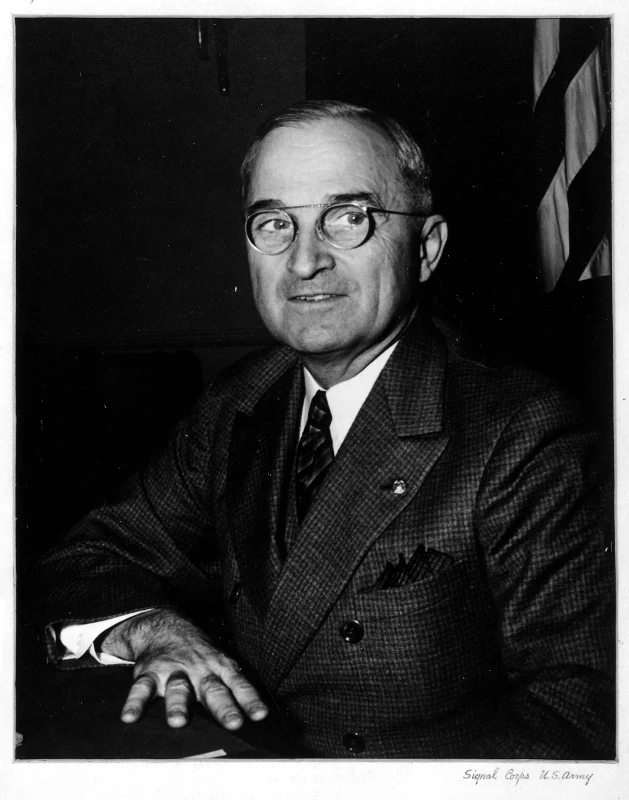
1884–1972
Harry S. Truman
33rd president of the United States and former Missouri senatorA Missouri veteran and senator who inherited the presidency in 1945 and shaped the postwar American state through foreign commitments and contested executive decisions.Read biography
1882–1945
Franklin D. Roosevelt
32nd president of the United States and New Deal political leaderA New York politician whose presidency expanded federal responsibility for economic security and led the United States through depression and most of World War II.Read biography
1940–2020
John Lewis
Civil rights organizer and U.S. representative for GeorgiaA student organizer who confronted segregation and voter suppression, then carried the civil rights movement’s demands into a long congressional career.Read biographyQuick answers
Common questions
- What did Executive Order 9981 do?
- It declared equal treatment and opportunity to be presidential policy for the armed services, regardless of race, color, religion or national origin. It also authorized an advisory committee to examine service practices and recommend changes.
- Did it immediately integrate every military unit?
- No. The order set policy and required rapid implementation but allowed time for necessary changes. Service regulations and actual unit assignments changed at different speeds over several years.
- What was the Fahy Committee?
- It was the President’s Committee on Equality of Treatment and Opportunity in the Armed Services, chaired by Charles Fahy. Its 1950 report, Freedom to Serve, explained its inquiry and the policy changes accepted by the services.
- When did the Army complete the abolition of its all-Black units?
- Institutional histories identify 1954 as the year the last all-Black unit was abolished. Integration had accelerated during the Korean War and followed a worldwide Army directive in December 1952. This did not mean that every form of racial discrimination had ended.
Primary and institutional sources
How this history was checked
The order transcript establishes authority and scope; the contemporary committee report and institutional histories distinguish policy changes from later unit integration. This article was reviewed on 21 October 2026.
- National ArchivesExecutive Order 9981 (1948): document and transcript
- Harry S. Truman Presidential LibraryDesegregation of the Armed Forces: documents and chronology
- President’s Committee on Equality of Treatment and Opportunity in the Armed ServicesFreedom to Serve (1950)
- U.S. Army; Col. Jonathan DahmsArmy Commemorates 60th Anniversary of Armed Forces Integration
- National Archives, Pieces of HistoryVictory at Home and Abroad: Combating Segregation in the Armed Forces
- Harry S. Truman Presidential LibraryHarry S. Truman and Civil Rights
- Harry S. Truman Presidential LibraryPortrait of Harry S. Truman, 59-140-1