
The short answer
When was the Open University founded: 1963, 1969 or 1971? Each date marks a different stage. Wilson supplied political sponsorship, Jennie Lee sustained the project through government, and Walter Perry led the practical development of a university that could teach students at a distance.
Different responsibilities within one project
Who contributed what?
Political sponsorship, ministerial persistence and academic leadership were complementary roles.
| Contributor | Principal contribution | Chronological distinction |
|---|---|---|
| Harold Wilson | Promoted the University of the Air and supplied political backing. | The public proposal preceded his 1964 premiership. |
| Jennie Lee | Drove government preparation and defended the quality of the proposed university. | Advisory work and the White Paper preceded the charter. |
| Walter Perry | Led the development of the university’s academic and administrative operation. | Selected in 1968; the first vice-chancellorship covered the launch of teaching. |
Chronology
A timeline of the turning points
Wilson developed the public proposal
He promoted a University of the Air before becoming prime minister.
Jennie Lee took responsibility
After Labour’s victory, Wilson asked the arts minister to pursue the project.
Advisory work led to a White Paper
A committee chaired by Lee examined the institution’s functions; the White Paper followed in February 1966.
The academic institution was planned
A planning committee began work in October 1967 and selected Walter Perry as vice-chancellor in May 1968.
The Royal Charter was approved
The university marks this as its official birthday.
The charter was formally presented
Wilson and Lee attended the ceremony that installed Geoffrey Crowther as chancellor.
Registration preceded teaching
Applications and administrative preparation led to the first students beginning study in 1971.
The proposal addressed access as well as broadcasting technology
Wilson’s 1963 proposal used the language of a University of the Air. Radio and television offered ways of reaching people unable to follow a conventional residential route into higher education. The technology served a social objective: widening the opportunity to study. It was not yet a functioning university, a Royal Charter or a set of courses ready for students.
The OU archive places the proposal within a longer history of educational broadcasting and earlier thinking about access. That context limits the claim that one politician invented distance education. Wilson’s particular contribution was to champion a national institution and give it political backing. After the 1964 election, turning the proposal into government policy required another set of decisions and people.
Jennie Lee made the idea an institutional commitment
As Minister for the Arts, Jennie Lee took charge of the project after Labour entered office. She chaired the advisory committee that first met in June 1965. Its work informed the February 1966 White Paper, followed by a commitment in Labour’s election manifesto. These stages converted an attractive public proposal into a programme that ministers and educational specialists had to examine.
Lee insisted on university standards rather than a second-rate substitute for people who had missed an earlier opportunity. A planning committee then had to define how the institution would operate and prepare its charter and statutes. Her importance lay in persistence through these practical and political stages, including scepticism about the scheme. Founding the university required more sustained work than authorising a series of broadcasts.
Walter Perry’s appointment connected planning with delivery
The planning committee selected Walter Perry as vice-chancellor in May 1968, before the charter. His task was to develop an academic organisation capable of producing courses, supporting students and assessing their work. Political approval could supply legitimacy and resources, but it could not by itself solve the educational and administrative problems of teaching at a distance.
The archive’s account of early teaching identifies course teams, computer-marked assignments and home experiment kits among the innovations. Science courses particularly needed ways for students to learn through activity beyond watching a programme. Broadcasting, printed material, equipment and feedback had to work together. This combination explains why the institution became more than its original shorthand name suggested.
Charter, ceremony and first teaching were separate milestones
The Queen approved the Royal Charter on 23 April 1969, now celebrated as Charter Day. On 23 July the university held its first congregation at the Royal Society, where the charter was formally presented and Geoffrey Crowther installed as chancellor. Wilson and Lee attended. Confusing those dates makes an inauguration ceremony appear to be the original legal foundation.
Registration opened in 1970 and the first students began their studies in 1971. The intervening period was needed to design courses and establish the systems that would deliver them. Wilson was out of office by the time teaching began, showing how institutional work could span an electoral transition. For a reader asking when the OU began, the useful answer therefore distinguishes the 1963 proposal, the 1969 charter and the 1971 teaching launch.
Continue the chronology
Related history guides
Biography context
Explore United Kingdom through connected lives
Connected biographies
Read Labour lives across two generations
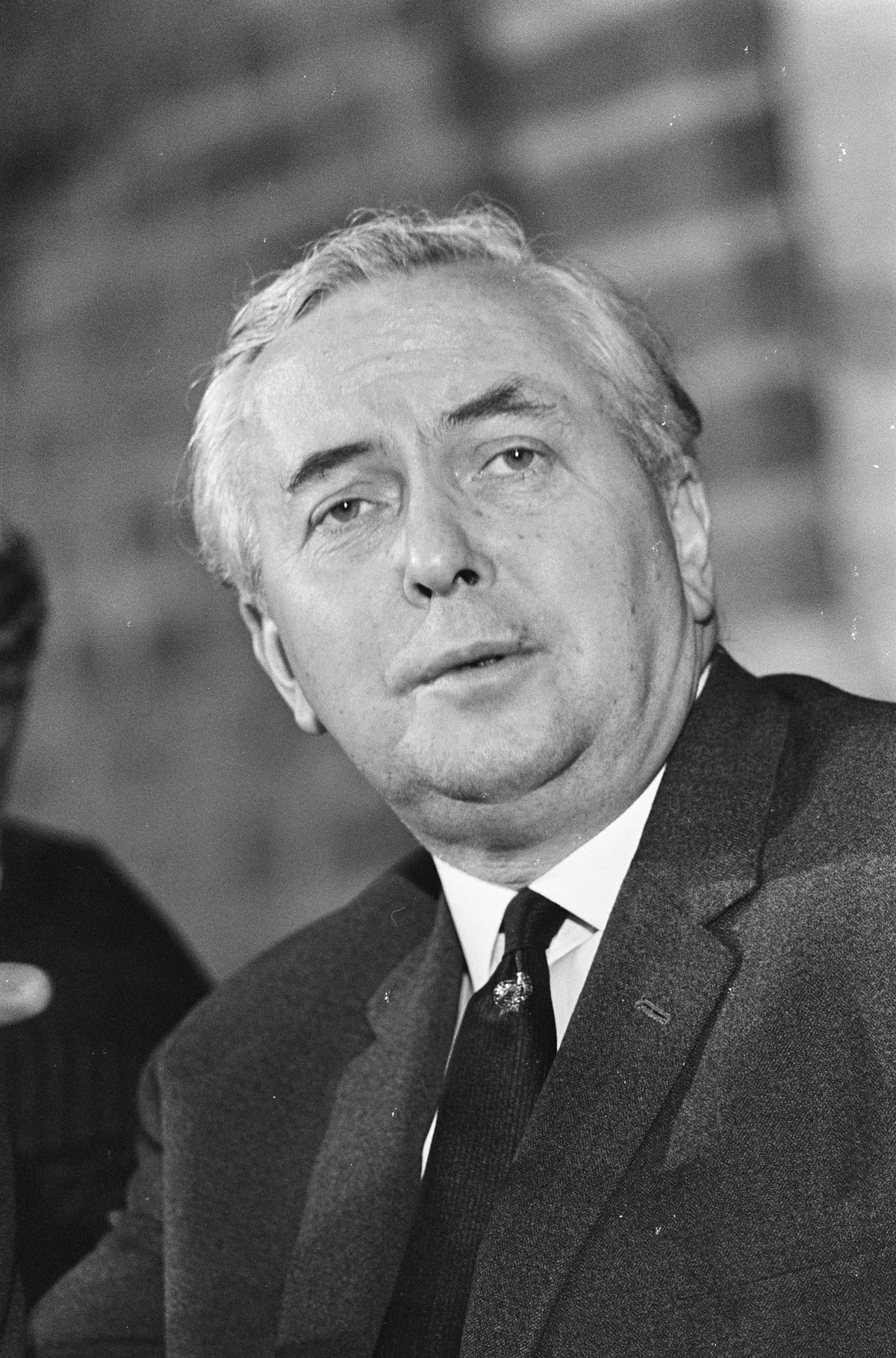
1916–1995
Harold Wilson
British Labour politician and prime ministerHarold Wilson was a Labour prime minister of the United Kingdom in 1964–1970 and 1974–1976. He linked a promise of technological modernisation with social reform, while managing sterling crises, a changing international role and deep disagreements over Europe.Read biography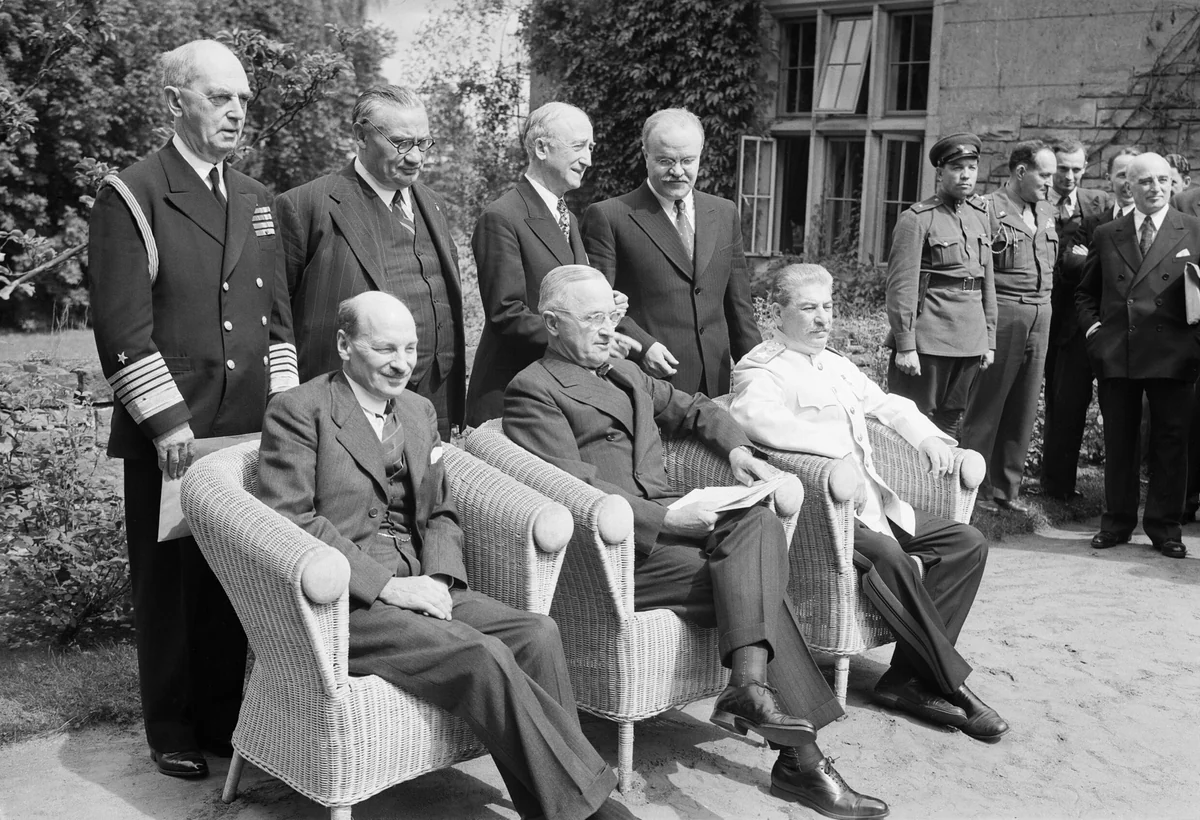
1883–1967
Clement Attlee
British prime minister and Labour leaderClement Attlee was British prime minister from 1945 to 1951 and Labour leader from 1935 to 1955. His governments established the NHS, expanded social insurance and nationalised major industries while confronting austerity, imperial withdrawal and the emerging Cold War.Read biographyQuick answers
Common questions
- Was the Open University founded in 1963 or 1969?
- Wilson promoted the proposal in 1963. The university’s Royal Charter was approved on 23 April 1969, its official birthday; teaching began in 1971.
- What happened on 23 July 1969?
- The charter was formally presented at the first congregation, and Geoffrey Crowther was installed as chancellor. This followed the April approval of the charter.
- Why is Jennie Lee described as a founder?
- She sustained the project through government, chaired advisory work and insisted that wider access should be matched by university-level quality.
- Was the Open University simply television lectures?
- No. Broadcasting worked alongside printed materials and systems for assignments, feedback and practical activity, including science experiment kits.
Primary and institutional sources
How this history was checked
The OU’s displayed exhibition descriptions and institutional history establish the roles and milestones. The April charter approval is distinguished from its July presentation; Perry’s selection in 1968 is distinguished from the chartered university’s subsequent operation. Linked videos, complete committee records and archive collections are not claimed as viewed. The portrait was made at a 1967 press conference and is explicitly contextual. This article was reviewed on 23 October 2026.
- UK Prime Minister’s OfficeHarold Wilson: political career and two premierships
- Open University Digital ArchiveThe OU Story: Wilson’s 1963 proposal
- Open University Digital ArchiveThe OU Story: Jennie Lee’s role
- Open University Digital ArchiveThe OU Story: planning and Walter Perry’s appointment
- Open University Digital ArchiveThe OU Story: April charter and July ceremony
- Open University in ScotlandOur story: founders, charter and first students
- Nationaal Archief / Wikimedia CommonsHarold Wilson at The Hague, 27 February 1967: original 920-1165 and CC0
- Creative CommonsCC0 1.0 public domain dedication
- Open University Digital ArchiveThe OU Story: inventing ways of teaching and preparing the first courses