
The short answer
The Blue Boy’s confident appearance can make its history seem equally settled. The painter and approximate date are secure; the sitter’s identity is not. This guide separates what the object shows from proposals about its subject and the much later history of its ownership.
Chronology
A timeline of the turning points
Gainsborough paints the portrait
The work belongs to his Bath period; the museum catalogue uses 1770 and its historical account allows an approximate date.
The Huntingtons purchase the work
Henry and Arabella Huntington acquired the painting, before its departure from Britain.
Departure and California arrival
A London farewell display preceded the painting’s journey to the United States.
A centenary loan to London
The National Gallery exhibition marked a temporary return, a century after its departure.
Identify the object and keep the date approximate
The Blue Boy is Thomas Gainsborough’s large, full-length oil portrait of a young figure in a blue costume, painted around 1770 during his Bath years. The Huntington’s collection catalogue lists 1770; its historical discussion uses circa 1770. The approximate form preserves the distinction between a useful catalogue date and evidence for an exact moment of completion.
The painting is now associated with the Huntington in San Marino, California. Its making belongs to eighteenth-century Britain, while its present collection history is American. Both locations matter. The artist portrait at the top of this page supplies biographical context; the linked Huntington object record is the place to examine The Blue Boy itself.
First owner is not the same thing as identified sitter
Jonathan Buttall was the painting’s first owner and was long identified as its subject. That association has often been repeated as a definite caption. The Huntington’s historical discussion is more cautious: ownership is evidence about the picture’s early possession, but it does not by itself establish who stood for the figure.
Gainsborough Dupont, the artist’s nephew and assistant, has also been proposed as the sitter. Museum texts vary in how strongly they present the proposal, from attributing it to a scholar to explaining why it is plausible. The responsible conclusion remains that the identity is unconfirmed. A familiar name attached to a famous picture can be a historical interpretation rather than a documented identification.
The costume deliberately looks back to Van Dyck
The blue satin outfit is not a straightforward record of ordinary clothing worn by a boy around 1770. Its historical styling recalls seventeenth-century portraiture, especially Anthony van Dyck. Pose and costume connect the young figure with the authority and elegance of an earlier portrait tradition. The image makes a statement about painting as well as about a person.
This connection changes how to read its apparent confidence. The figure’s bearing is constructed through a borrowed visual language, not simply captured as an unposed personal trait. Gainsborough’s knowledge of Old Masters supplied resources he could transform. The picture can be approached as an inventive engagement with a prestigious tradition without claiming a definitive private intention for the painter.
Blue is an effect made through painting and contrast
The costume draws attention through variations of light and dark rather than a single flat blue. The surrounding earth and landscape help set off the figure, while the stance gives the fabric a body and direction. Looking across those relationships is more useful than treating the title’s colour as an isolated symbolic code.
Gainsborough’s broader practice was known for fluid handling and rich colour. Those terms describe visible and material decisions, not proof that every stroke was spontaneous. Conservation research can add knowledge about layers, changes and materials, but its conclusions require the relevant technical evidence. This guide does not turn a web reproduction into an independent pigment analysis or a reconstruction of the complete painting process.
A 1921 purchase and a 1922 journey are separate events
Henry and Arabella Huntington purchased the picture in 1921. Its departure from Britain and arrival in California followed in 1922. A farewell display in London belonged to that later journey. Combining the dates into a single statement that it went to America in 1921 erases the interval between acquisition and physical movement.
The sale and journey helped make the painting an object of public feeling about cultural possession. That twentieth-century celebrity is distinct from its original making. When the picture returned on loan to the National Gallery in 2022, the exhibition marked a century since departure; it was a temporary exhibition journey, not evidence that the work had become a British public collection acquisition.
Later fame keeps changing the questions asked of it
The Huntington’s commission from Kehinde Wiley places a contemporary artist’s response beside the authority associated with the historic portrait. Such a project can ask who receives the scale, visibility and confidence traditionally granted by portraiture. It belongs to the continuing interpretation of Gainsborough’s work, rather than supplying new documentary proof of the original boy’s name.
The picture’s several histories can therefore remain in view together: an eighteenth-century painter engaging Van Dyck, an uncertain sitter attached to an early owner, a major transatlantic purchase and a work revisited by later artists and audiences. Keeping those histories distinct allows the fame to become a subject of enquiry instead of a reason to stop questioning a familiar caption.
Continue the chronology
Related history guides
Biography context
Explore Britain and San Marino, California, United States through connected lives
Thomas Gainsborough
Connect the work with Bath portrait commissions, landscape experiments and the Royal Academy.
Explore the biographiesMuseum objectThe Blue Boy at the Huntington
Examine the actual painting and its catalogue record, rather than the artist portrait used on this page.
Explore the biographiesMuseum historyProject Blue Boy
Read the museum’s cautious account of the sitter and the work’s historical setting.
Explore the biographiesConnected biographies
British painters, making and reception

1727–1788
Thomas Gainsborough
Painter, draughtsman and printmakerThomas Gainsborough was a British painter whose portraits and landscapes brought fluid brushwork, rich colour and close attention to pose and setting to eighteenth-century art.Read biography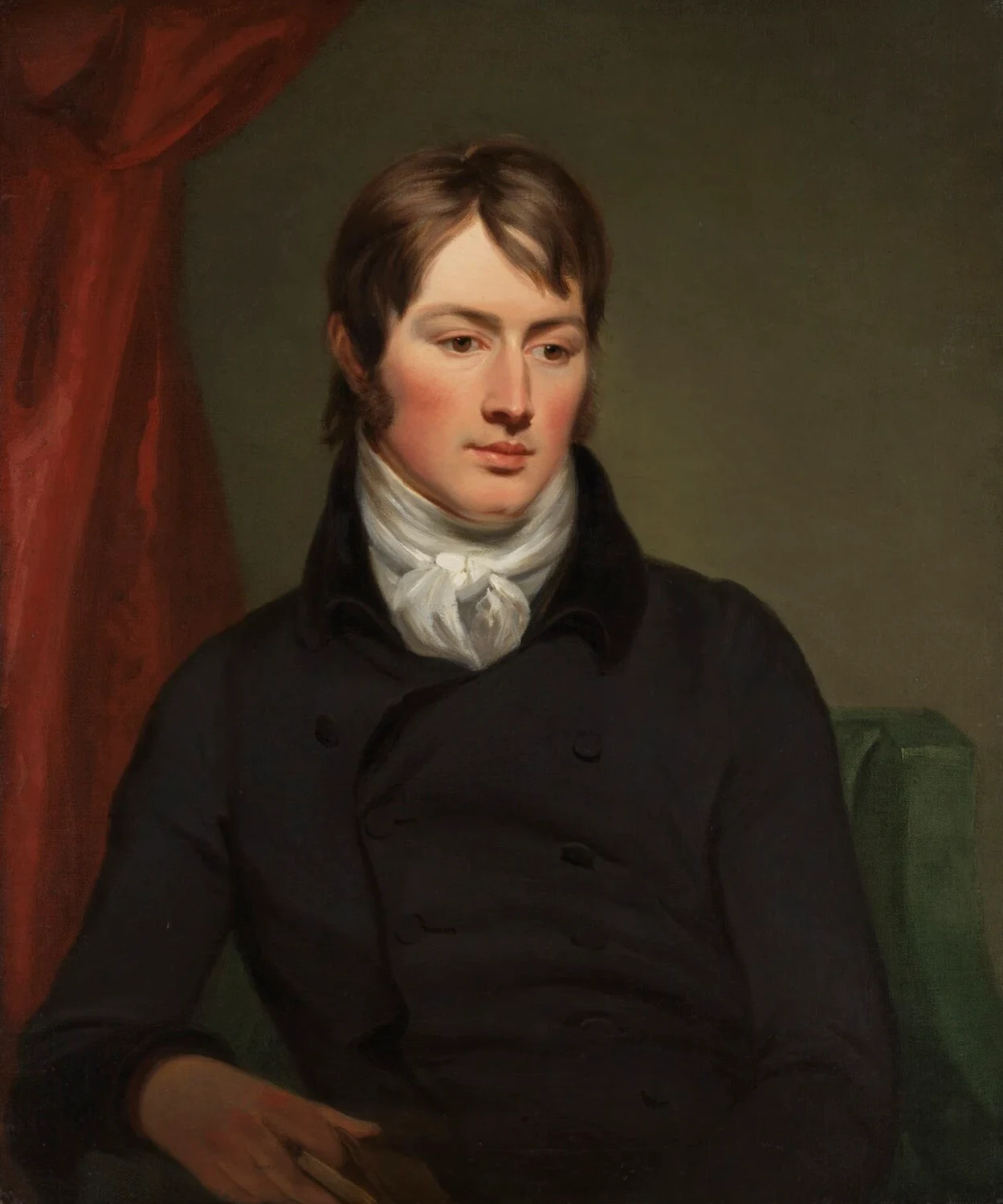
1776–1837
John Constable
Landscape painterJohn Constable was an English painter who made familiar working landscapes, changing weather and the careful construction of atmosphere central to ambitious exhibition pictures.Read biography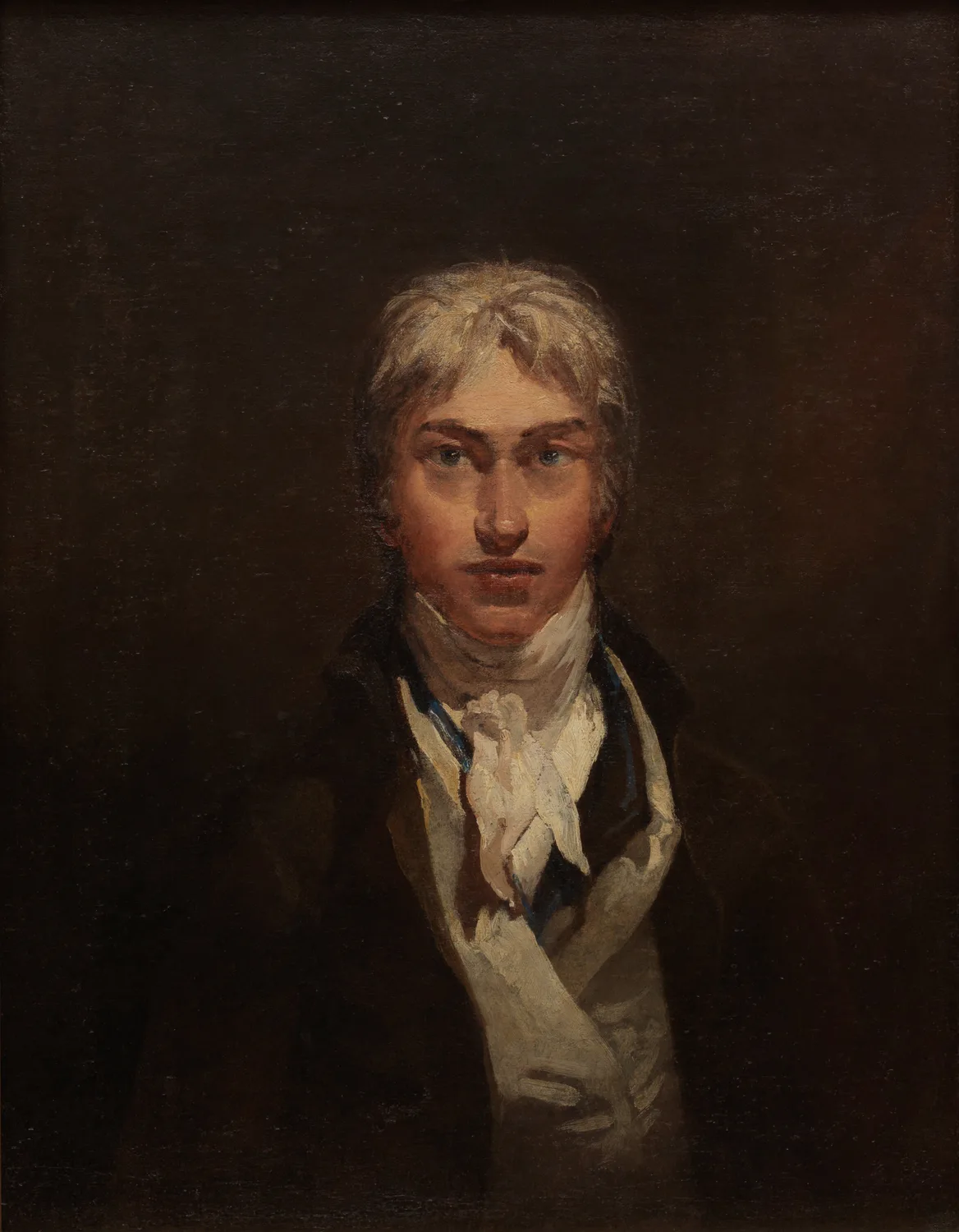
1775–1851
J. M. W. Turner
Painter, watercolourist and printmakerJ. M. W. Turner was an English artist whose landscapes, watercolours and prints transformed observed places into ambitious studies of light, history and change.Read biographyQuick answers
Common questions
- Who painted The Blue Boy?
- Thomas Gainsborough painted it around 1770, during his Bath period. The catalogue’s year 1770 is retained here as an approximate date.
- Is Jonathan Buttall definitely the boy?
- No. Buttall was the first owner, but that does not securely identify him as sitter. Gainsborough Dupont has also been proposed, and the identity remains uncertain.
- Is the blue costume normal clothing from 1770?
- Its historical styling looks back to seventeenth-century portraiture and Van Dyck, rather than simply recording ordinary contemporary dress.
- Did the painting arrive in America in 1921?
- The Huntingtons purchased it in 1921. Its departure from Britain and California arrival were in 1922.
- Why is this in a British art guide if it is in California?
- The work was made by Gainsborough in Britain. Its later ownership and collection history place it at the Huntington in San Marino, California; the guide identifies both locations.
Primary and institutional sources
How this history was checked
The batch owner read selected Huntington history, object, centenary-loan and Wiley-commission passages and supplied the source findings to this drafting agent. A later direct request returned 429 and the browser exposed only page shells, so no complete live-page review is claimed here. The museum’s approximate date and unresolved sitter are retained. No parish register, underlying conservation study, complete provenance archive or paywalled sitter scholarship was independently inspected. This article was reviewed on 23 October 2026.
- Gainsborough’s HouseThomas Gainsborough: biography, baptism, family, technique and landscapes
- National GalleryThomas Gainsborough: career, portrait practice and slavery-linked patrons
- National GalleryMr and Mrs Andrews: portrait, estate and unfinished composition
- Huntington Library, Art Museum, and Botanical GardensProject Blue Boy: history, Van Dyck and uncertain sitter identity
- Huntington Art MuseumThe Blue Boy: collection object record
- Huntington Library, Art Museum, and Botanical GardensThe Blue Boy: 1921 purchase, 1922 departure and 2022 loan
- Huntington Library, Art Museum, and Botanical GardensKehinde Wiley commission: first owner and proposed alternative sitter
- Thomas Gainsborough / Wikimedia CommonsExact 1754 self-portrait, Yorck source, rights and sole revision
- Wikimedia CommonsComplete current Gainsborough JPEG