
The short answer
The suffrage pilgrimage turned a national network of constitutional campaigners into a moving public demonstration. It brought the argument for women’s parliamentary votes to communities along its routes before a large London rally. Its purpose was political pressure, not a religious test or an immediate grant of voting rights.
Chronology
A timeline of the turning points
The NUWSS formed
An umbrella of suffrage societies developed into a national campaigning organisation.
Public demonstration expanded
The Mud March illustrated that constitutional campaigning could be visible and collective.
Pilgrims travelled towards London
Campaigners held meetings, distributed literature and raised funds along the way.
A mass Hyde Park rally
The converging campaign demanded political action for women’s votes.
Partial parliamentary enfranchisement
Qualifying women aged thirty and above gained the vote in a wider electoral settlement.
Voting terms equalised
Women gained parliamentary voting rights on the same age terms as men.
The pilgrimage answered frustration with parliamentary delay
The National Union of Women’s Suffrage Societies had spent years organising petitions, deputations and support for legislation. By 1913, constitutional campaigners faced a recurring problem: favourable speeches or the passage of an early parliamentary stage did not ensure government time and support to enact women’s suffrage.
In her 1920 memoir Fawcett described the demand for a government measure backed by a united Cabinet. She credited Mrs Harley with proposing the pilgrimage. This recollection explains its strategic setting but is also the account of a leader defending her organisation’s methods. The event belonged to a national movement and its local societies, rather than being an individual journey undertaken by Fawcett alone.
The journey itself was a form of political organising
During June and July, participants converged on London through a network of routes. Meetings, banners, literature and fundraising made the journey a campaign in its own right. People could join for part of the way; local supporters provided practical help and hospitality. The work required coordination between a national organisation and people who knew particular towns and villages.
A modern research account describes walking alongside the use of bicycles, horses and caravans. The point was not that every supporter had to complete the same distance. Public encounters along the road could reach women who had not previously participated. Constitutional politics here included bodily presence, logistical labour and contact outside established political meeting rooms.
Law-abiding did not mean passive or free from confrontation
The NUWSS distinguished its methods from the militant WSPU campaign associated with the Pankhursts. Its participants sought to demonstrate widespread, organised support without attacks on property. That difference was an argument about how reform could be won, not evidence that one movement possessed all political courage or represented every woman.
Fawcett’s memoir remembers generous receptions but also hostile crowds and objects thrown at speakers. Her testimony makes clear that peaceful campaigning could still encounter intimidation. The suffragists’ insistence on a public platform was itself a challenge to assumptions that women belonged outside political life. The contrast with militancy should therefore not turn them into spectators awaiting decisions made elsewhere.
The Hyde Park rally made collective support visible
The pilgrimage culminated in Hyde Park on 26 July 1913. LSE’s account follows Alice Clark, who carried a banner made by her sister Esther. That example shows how family, local society and national campaign could meet in the same event. Fawcett’s own account describes multiple platforms representing the organisation’s federations.
The rally’s immediate value was visibility, solidarity and pressure on political leaders. It did not enact a statute. Crowd estimates and route classifications vary across accounts, so neither a single attendance figure nor a single route total is necessary to explain its significance. Its political force lay in the organised encounters and the public claim that women’s exclusion required government action.
Its legacy must be distinguished from the later franchise laws
Recent scholarship examines the pilgrimage’s relationship to women’s registration in local elections, where some women were already eligible. That is a narrower outcome than winning a parliamentary franchise, and it should not be presented as proof that this march alone caused national enfranchisement. Organising could change participation before it changed the law.
The 1918 settlement followed further campaigning, war and a wider reconsideration of electoral rules. It enfranchised qualifying women aged thirty and above, leaving substantial inequality. Equal parliamentary voting terms came in 1928. The pilgrimage was one important episode in that longer struggle; understanding its particular methods is more useful than assigning it sole credit for the final result.
Continue the chronology
Related history guides
Biography context
Explore United Kingdom through connected lives
Millicent Fawcett
Place the pilgrimage beside education, Unionism, imperial war and the later franchise settlements.
Explore the biographiesCompare campaigning strategiesEmmeline Pankhurst
Read about the WSPU leader and the different choices associated with militancy.
Explore the biographiesConnected biographies
Different leaders within the suffrage movement

1847–1929
Millicent Fawcett
Suffragist, writer and education campaignerMillicent Fawcett built a constitutional campaign for women’s votes through speaking, writing, lobbying and national organisation. She also promoted women’s education, while her Unionism and support for imperial war complicate a simple equality narrative.Read biography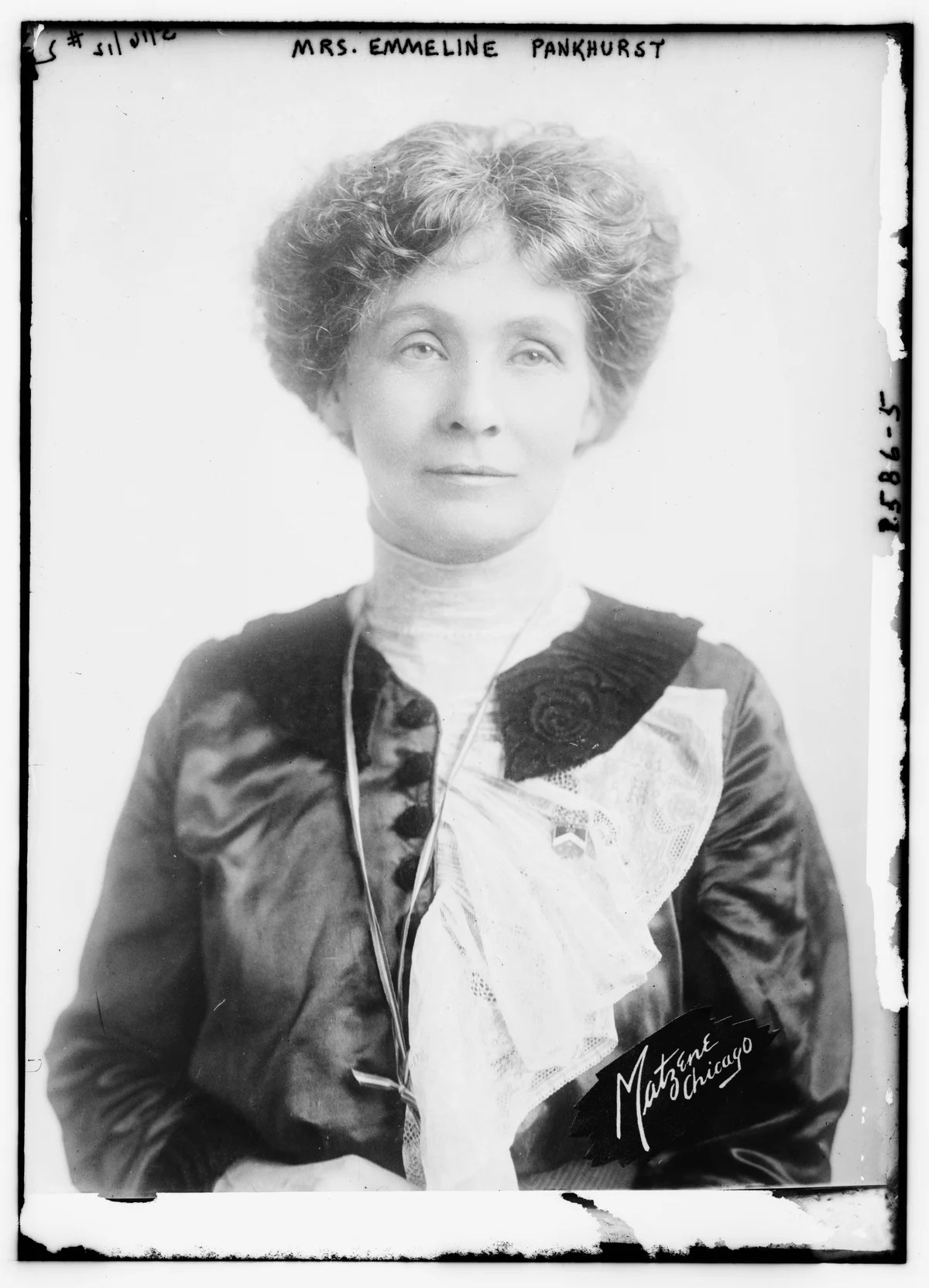
1858–1928
Emmeline Pankhurst
British suffrage campaigner and WSPU leaderEmmeline Pankhurst was a British suffrage campaigner who founded the Women’s Social and Political Union in Manchester in 1903. Her speeches, imprisonment and support for militant tactics made her a prominent, contested leader within a much wider movement for women’s votes.Read biographyQuick answers
Common questions
- Who organised the pilgrimage?
- The NUWSS and its federations and local societies organised it under Fawcett’s national leadership. Fawcett’s memoir credits Mrs Harley with proposing the idea.
- Was it a WSPU suffragette march?
- No. It was organised by constitutional suffragists of the NUWSS, whose law-abiding strategy differed from WSPU militancy.
- Did the pilgrimage immediately win women the vote?
- No. Partial parliamentary enfranchisement came in 1918 and equal voting terms in 1928, after further campaigns and wider political changes.
Primary and institutional sources
How this history was checked
Chapter V of Fawcett’s 1920 memoir was read for the pilgrimage’s organisation and remembered reception; it is a participant’s retrospective account. The 2025 research article’s abstract, introduction and Great Pilgrimage section were read, not its datasets or full statistical verification. LSE and institutional histories corroborate the rally and campaign structure. Route and crowd figures are not harmonised into false precision. The later franchise chronology follows Parliament’s separate explanation. This article was reviewed on 23 October 2026.
- Millicent Garrett Fawcett / Project GutenbergThe Women’s Victory—and After (1920): chapter V, the 1913 pilgrimage
- British Journal of Political Science / Cambridge University PressActivism and the Electoral Participation of Women: the Great Pilgrimage section
- LSE Library / Gillian MurphyAlice Clark: the Election Fighting Fund and the 1913 pilgrimage
- English HeritageNational Union of Women’s Suffrage Societies: organisation and campaigns
- London MuseumMillicent Fawcett: suffragist, not suffragette
- UK ParliamentWomen get the vote: the 1918 and 1928 settlements
- The Fawcett SocietyOur history: presidency, equal franchise and commemoration
- Wikimedia CommonsFord Madox Brown: Fawcett double portrait, PD-Art and file history
- National Portrait GalleryHenry Fawcett and Dame Millicent Fawcett, Ford Madox Brown, 1872, NPG 1603
- Creative CommonsPublic Domain Mark 1.0