
The short answer
Cirque du Soleil’s 1984 beginning grew out of Québec street performance and a publicly supported provincial tour. Understanding that beginning requires more than naming a celebrated founder. Earlier troupes, festival organizers, fellow founders, skilled artists and government support all contributed to a project that developed gradually into an international entertainment business.
Chronology
A timeline of the turning points
A performance community
Gilles Ste-Croix’s Les Échassiers performs around Baie-Saint-Paul.
Fête foraine
Street festivals bring performers together and develop the organizing network.
Le Grand Tour
A Québec-supported tour begins in Gaspé in the Cartier-anniversary programme.
Beyond Québec
Ontario performances precede the Los Angeles Festival engagement.
A resident venue
Mystère at Treasure Island marks a later stage, separate from the original touring project.
Baie-Saint-Paul supplied a network before it supplied a brand
In the early 1980s, Les Échassiers de Baie-Saint-Paul combined stilt-walking, music, juggling and other street skills. Gilles Ste-Croix founded the troupe, and Guy Laliberté participated in this performance community. The later Cirque name should not erase the group that preceded it.
Le Club des talons hauts and the Fête foraine brought artists together to perform and exchange ideas. The company history dates the first festival to 1982, followed by editions in 1983 and 1984. These events supplied practical experience in attracting audiences and organizing performers, while a travelling circus remained an ambition that required a different level of financing.
The 1984 tour was connected to a public commemoration
Québec’s commemorations of Jacques Cartier’s 1534 arrival created an opportunity for a show that could travel around the province. Laliberté presented the Cirque du Soleil proposal and secured the organizers’ support. The Québec government helped finance the undertaking. Its beginning was therefore connected with public cultural spending as well as the organizers’ initiative.
The first production, Le Grand Tour, began in Gaspé and then visited other Québec towns. That launch is different from the earlier Baie-Saint-Paul festivals and from the later establishment of Montréal headquarters. The historically useful founding date is 1984; an exact incorporation day is not established by the sources used here.
Different founders and creators contributed different kinds of work
Accounts emphasize different people. Cirque’s own history describes Ste-Croix’s earlier troupe and Laliberté’s proposal, while Larousse identifies Laliberté and Daniel Gauthier as founders. AMA Toronto also names Gauthier as an early collaborator involved in the anniversary project. These descriptions preserve a broader founding circle than the familiar image of one entrepreneur.
Laliberté’s increasing business responsibilities included financing and international partnerships. Artists and technicians created the acts, music, staging and performance environment. Distinguishing those contributions makes the commercial history more precise: an organizer could obtain a tour contract, but the resulting production depended on collective artistic and operational work.
The production model placed theatrical design around acrobatics
Cirque’s early identity combined circus skills with theatrical presentation and omitted animal acts. Costumes, original music, lighting and a shared atmosphere linked performances that could otherwise have appeared as separate street numbers. Acrobatic technique remained central, but it was placed inside a designed world rather than presented only as a succession of feats.
Larousse situates this approach in the history of contemporary circus and also questions the later move towards large commercial spectacle. Its assessment is useful because artistic innovation and commercial scale are different questions. The 1984 project opened a direction for development; it did not contain every feature of the later global company.
International expansion followed through later experiments
The troupe travelled to Ontario in 1985 and reached American audiences at the Los Angeles Festival in 1987. These were subsequent steps, rather than evidence that the original provincial tour began as an established international enterprise. Each new market required audiences, partners and practical operating arrangements.
A further change came with resident productions. Mystère opened in a purpose-built Las Vegas theatre in 1993, under an agreement with Mirage Resorts. A permanent venue supported different production possibilities from a travelling tent. Montréal’s headquarters later became a centre for development. The route from local performers to global enterprise was cumulative, with the 1984 launch as one decisive stage.
Biography context
Explore Canada through connected lives
Connected biographies
The founder’s wider business and public life
1959–
Guy Laliberté
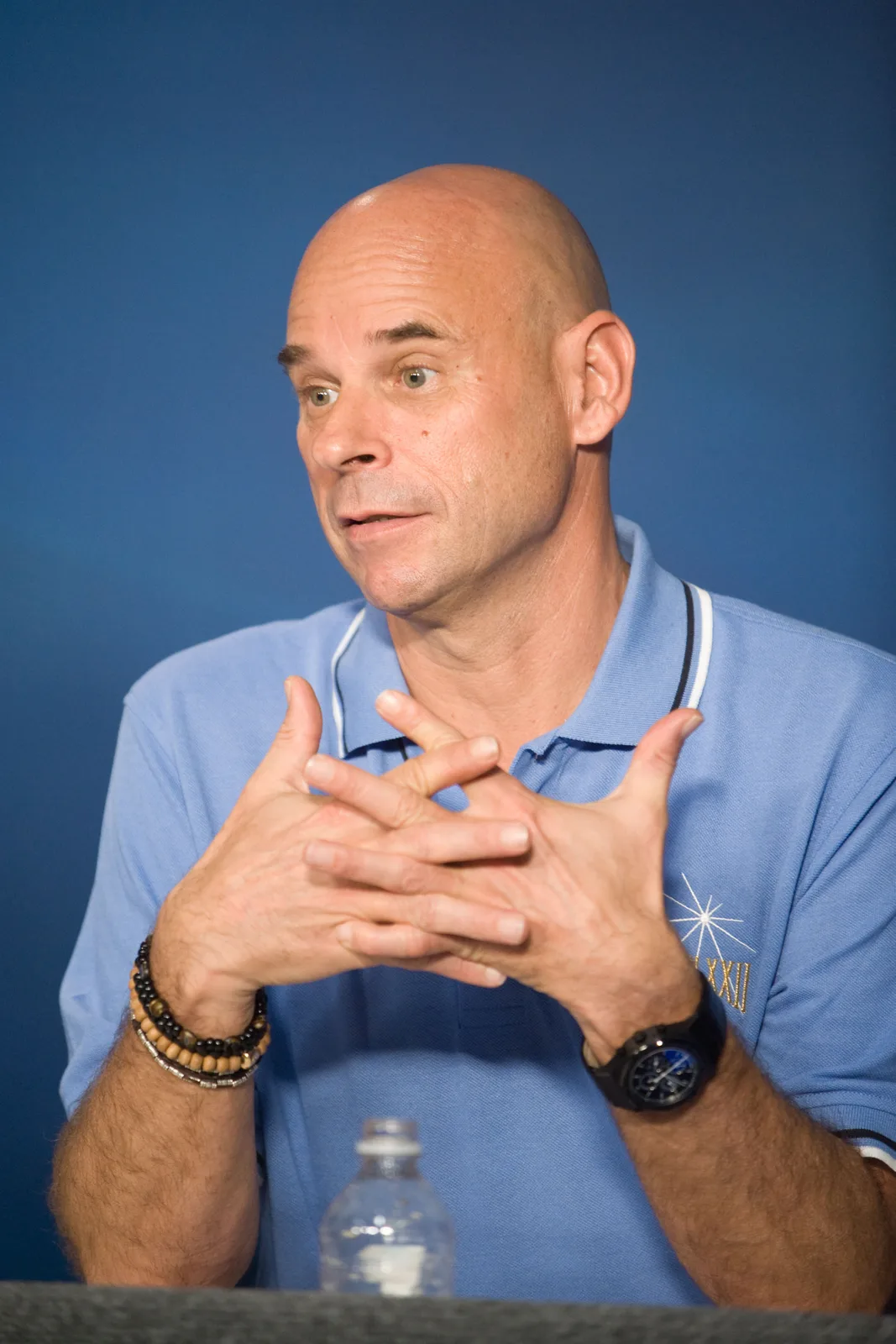
Cirque du Soleil co-founder, entertainment entrepreneur and One Drop founderGuy Laliberté moved from street performance into the financing and international development of Cirque du Soleil. Its 1984 beginning involved fellow organizers, artists and Québec public support. He later reduced his ownership, established the One Drop Foundation and pursued other entertainment and investment projects through Lune Rouge.Read biographyQuick answers
Common questions
- Was Cirque du Soleil founded in Montréal?
- Its origins lie in the Baie-Saint-Paul performance community and a 1984 Québec tour whose first production began in Gaspé. Montréal became the location of its international headquarters.
- Did Guy Laliberté establish it alone?
- No. The record includes Gilles Ste-Croix’s earlier troupe, Daniel Gauthier and a wider group of performers, technicians and organizers.
- Did the project receive government support?
- Yes. The Québec government supported the 1984 tour connected to commemorations of Jacques Cartier’s arrival. Later commercial operations belong to a different stage.
- Was Mystère the first Cirque production?
- No. Mystère opened in Las Vegas in 1993. The original 1984 production was Le Grand Tour.
Primary and institutional sources
How this history was checked
Company histories identify the early troupe, festival sequence and tours. Québec and Montréal institutional biographies, AMA Toronto and Larousse broaden the account of collaborators and business development. The commemorative language is rendered as Cartier’s arrival, and no unverified exact incorporation date or grant amount is supplied. This article was reviewed on 23 October 2026.
- Cirque du SoleilCorporate history: Ste-Croix’s troupe, the 1984 tour and later expansion
- Cirque du SoleilHistory: street performance, theatrical style and the 1987 Los Angeles appearance
- LarousseCirque du Soleil: Laliberté and Gauthier, public support and the artistic business model
- Ordre national du QuébecGuy Laliberté: Québec birth in 1959, performing skills and the 1997 honour
- American Marketing Association TorontoGuy Laliberte: 2005 inductee biography, travel and early collaborators
- Ville de MontréalGuy Laliberté: cultural enterprise, headquarters and dated municipal honours
- Governor General of CanadaGuy Laliberté: Officer of the Order of Canada, appointed in 2003 and invested in 2004
- NASA / James Blair / Wikimedia CommonsLaliberté Soyuz TMA16.jpg: NASA photograph JSC2009-E-147268 and file history
- NASA Johnson / FlickrJSC2009-E-147268: exact press-conference caption and James Blair credit
- NASAImages and media usage guidelines: factual editorial use and attribution