
The short answer
How could Boxer become a separately traded company without leaving Pick n Pay’s group? Its 2024 listing shows the difference between issuing shares, moving cash through a corporate restructure and surrendering control of a business.
Chronology
A timeline of the turning points
Two-step recapitalisation
Pick n Pay raises capital through its own rights offer and prepares a separate Boxer flotation.
Offer documentation published
The abridged statement distinguishes qualifying investor placements, admission and intended proceeds.
Pricing announced
The offer is priced at R54 per share after the book closes.
Trading begins
Boxer lists at the JSE in Sandton, with a secondary A2X listing.
Final structure confirmed
The overallotment is implemented; Pick n Pay retains 65.6%.
A separate later sale
A further placement reduces Pick n Pay’s holding to 53.1%, without loss of control.
The listing addressed a parent company’s financial crisis
Pick n Pay’s 2024 recapitalisation had two distinct legs: a rights offer in Pick n Pay itself, followed by a flotation of Boxer. The plan responded to liquidity and performance problems in the wider group. Selling an interest in a stronger subsidiary could release value, but could not by itself repair supermarket operations.
The same period brought governance concessions by the Ackerman family, including the loss of majority voting control in Pick n Pay. That was a different ownership relationship from Pick n Pay’s holding in Boxer. Confusing the family, the listed parent and the subsidiary turns separate corporate decisions into a misleading story about one person selling everything.
Gross offer proceeds were not simply a new-store spending pot
The abridged statement explained that net proceeds would ultimately support the Pick n Pay group’s debt settlement and supermarket turnaround. The corporate reorganisation mattered: Boxer’s subsequent accounts describe a pre-IPO dividend owed to a wholly owned Pick n Pay subsidiary, settled using the IPO proceeds.
That cash path differs from assuming every rand raised remained available for Boxer’s expansion. Transaction costs, dividends, intercompany balances and external funding affected the resulting balance sheet. Moneyweb’s later CEO interview also distinguished earnings-per-share dilution from trading performance: issuing more shares changes the denominator even when operating results follow a different trajectory.
Separate listing did not equal a complete corporate separation
On 13 December, Boxer confirmed implementation of the overallotment option and a final offer size of R8.5 billion. Pick n Pay held 300 million shares, representing 65.6%. This completed confirmation matters because the earlier pricing announcement had described the final structure on the assumption that the option would be exercised in full.
Pick n Pay’s financial reporting continued to treat Boxer as a controlled subsidiary. Outside investors held a minority interest, while Boxer had its own listed shares and disclosure responsibilities. A stock-exchange listing, a distinct operating management team and inclusion in a parent’s consolidated accounts can therefore coexist; they answer different governance and accounting questions.
The later stake sale must not be folded into the 2024 IPO
A separate placement completed on 18 May 2026 raised further funds for Pick n Pay and reduced its Boxer holding to 53.1%. The company explicitly reported no loss of control. Thus 65.6% is the relevant post-IPO historical figure, while 53.1% reflects the later disclosed transaction at this review.
The sequence shows why capital raised, ownership percentage and recovery are not synonyms. The parent continued to face operational challenges and labour consultation. A successful placement establishes that a transaction occurred, not that every turnaround target was achieved or every stakeholder benefited. This guide explains the structure; it does not recommend either company’s shares.
Biography context
Explore Sandton, Johannesburg, South Africa through connected lives
Gareth Ackerman
Understand the family-business and board-governance background without confusing it with IPO mechanics.
Explore the biographiesEarlier retail historyRaymond Ackerman
Read the earlier retail history separately from the 2024 capital-market transaction.
Explore the biographiesConnected biographies
The board and family-business context
Contemporary
Gareth Ackerman
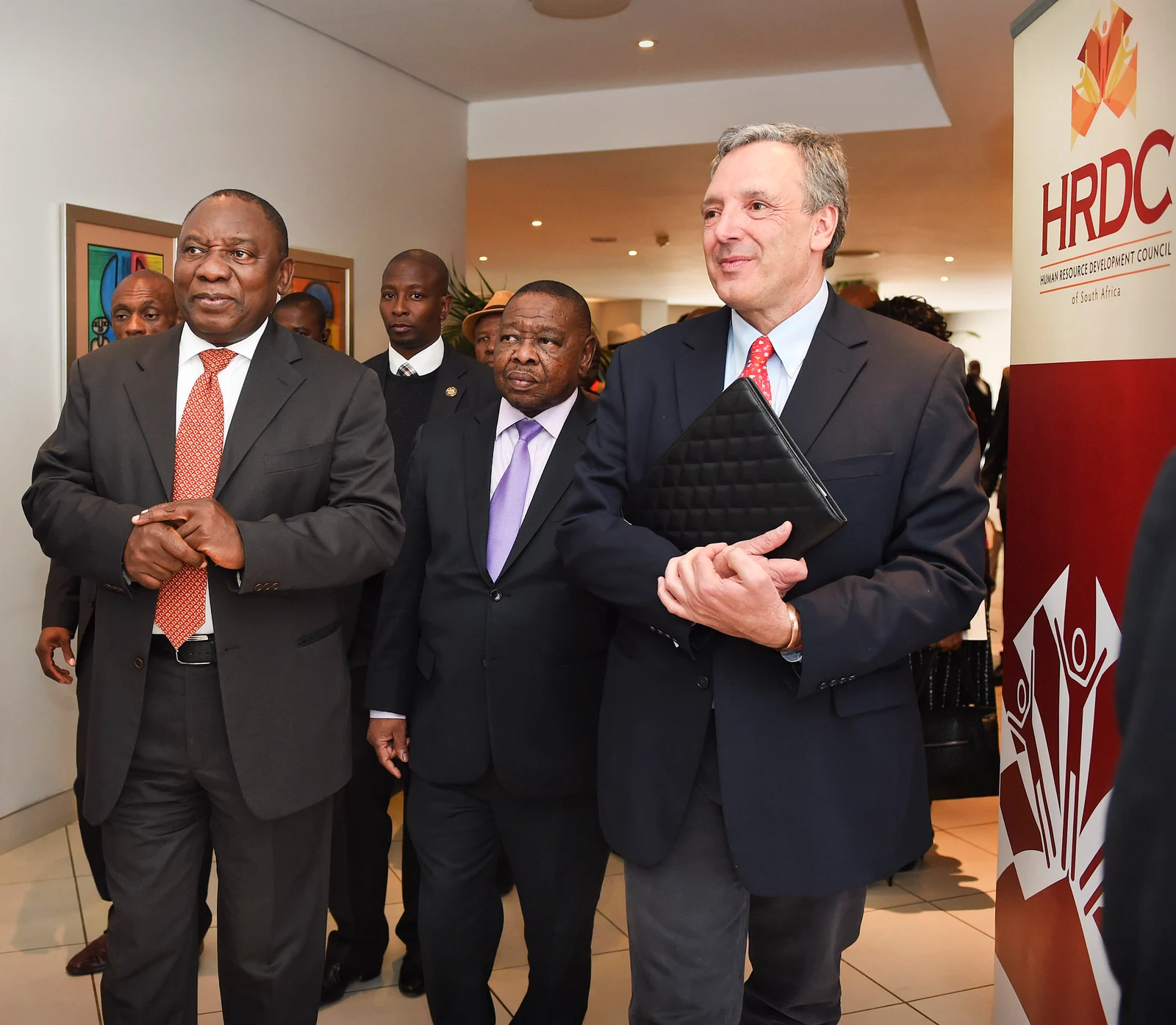
Retail business leader and Pick n Pay non-executive directorGareth Ackerman’s retail career combined operational work, holding-company leadership and a long Pick n Pay chairmanship. He inherited access to a family business rather than founding the chain. Its financial crisis, recapitalisation and governance changes make his record a case of succession and accountability as well as industry leadership. He remained a director after leaving the chair in 2025.Read biographyQuick answers
Common questions
- Did Boxer leave Pick n Pay’s group when it listed?
- No. Pick n Pay retained a controlling 65.6% holding after the completed IPO.
- Were all IPO proceeds kept for new Boxer stores?
- No. The documented restructure directed proceeds through a pre-IPO dividend and towards the parent group’s recapitalisation.
- Is 65.6% the latest holding used in this guide?
- No. A separate completed May 2026 sale reduced Pick n Pay’s holding to 53.1%, still with control retained.
- Was this a sale of the Ackerman family’s entire business?
- No. Family voting rights in Pick n Pay, its own rights offer and Boxer’s share issuance were distinct arrangements.
Primary and institutional sources
How this history was checked
The offer documents, completed-listing announcements and audited accounts distinguish newly issued shares, the use of proceeds, retained control and the separate May 2026 placement. This article was reviewed on 24 October 2026.
- Liabo Setho / SABC News27 May 2024: turnaround, governance changes and independent analyst criticism
- Pick n Pay2024 announcement: family rights participation, voting-control concessions and intended board succession
- Pick n Pay2025 integrated report: selected recapitalisation chronology; indexed passage only
- Boxer Retail11 November 2024 abridged pre-listing statement: offer structure, qualifying investors and use of proceeds
- Boxer Retail25 November 2024: results of offer and final offer price
- Nqobile Dludla / Reuters25 November 2024: independent report on pricing and retained parent stake
- Boxer3 December 2024: confirmation of 28 November listing at the JSE in Sandton
- Boxer Retail / JSE SENS13 December 2024: overallotment implementation and final offer size
- Boxer Retail / JSE SENS2025 annual financial statements, note 36: formation, new shares and settlement of pre-IPO dividend
- Moneyweb2025 CEO interview: earnings-per-share dilution and the pre-IPO balance-sheet restructure
- Pick n PayFY2026 financial statements: selected notes 22, 36.1 and 36.4 on control, labour consultation and later share sale
- Pick n Pay / JSE SENS25 May 2026 results: completed 18 May placement and retained 53.1% Boxer holding
- Siyasanga Mbambani / GCIS, GovernmentZAHuman Resource Development Council meeting, 7 August 2015
- Creative CommonsAttribution-NoDerivs 2.0: section 3 permits necessary technical media and format conversion
- Creative CommonsAttribution-NoDerivs 2.0 legal code, section 3: necessary technical modifications only