
The short answer
An instrument can be familiar at a wedding yet unfamiliar as the centre of a long classical recital. Khan’s career changed that expectation. The question is how training, repertoire, concert opportunities, broadcasting and recordings made a ceremonial sound a featured musical voice.
Chronology
A timeline of the turning points
An established ceremonial instrument
Shehnai players worked in courtly, religious and celebratory settings.
A family and a teacher
Ali Bux’s instruction connected sustained practice with a working musical environment.
All India Music Conference, Calcutta
A major opportunity brought Khan to a wider concert public.
National occasions
Later government accounts link his playing to independence and the first Republic Day.
International concerts and recordings
The instrument reached listeners outside its earlier ceremonial settings.
A legacy needs other musicians
Later reporting examines work, training and instrument making after Khan’s death.
The instrument existed before its most famous player
The shehnai is a reed wind instrument with a long history in ceremonial and religious settings. Ken Hunt’s account describes a double reed, finger holes and a flared bell, and distinguishes the melodic instrument from a drone instrument used in an ensemble. It is not a flute, even though both depend on a player’s breath.
Khan’s achievement was therefore a change in musical standing and expectation, not an invention of the instrument. An audience might already know its sound as an announcement of celebration. A featured recital asks that audience to listen to the instrument’s unfolding musical decisions rather than treating it as a signal attached to another event.
Banaras supplied more than inspiration
Khan’s family connections brought him from Dumraon into Banaras’s musical world. His uncle Ali Bux was his teacher, and temple settings were places of performance and practice. The Tribune’s account locates the music among the city’s river, temples and mosque neighbourhoods.
This matters because a concert career needs a foundation in repeated work. A teacher can transmit technique and repertoire; a ceremonial engagement requires reliability; local listeners and fellow musicians supply standards against which a young performer learns. The later public image of one exceptional musician should not hide that professional and familial environment.
What did the 1937 conference change?
The government’s commemorative account and Sruti’s history identify the 1937 All India Music Conference in Calcutta as a breakthrough. Sruti also notes an earlier public opportunity in Allahabad. Those accounts support the importance of the conference without calling it Khan’s first sound before any audience.
A major conference provides a different setting from a wedding or temple engagement: the performer can be heard as the reason for gathering. The institutional invitation, the presentation of a classical repertoire and the attention of a concert public work together. Describing that change is more informative than imagining that one event instantly abolished every older hierarchy around the instrument.
Broadcasts and records separate music from place
Broadcasting allowed listeners to hear the shehnai without being present at the ceremony or concert. Government commemoration links Khan to national celebrations in 1947 and 1950; later audiences encountered his sound through radio and television associations with those occasions. The sound could acquire a shared public meaning far beyond one city.
Commercial records created another kind of encounter. Hunt discusses the 1967 Duets release with sitarist Vilayat Khan and an extensive later recording career. A recording can be replayed and compared, though it preserves one performance or selection rather than the whole history of a musician’s work. The recording year, release year and date of a later reissue must still be checked separately.
A national symbol is not a complete event record
The 2008 government release specifically associates Khan with Independence Day on 15 August 1947 and Republic Day on 26 January 1950. It is evidence of the state’s later account of his role. It does not provide a contemporary running order for the independence ceremonies or verify every detail attached to the Red Fort story in later retellings.
The same caution applies to the often-repeated first Edinburgh appearance: checked accounts vary between 1965 and 1966. Neither uncertainty requires denying the wider international career. This guide keeps the well-supported changes of audience and setting while leaving disputed day-level or year-level details qualified.
What survives when a celebrated player dies?
Suanshu Khurana’s 2017 report interviews shehnai players who describe shrinking opportunities and makers who have taken other work. These are dated observations from musicians and artisans. They should not be repeated as a complete employment survey or a verified statement about every institution in 2026.
The report raises a lasting question: can admiration for one musician support a profession? Recordings preserve examples, but new performers also need teachers, playable instruments, income and meaningful places in programmes. Khan’s concert legacy is most clearly understood when those practical conditions remain part of the story, alongside the honours and familiar national symbolism.
Sources for this section: [6]
Continue the chronology
Related history guides
Biography context
Explore Varanasi, India through connected lives
Connected biographies
The musician beyond this change of setting
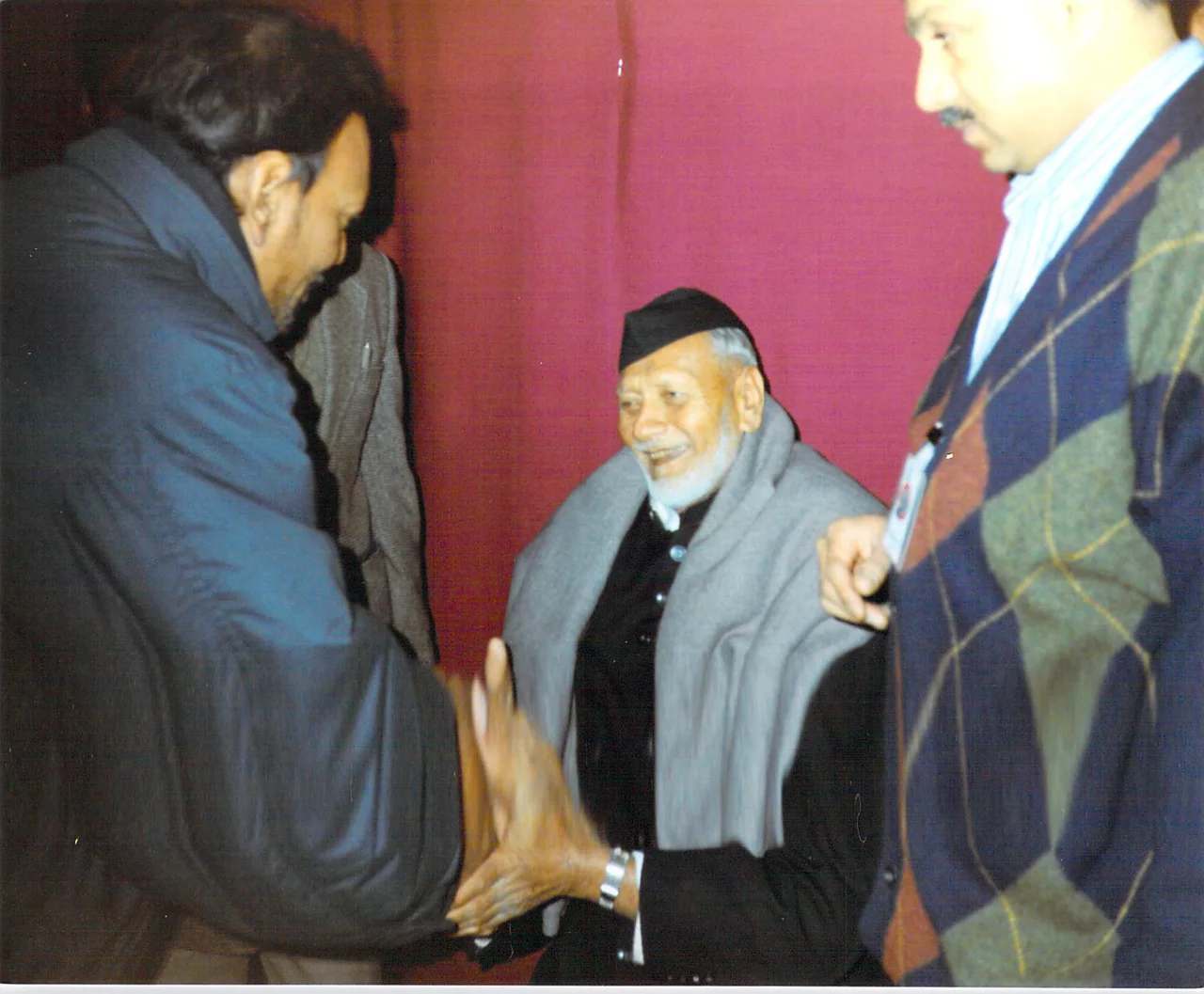
1916–2006
Bismillah Khan
Shehnai musician and teacherBismillah Khan developed a shehnai career from family and temple traditions in Dumraon and Banaras into concerts, broadcasting and recordings.Read biographyQuick answers
Common questions
- Is the shehnai a flute?
- No. It is a reed wind instrument, commonly described as belonging to the shawm or oboe family. Its reed and playing method distinguish it from a flute.
- Was the 1937 conference his first public performance?
- It was an important concert breakthrough. Sruti’s account also records an earlier Allahabad appearance, so breakthrough and first public performance should not be merged.
- Did concert recognition end the shehnai’s ceremonial use?
- No. A new featured concert role could coexist with weddings, religious occasions and national ceremonies.
Primary and institutional sources
How this history was checked
The guide combines a government commemoration, a named music critic’s obituary, specialist historical passages and reporting on later players and makers. It does not claim a complete new audition of recordings or verify every detail in later independence-ceremony stories. No musical notation, lyrics or sound files are reproduced. This article was reviewed on 23 October 2026.
- Ken Hunt / The IndependentInstrument construction, concert career and recordings
- Ministry of Communications / PIB1937 breakthrough and later national commemoration
- SrutiEarly public appearances and Calcutta conference distinction
- The TribuneBanaras, Ali Bux and the local musical world
- PlaybillFamily and training: indexed obituary passages
- Suanshu Khurana / The Indian ExpressA Dying Fall: players, makers and opportunities in 2017
- Wikimedia Commons / JonathansammyLater Leicester photograph: complete original and CC BY-SA rights