
The short answer
Amazon’s initial public offering was a financing milestone for an existing online bookseller, not its founding or a declaration that it had become profitable. Contemporary records show a business combining a searchable website with suppliers, warehouses, employees and uncertain economics.
Chronology
A timeline of the turning points
Company established
Amazon was founded before it began taking online book orders.
Bookstore began selling
The website opened for book sales after a period of preparation.
Public offering
Amazon offered three million new shares at $18 each; this was financing for an operating business.
Second distribution center
The company opened a Delaware facility as its physical operations expanded.
Growth alongside losses
The annual accounts recorded approximately $147.8 million in sales and a $27.6 million net loss.
Three dates with different meanings
Amazon’s founding, store opening and public offering were separate events. A later SEC Investor Advocate speech, citing the original prospectus, dates the company’s establishment to July 1994 and the start of book sales to July 1995. The May 1997 IPO therefore came after an operating history, albeit a short one. Treating all three dates as interchangeable removes the preparation and early trading between them.
The distinction also clarifies what an IPO changes. Forming a company creates an organization; opening a store begins serving customers; offering shares brings a business into public capital markets. None of these milestones by itself measures whether orders arrive reliably, customers return or sales cover the costs of providing a service.
Sources for this section: [1]
A website connected to physical retail
Amazon’s early business was not simply a website displaying books. Its 1997 annual report describes searching, reviews, personalized services and order-status features alongside the work of purchasing and shipping products. The report distinguishes titles offered in a catalogue from inventory physically held. A large selection on screen did not mean that every listed book was waiting on Amazon’s own shelves.
Distributors and publishers supplied the books, with Ingram and Baker & Taylor particularly important. Software routed orders, while specialist employees handled difficult requests. This arrangement linked digital discovery to an existing book trade. Assessing the retailer therefore requires attention to suppliers, fulfilment and service, as well as the interface that customers could see.
Sources for this section: [3]
What the offering financed
The May 1997 prospectus specified three million new shares at $18 each: $54 million before underwriting charges and other offering expenses. That historical offering price is not a present-day quotation or a split-adjusted comparison. The document identified general corporate purposes, including working capital, expected operating losses and capital spending, rather than promising one fixed project that would explain every subsequent development.
Issuing shares and earning retail income are different transactions. The offering supplied capital; selling and delivering books remained the operating task. Nor does a later successful business prove that the risks described before its offering were unreal. The prospectus records what the issuer proposed and disclosed at that point, not a guarantee about future results.
Sources for this section: [2]
Expansion continued after the IPO
In his 1997 shareholder letter, Jeff Bezos reported that employee numbers increased from 158 to 614 and distribution capacity grew from 50,000 to 285,000 square feet during the year. The expansion included a Delaware distribution center opened in November. These are year-end developments, not a description of the company’s entire infrastructure on the day of the offering.
The letter presented investment in customer relationships and long-term business development as management’s approach. That is useful evidence of stated priorities, but not an independent verdict that each expenditure worked. The chronology supports a narrower conclusion: the retailer continued building its organization after becoming public. It does not isolate the offering as the single cause of later growth.
Sources for this section: [4]
More sales did not mean a profit
Amazon’s July 1997 results release reported $27.9 million in net sales for the quarter ending in June and a $6.7 million net loss. The two figures describe different aspects of the same business: a growing flow of customer purchases and expenses that still exceeded revenue after the relevant accounting items. The public offering had not instantly transformed the retailer into a profitable operation.
The release also announced promotional relationships with major internet services and recorded management’s expectations for them. Such expectations should not be substituted for measured causes. A company can report an initiative and an increase in sales without demonstrating how much of the increase that initiative produced. Contemporary announcements are strongest when read as dated evidence rather than retrospective inevitability.
Sources for this section: [5]
Reading the risks without hindsight
The annual report filed after 1997 retained warnings about Amazon’s limited history, anticipated losses, supplier dependence, competition and the demands of growing systems and staffing. Its accounts recorded about $147.8 million in annual sales and a $27.6 million net loss. These disclosures belong beside the story of expansion; omitting them would turn a contingent business history into a simple success formula.
A useful reading separates reported results, management intentions and later interpretation. The filings explain what the company disclosed, not what a regulator recommended. Studying the IPO can illuminate how an early online retailer organized and financed its work, without becoming advice to buy shares or assuming that another business would reproduce the same outcome.
Sources for this section: [3]
Biography context
Explore United States through connected lives
Connected biographies
The founder behind the early company
1964–present
Jeff Bezos
Amazon founder and former chief executiveA technology entrepreneur whose Amazon career connected online retail, physical distribution and computing services, alongside separate space and media interests.Read biographyQuick answers
Common questions
- Was Amazon founded when it went public in 1997?
- No. It was founded in July 1994, began selling books online in July 1995 and completed its IPO in May 1997. Each date refers to a different stage.
- Did Amazon stock every title in its online catalogue?
- No. Catalogue selection and owned inventory were different. Amazon worked with publishers and distributors to obtain books, supported by its own ordering and fulfilment systems.
- Did the IPO make Amazon profitable?
- No. Raising capital was separate from earning a profit. Amazon reported a $6.7 million net loss for the quarter ending June 1997 and a $27.6 million net loss for the full year.
- Does this history recommend Amazon shares?
- No. It explains the company’s early operations and contemporary disclosures. Historical offering terms and later business outcomes do not establish a recommendation or guarantee future results.
Primary and institutional sources
How this history was checked
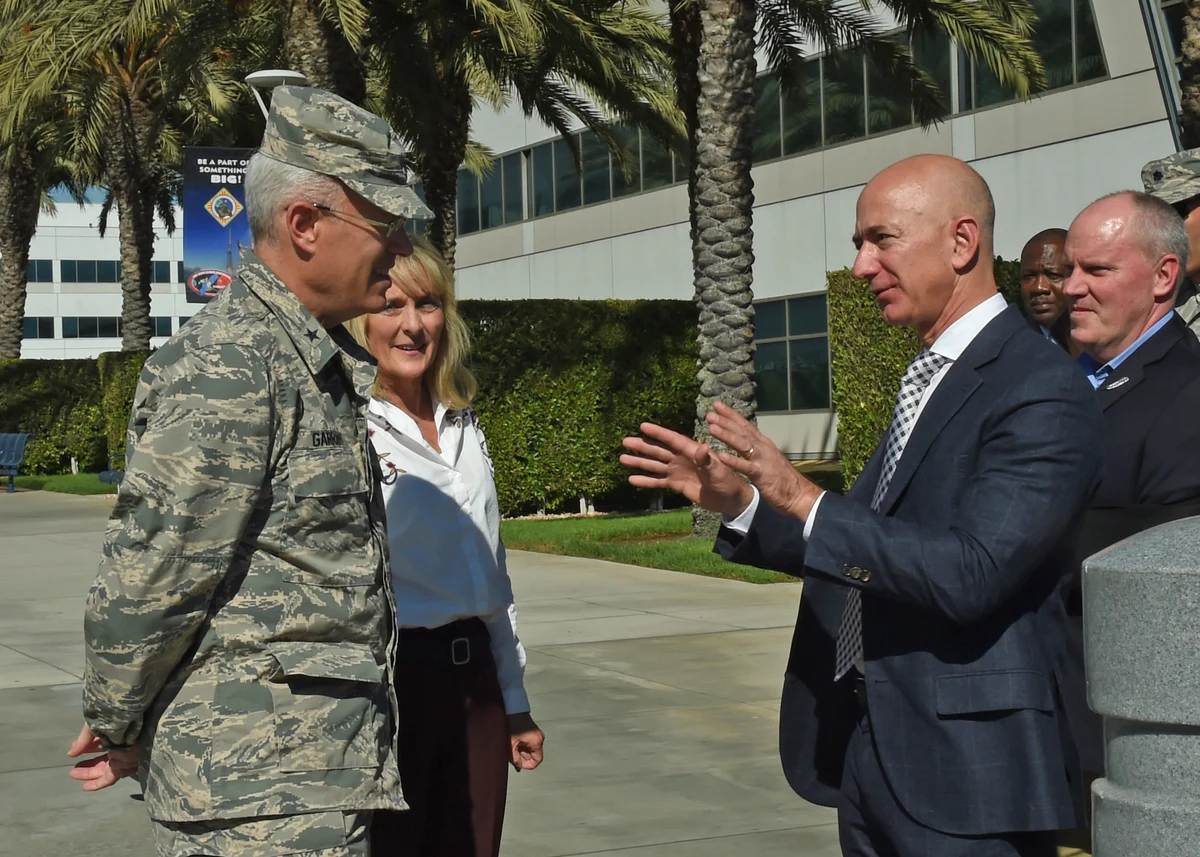
Contemporary issuer disclosures and management statements are identified as such. The SEC speech provides a later institutional chronology, not an endorsement of the company. The illustration is a documented 2017 photograph, not a picture of the 1997 offering. This article was reviewed on Reviewed 21 October 2026.
- U.S. Securities and Exchange CommissionRick A. Fleming, Enhancing the Demand for IPOs, 9 May 2017 — chronology and original prospectus reference
- Amazon.com / U.S. Securities and Exchange CommissionIPO prospectus, Form 424B1, 14 May 1997
- Amazon.com / U.S. Securities and Exchange Commission1997 Form 10-K, filed 30 March 1998 — operations, risks and annual accounts
- Jeff Bezos / AmazonOriginal 1997 shareholder letter
- AmazonSecond-quarter 1997 results release, July 1997
- U.S. Air Force / DVIDSTech. Sgt. Sarah Corrice photograph, VIRIN 171025-F-HW403-010, captioned October 2017