
The short answer
Woolf shifts a question about women writers towards the conditions of writing itself. The room matters alongside money, education and the right to enter institutions.
Chronology
A timeline of the turning points
Hogarth Press begins
Virginia and Leonard Woolf started a practical publishing venture.
Women and fiction
Woolf spoke to students at Newnham and Girton.
A revised book
The Hogarth Press published A Room of One’s Own.
Students respond
Newnham’s archive records a kitchen committee discussed in relation to Woolf’s argument about food and intellectual life.
The lectures are the occasion, not the whole book
A Room of One’s Own grew from talks to women students at Newnham and Girton in October 1928. The revised work appeared in 1929, with the Hogarth edition published in October. This distinction matters: a book can reconsider an occasion, rearrange material and create a form that does more than preserve a lecturer’s spoken words. Woolf’s subject becomes the relationship between literary possibility and social arrangements.
The colleges were active communities with their own history and responses. Newnham’s archive-based account records students engaging with Woolf’s description of food and intellectual life, including a later kitchen committee. The women in the audience were not simply passive recipients of a famous writer’s wisdom. The institutional setting helps explain why questions of access, resources and education had immediate force.
An invented narrator can make a serious argument
The opening explicitly gives the speaker the freedom of a novelist. Oxbridge and Fernham are invented places, and the speaking “I” is a constructed figure. The names Mary Beton, Mary Seton and Mary Carmichael unsettle the expectation of a single transparent autobiographical voice. These devices make the essay’s method visible: it is showing a train of thought, not presenting every scene as a documented incident.
That does not make the exclusion it examines imaginary. A library door, a protected patch of grass and different meals become scenes through which authority and opportunity can be explored. Keep the historical occasion separate from the narrative demonstration. A fictional encounter can illuminate a real institution’s rules without serving as a literal transcript of what happened to Woolf on one particular visit.
A room stands for conditions as well as space
Woolf’s opening argument joins money to a room. Privacy without a secure livelihood may still leave a writer exhausted, dependent or constantly interrupted. Income without control over time may also fail to create the freedom needed for sustained work. The force of the pairing is that writing requires ordinary material arrangements, even when literary history prefers to explain achievement through exceptional talent.
Her own publishing work gives the question a practical context. The Hogarth Press involved buying equipment, learning a trade and circulating books. The essay does not say that purchasing a desk automatically produces literature. It asks what barriers prevent capable people from beginning or continuing. When reading it now, distinguish the argument about structural opportunity from a promise that one household arrangement will work identically for everyone.
Judith Shakespeare tests what the record leaves out
In Chapter 3 Woolf imagines a gifted sister of Shakespeare called Judith. She announces the act of invention: this is a thought experiment about what an equally talented woman might have been allowed to do. Judith is not a newly discovered historical playwright. The imagined contrast directs attention to education, family expectations, public work and the absence of a route into the theatre.
The exercise asks readers to reconsider what an empty archive proves. A lack of celebrated works by women need not establish a lack of ability; it may reflect conditions that obstructed their creation or survival. At the same time, Woolf’s account has its own social limits. Newnham’s history notes the snobbery that could accompany her sympathy. The essay is most productive when its methods and assumptions remain open to examination as well as admiration.
Continue the chronology
Related history guides
Biography context
Explore United Kingdom through connected lives
Connected biographies
The writer behind the argument
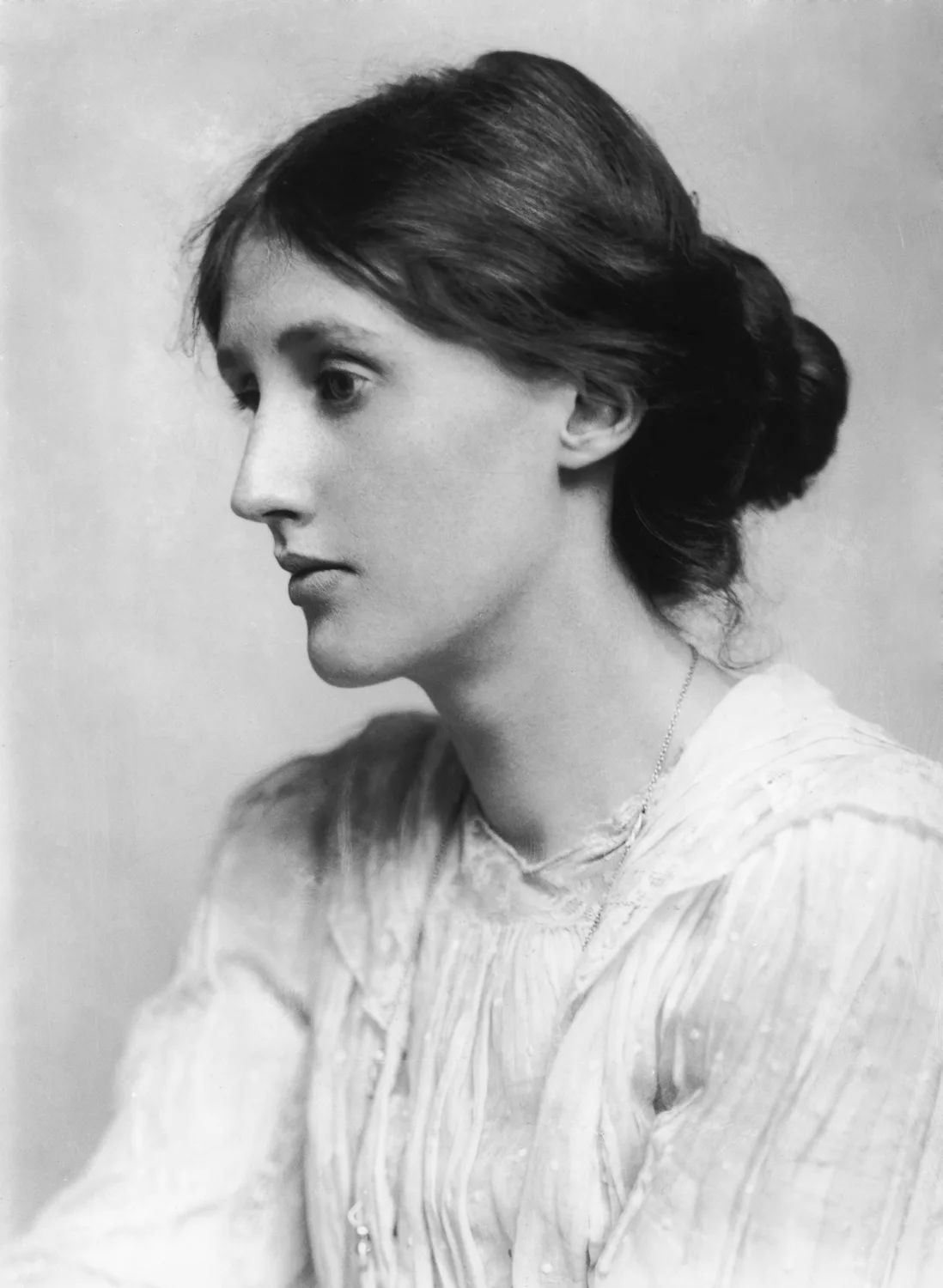
1882–1941
Virginia Woolf
Novelist, essayist, critic and publisherVirginia Woolf was an English novelist, critic and publisher whose experiments with consciousness and time changed modern fiction and feminist literary argument.Read biographyQuick answers
Common questions
- Is Judith Shakespeare a real historical writer?
- No. She is Woolf’s invented sister of William Shakespeare, used to test how unequal opportunities could frustrate equal talent.
- Were the lectures given in 1929?
- They were given in 1928 at Newnham and Girton. The revised book was published in 1929.
- Does the title mean that a bedroom alone is enough?
- No. Woolf pairs space with income and investigates education, institutional access and the freedom to sustain intellectual work.
- Is the narrator always literally Virginia Woolf?
- The essay deliberately constructs a narrator and fictional places. Its historical occasion should be distinguished from the invented scenes used to develop its argument.
Primary and institutional sources
How this history was checked
Read limits: selected Chapter 1 passages on the constructed narrator and institutional scenes, Chapter 3’s Judith Shakespeare thought experiment, Newnham and Girton historical accounts, and a British Library edition description were read. The whole book, lecture manuscripts and complete college archives were not reviewed. Invented people and places are not treated as literal case histories. This article was reviewed on 23 October 2026.
- British LibraryVirginia Woolf’s Mrs Dalloway: author, manuscript, modernism and narrative perspectives
- English HeritageVirginia Woolf: London addresses, Bloomsbury, first novel and criticism
- University of St AndrewsThe Virginia Woolf letters: Hogarth Press and the Kirkpatrick collection, 2016
- National TrustThe history of Monk’s House: Virginia and Leonard Woolf
- National Trust / Abigail Green, University of OxfordJewish stories at country houses: Leonard Woolf and Virginia’s antisemitic prejudice
- Newnham College / Rosa CampbellVirginia Woolf: 1928 lectures, college archives and the politics of access
- Girton CollegeStudent experience: Woolf’s October 1928 visit and the revised book
- Virginia Woolf / Project GutenbergMrs Dalloway: selected opening and Septimus passages in an American-edition transcription
- Virginia Woolf / WikisourceA Room of One’s Own, Hogarth 1929, Chapter 1: selected opening, narrator and institutional scenes
- Virginia Woolf / WikisourceA Room of One’s Own, Hogarth 1929, Chapter 3: selected Judith Shakespeare passage
- British Library ShopA Room of One’s Own: edition based on the October 1929 Hogarth text
- George Charles Beresford / Wikimedia CommonsExact original 1902 portrait, creator dates, file history and public-domain tags
- Wikimedia CommonsComplete original portrait, not the restoration derivative